Mandelson vetting row raises new questions over Starmer's judgment
A security clearance override, a senior official forced out and tens of thousands of files ordered released have turned Mandelson’s appointment into a test of Starmer’s judgment.
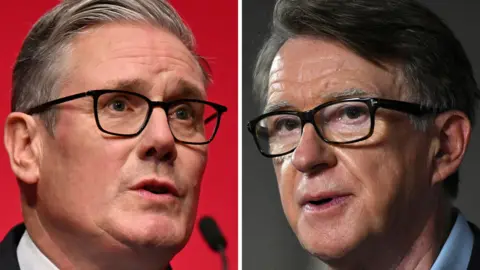
Peter Mandelson’s appointment as Britain’s ambassador to the United States, once sold as a hard-headed political choice, has become a far more damaging question of governance: who signed it off, who overrode the warning signs, and how much control Sir Keir Starmer really had over his own operation.
Mandelson was appointed in December 2024 and later sacked in September 2025 after fresh revelations about his relationship with Jeffrey Epstein. The latest reporting in April 2026 went further, saying he failed security vetting before the appointment and that the Foreign Office overruled the recommendation of the government’s vetting officials. Government sources said Starmer and ministers were not aware at the time that the recommendation had been overridden.

That sequence matters because it moves the story beyond Westminster intrigue. The issue now sits at the junction of national security clearance, ministerial accountability and the prime minister’s judgment. If a senior ambassadorial appointment can proceed despite a failed vetting process, then the question is not just about Peter Mandelson. It is about whether the machinery of state, from the Foreign Office and Cabinet Office to UK Security Vetting and Downing Street, is disciplined enough to protect the government from its own political instincts.
The fallout has already widened. MPs ordered the release of tens of thousands of documents connected to Mandelson’s appointment, adding to pressure for a full account of what was known and when. A senior Foreign Office official was forced to leave over the row, a sign that the consequences are no longer confined to political embarrassment. They are now affecting careers inside the machinery that handled the appointment.
Opposition figures have seized on the episode as evidence that Starmer’s team was careless with one of the most sensitive ambassadorial posts in government. Kemi Badenoch and other critics have used the affair to attack his judgment and competence, especially as Labour faces a series of other high-stakes tests. The criticism lands because Mandelson himself had framed the job as one meant to help the government land “big opportunities” with the US government.
Instead, the appointment has exposed a larger weakness at the top of government. For a prime minister who has tried to project discipline and control, the Mandelson row suggests that patronage, vetting and political judgment may not have been as tightly managed as Downing Street hoped.
This article was produced by Prism’s automated news system from verified source data, official records, and press releases, then run through automated quality and moderation checks before publishing. The system is built and supervised by the people who set the standards it runs under. Read our full AI policy.
Did this article answer your question?

