Manufacturing jobs rebound in hard-hit regions despite Trump tariffs and crackdowns
Manufacturing payrolls are improving in some battered counties, but the comeback is uneven. New plants, tariffs and immigration crackdowns are reshaping the old factory map rather than restoring it.
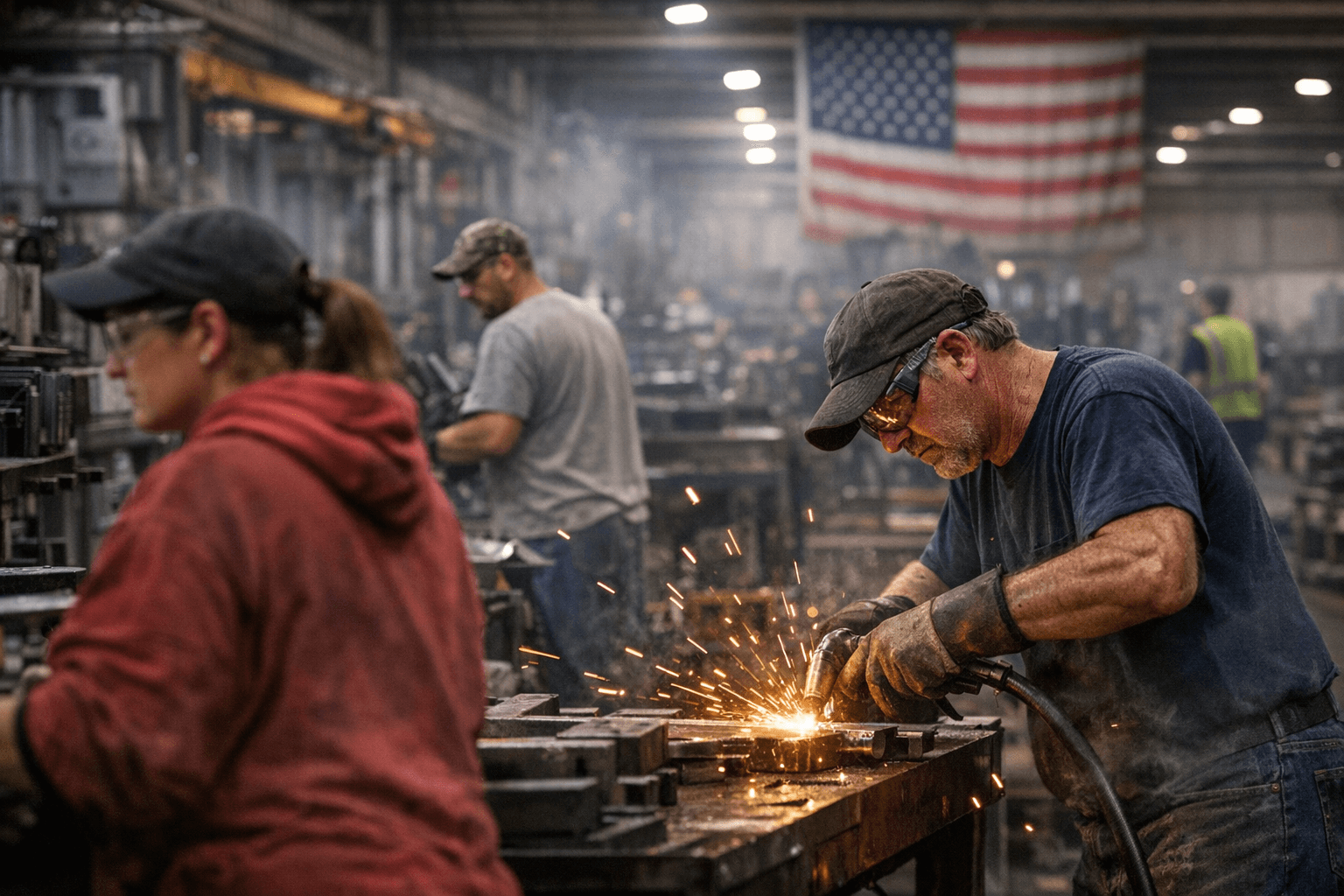
America’s hardest-hit manufacturing towns are putting more people back to work, but the recovery is not a return to the old factory economy. In counties scarred by the China shock, job growth has accelerated since 2019, and Brookings says manufacturing and high-tech investment have helped some distressed places finally move forward after years of decline.
That rebound matters because the original damage was enormous. China’s manufacturing exports surged after it joined the World Trade Organization in 2001, and nearly a quarter of U.S. manufacturing jobs disappeared between 1999 and 2007. Economists David Autor, David Dorn and Gordon Hanson found that the communities most exposed to Chinese import competition suffered more plant closures, lower manufacturing employment, weaker wages, falling housing prices, shrinking tax revenues, higher poverty and higher mortality. The shock plateaued around 2010, but its effects persisted through at least 2019.
The adjustment was never just a story of people simply moving away and starting over. Research on the most affected labor markets found only modest migration, concentrated among younger native-born adults and foreign-born workers. Even where employment later recovered, the workforce changed. A Federal Reserve Bank of Minneapolis analysis found that gains in the hardest-hit labor markets were fueled in part by young U.S.-born workers and foreign-born Hispanic workers, underscoring how different the revived payrolls look from the old industrial base.
That makes the new policy push under Donald Trump hard to read. Trump unveiled sweeping new tariffs on April 2, 2025, casting them as a way to promote U.S. manufacturing. But tariff-fueled protection is no guarantee of a broad industrial renaissance. Minneapolis Fed warnings have put the potential cost of current tariff scenarios at between 955,000 and 3.4 million U.S. jobs, with unemployment rising by 0.6 to 2.0 percentage points. Broader analysis has also warned that tariffs can lift consumer prices and may cost jobs overall.
Immigration enforcement adds another layer of strain. Worksite raids have increasingly targeted employers, and industries that depend on immigrant labor are already bracing for shortages. For many manufacturers, the policy mix is pulling in two directions at once: one set of measures is meant to revive domestic production, while another threatens the labor supply that keeps factories, warehouses and suppliers running.
The result is a national test of whether the counties battered by the China shock are truly rebuilding or only stabilizing after years of damage. In places that once lost plants, paychecks and tax base, the numbers now point to a narrower question: whether new investment can create durable, middle-class jobs, or whether the latest round of tariffs and crackdowns will simply rearrange the pressure.
This article was produced by Prism’s automated news system from verified source data, official records, and press releases, then run through automated quality and moderation checks before publishing. The system is built and supervised by the people who set the standards it runs under. Read our full AI policy.
Did this article answer your question?