Marcos Jr. arrives in New York for United Nations working visit
Philippine President Ferdinand "Bongbong" Marcos Jr. landed in New York on March 8 for a short, multi-day working visit focused on United Nations meetings, spotlighting diplomacy and human rights scrutiny.
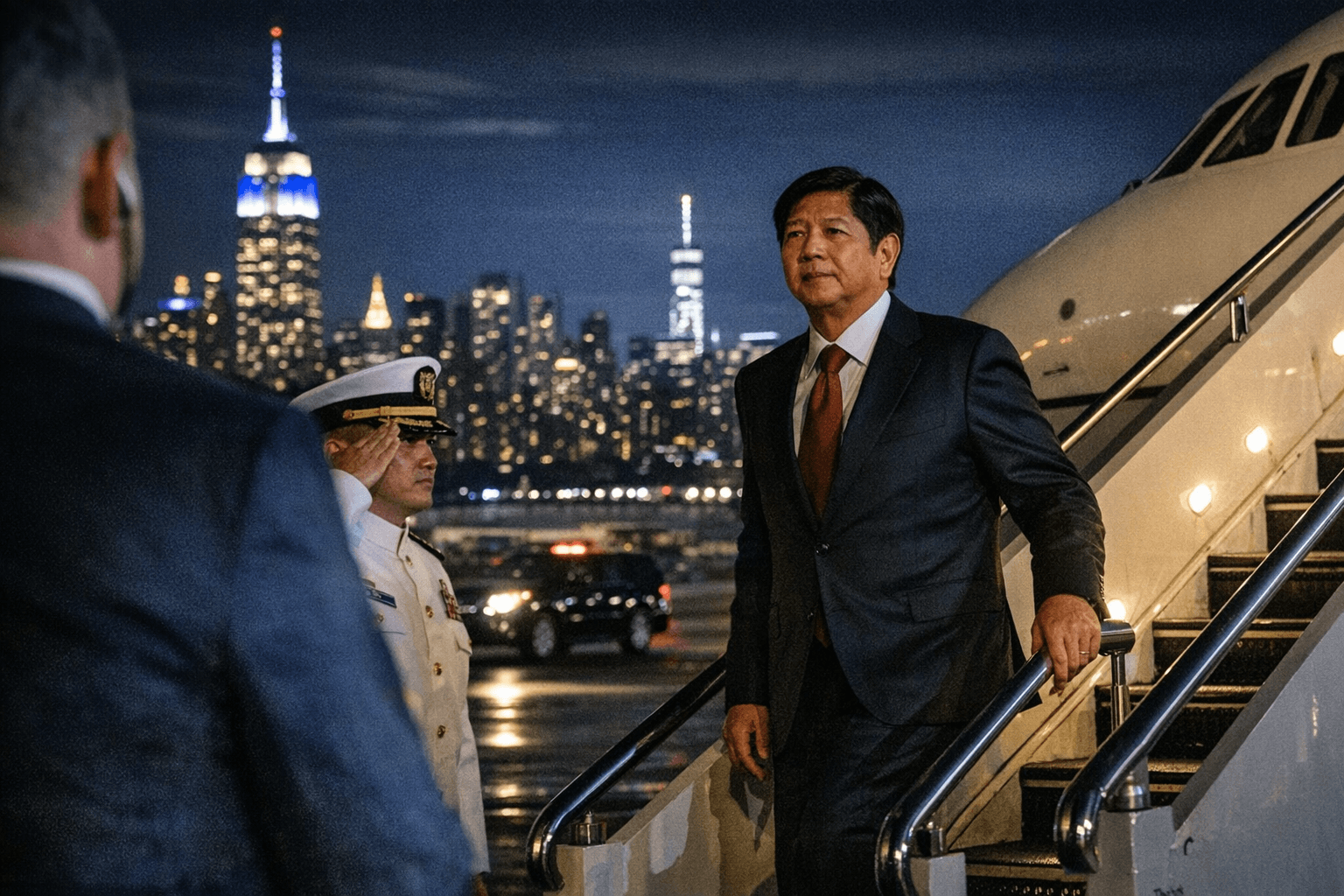
President Ferdinand "Bongbong" Marcos Jr. landed in the New York area on Sunday, March 8, beginning a short, multi-day working visit centered on meetings at the United Nations, officials said as media coverage followed on March 9. The trip places the Philippine leader in the international spotlight amid an uptick in high-level diplomacy and continuing scrutiny of his government’s human rights record.
Marcos’s visit comes after a string of face-to-face encounters with major partners. President Joe Biden pledged in his first meeting with Marcos to work to strengthen relations with the Philippines, saying there had been some "rocky times" in the past. The outreach underlines Washington’s effort to steady ties with a strategic Pacific nation at a time when U.S. alliances in Asia are a focus of policy and markets that track geopolitical risk.
Human rights concerns are expected to shadow Marcos’s New York agenda. A U.N. expert has said steps have been taken under Marcos to address human rights abuses, including killings of journalists and rights activists, and United Nations envoys have recently visited the Philippines. Irene Khan, the U.N. special rapporteur on freedom of opinion and expression, held a news conference in Mandaluyong in February while conducting an official visit, underscoring the continuing attention from U.N. monitors.
The visit also arrives against a backdrop of regional tensions. Philippine officials have publicly addressed incidents in the South China Sea, and Marcos has said that an episode in which the Chinese coast guard allegedly used a powerful laser against a Philippine patrol vessel did not, in his view, warrant invoking mutual defense arrangements. Those remarks highlight the tightrope Manila walks between seeking security cooperation with the United States and managing fraught ties with China.
For investors and regional markets, the trip matters less for immediate economic data than for policy signals. A visible strengthening of U.S.-Philippine diplomatic coordination could reassure foreign investors and defense contractors exposed to Indo-Pacific security spending, while any sharp rhetoric over territorial disputes could raise risk premia for shipping and energy routes that traverse contested waters. Marcos’s meetings at the U.N. may also include bilateral side meetings that could touch on trade, investment and development finance, areas where clarity would influence capital flows to the Philippines.
The Philippine government has not released a full characterization of the trip in a single public statement. Marcos’s schedule in New York has been described as focused on United Nations meetings; details of specific sessions or bilateral counterparts have not been fully disclosed. His recent record of international engagements includes hosting foreign leaders and traveling to Washington, reflecting an active diplomacy that seeks both economic opportunities and security assurances.
This working visit will test whether Marcos can convert high-level diplomacy into concrete cooperation on security and investment while addressing persistent human rights concerns raised by U.N. experts and advocacy groups. The outcomes, and any statements he delivers at the U.N., will be watched for how they shape Washington-Manila ties and regional dynamics in the months ahead.
This article was produced by Prism’s automated news system from verified source data, official records, and press releases, then run through automated quality and moderation checks before publishing. The system is built and supervised by the people who set the standards it runs under. Read our full AI policy.
Did this article answer your question?