Maria Grazia Chiuri Debuts Co-Ed Fendi FW26 with Less I, More Us
Maria Grazia Chiuri returned to Fendi with a co-ed FW26 that spelled out "Meno Io, Più Noi / Less I, More Us" as a manifesto, trading monograms for embroidery and renewed atelier craft.

Maria Grazia Chiuri staged a deliberate homecoming at Milan Fashion Week, presenting a co-ed Fendi Fall–Winter 2026 ready-to-wear that foregrounded collective authorship and the house’s craft. The runway floor carried the motto “Meno Io, Più Noi / Less I, More Us,” and the show, presented in Milan on February 25, 2026, felt like a statement about collaboration as much as style.
Chiuri’s appointment is explicitly framed as a return to a place she once learned; accounts place her first stint at Fendi either between 1988 and 1999 or starting in 1989, after which she moved on to Valentino and then Dior. Her tenure at those houses shaped an ethos of working with artists and centering many hands in creation, a principle that the FW26 collection made visible in both imagery and process.
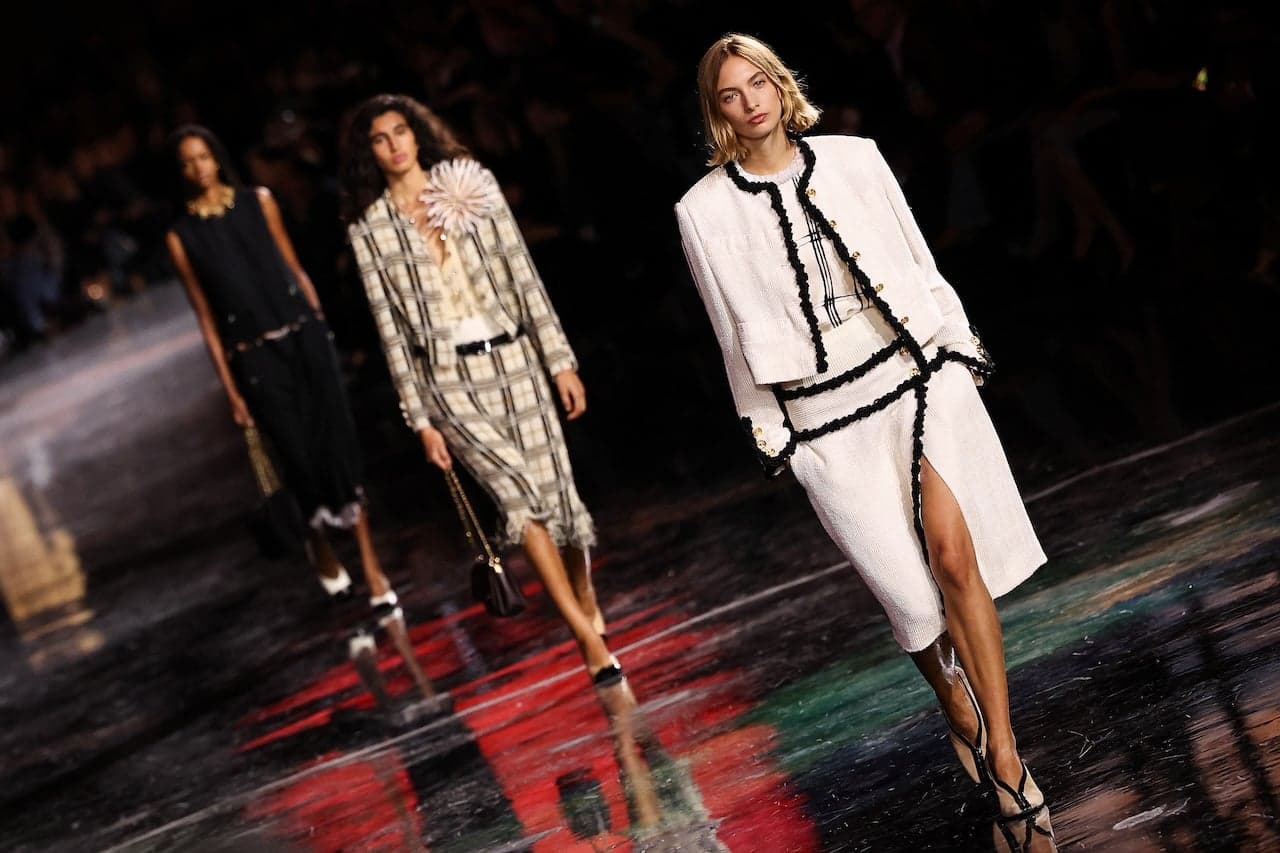
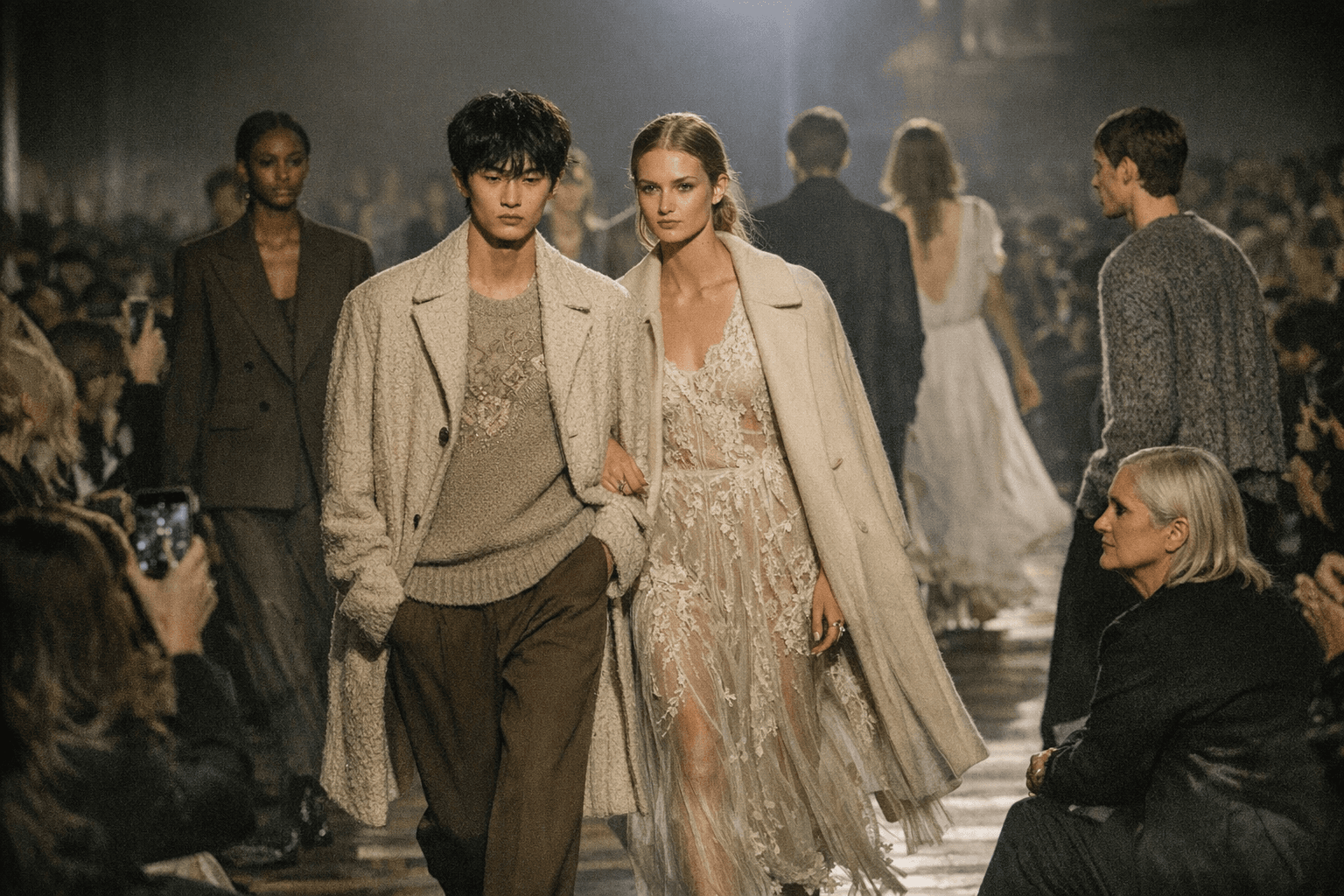
On the clothes, Chiuri married codes from her Dior era with a Roman sensibility. The palette leaned black-and-white with moments of neon: fluid floral dresses sat beside elongated lace slip-dresses and translucent black lace gowns, many finished with collar chokers. Long ballet skirts returned as a recurring silhouette, while laser-cut leather and what appeared as cracked leather revealed themselves on closer inspection to be panels of small leather flowers set against white. Outerwear was a centerpiece: plush fur coats in a neon yellow green and mixed-fur patchwork coats marched down the runway, and black fur or leather shirt collars were used without shirts for a sexier Roman edge.
The collection was co-ed in execution as well as spirit, designed by both the womenswear and menswear teams. Menswear offered dark, patinated tailoring softened by fur collars and blazers with a diagonal toggle-strap that suggested a harness; biker jackets and sharp tailoring threaded through the lineup, balancing sensuousness with structure.
Accessories emerged as a secondary but decisive pillar of the show. Chiuri, who was part of the original team that created the Baguette, reworked the bag with a second strap to allow cross-shoulder wear and applied embroidered beading and fur to select styles. Animal-print handbags, oversized wrap shades and chokers punctuated looks; Fashionotography framed these moves as an assertion that the house’s craft remains alive. Chiuri also introduced the Echo of Love project, offering clients the option to bring existing furs to the Fendi atelier to be remade, a program she described as resting on “emotional durability,” the idea that an object carries personal meaning beyond its material value.
Branding was intentionally restrained. Logos were stashed away in favor of “embroideries and other applied materials” meant to emphasize wearer individuality rather than monogram dominance. Backstage Chiuri summed her aim plainly: “I wanted to pay homage to the heritage of the brand. The five sisters were a big school for me, and for all designers.” Ramon Ros, Fendi chairman and CEO, framed the moment as institutional as well as aesthetic: “Today, we celebrated the beginning of a new chapter in our history,” adding that “Maria Grazia Chiuri’s vision for Fendi FW26 shows her innovative yet grounded approach and highlights our unparalleled savoir faire, authentic craftsmanship, and a commitment to excellence.”
Early reaction called the debut a confident and articulate opening statement and, in some rounds of response, “a real palate cleanser.” What Chiuri delivered in Milan was not a break with Fendi’s past but a recalibration: the house’s fur, leather and beading know-how placed squarely at the service of collective authorship and wearable detail.
Know something we missed? Have a correction or additional information?
Submit a Tip