Mario Maggi’s One-Off MCS70, First Programmable Synth, Powered 1978 Automat
The one and only MCS70 - Mario Maggi’s memory-controlled synth with 64 presets - has been restored and was the sole sound source for the 1978 album Automat.
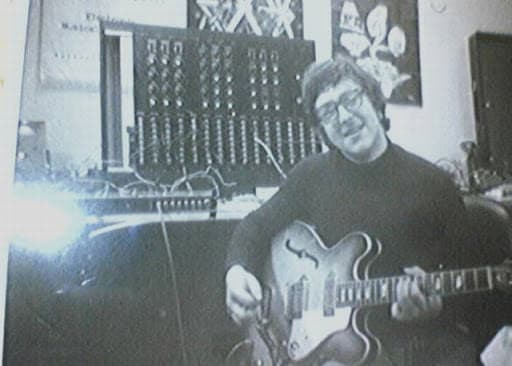
The sole MCS70, Mario Maggi’s one-off Memory Controlled Synthesizer, has been brought back to life after more than two decades of disuse and damage. Built and programmed by Maggi, the monophonic MCS70 supplied every sound on the 1978 Automat LP by Romano Musumarra and Claudio Gizzi, including drum textures, and Maggi filled all 64 memory slots with presets used on the record.
Automat was recorded November–December 1977 and released in January 1978 on Harvest/EMI, running 33:52. The LP is structured with a long Automat suite on Side A credited to Claudio Gizzi and three shorter tracks on Side B by Romano Musumarra; the B-side track “Droid” later became a leading theme on Brazilian Globo TV. EMI Italy is credited as producer, and the original 1978 pressing carries catalog number EMI 3C064-18323; the album was reissued in Italy in 2019 by Tempo Dischi (TD 002).
Technically, the MCS70’s claim to fame is its preset-saving architecture. MCS stands for Memory Controlled Synthesizer, the unit is monophonic, and Maggi reportedly programmed 64 distinct presets and used every one on Automat. Several sources describe the MCS70 as the first synthesizer capable of storing presets and even call it “the first completely programmable synth in history.” Maggi insisted that the album be the demonstration for the instrument and required that all sounds on the record come from the MCS70; accounts also say he conditioned a Frankfurt Musikmesse presentation on that exclusive demonstration.
Recording sessions used auxiliary gear to capture and process the MCS70’s output: a Sequential Circuits 3-row x 16-step analog sequencer synced to a 16-track recorder for overdubs, an EMT digital reverberation unit, two Horban parametric equalizers, a 30-band graphic equalizer, a natural echo chamber, and a 2-track recorder for delay effects. Despite the technical ambition, contemporary sources report the sessions were rushed and both Musumarra and Gizzi were unhappy with the final product even as the album later acquired cult status among electronic music fans and drew comparisons with Kraftwerk and Jean-Michel Jarre.
Ownership and restoration details remain partly unsettled. The unit is currently owned by Patrizio Fariselli of prog-rock band AREA and had been damaged for over 20 years before a recent restoration. Two friends reportedly came together to restore the single unit, and Francesco Mulassano, founder of the Soundmit event, was invited to test it; Mulassano “could not hold back his excitement and praised technicians Marco Molendi and Andrea Manuelli for their work.” It is not explicitly confirmed whether Molendi and Manuelli were the pair who initiated the restoration.
Sources disagree on one timeline detail: some accounts imply Maggi completed the MCS70 in time for the late-1977 recordings, while at least one account places completion in 1978 before the Frankfurt Musikmesse offer. That discrepancy, along with provenance and restoration specifics, remains to be clarified, but the restored MCS70 now stands as a unique technical milestone that powered Automat and may prompt renewed interest in Maggi’s early innovations and his later work on instruments such as the Elka Synthex.
Know something we missed? Have a correction or additional information?
Submit a Tip