Marjane Satrapi's Persepolis reshaped how the world saw Iran
Marjane Satrapi turned personal memory into a global lens on Iran. Persepolis made revolution and exile intimate, and gave comics new literary authority.
A memoir that translated a country
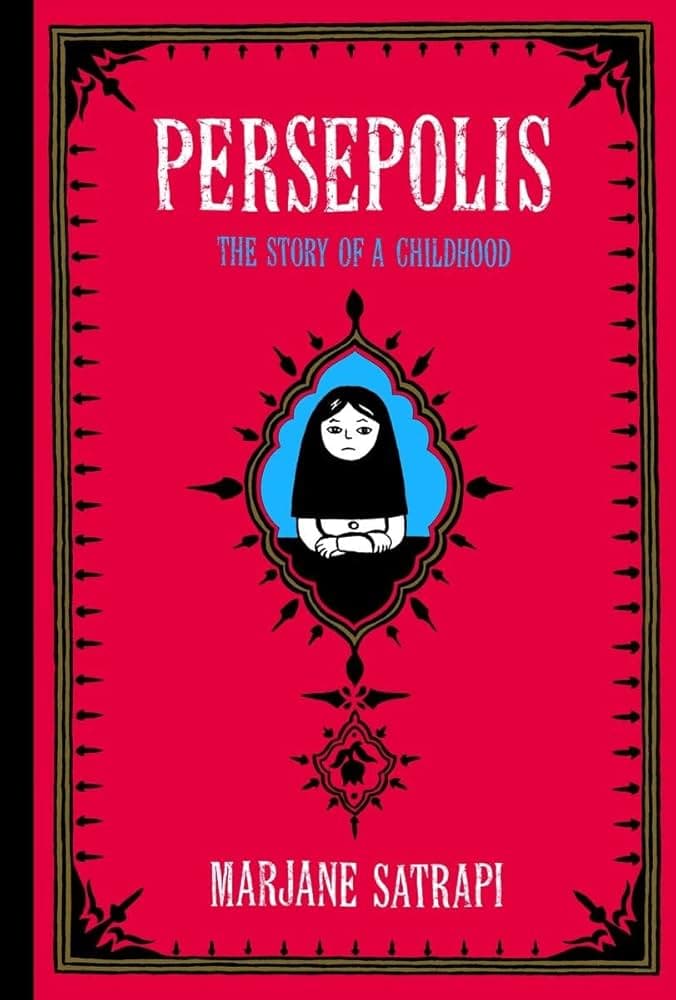
Marjane Satrapi did more than tell her own story. Through Persepolis, she gave global readers a way to see Iran as lived experience rather than abstraction, turning childhood memory into a bridge across politics, language, and fear. Published in English in 2003, the graphic memoir followed an Iranian girl through the Islamic Revolution and the Iran-Iraq War, and it helped millions relate to Iranians as ordinary people rather than symbols of crisis.
That shift mattered because the setting of the book was one of the most devastating conflicts of the late 20th century. The Iran-Iraq War ran from September 22, 1980, to August 20, 1988, and Britannica estimates its casualties at more than 1 million deaths, with total losses possibly rising to twice that number. Against that scale of destruction, Satrapi’s panels narrowed the frame to family routines, school rules, fear, loss, and survival, making a national catastrophe legible through a single childhood.
How Persepolis changed the reading of Iran
Persepolis arrived at a time when Western readers often encountered Iran through headlines, diplomacy, or war coverage. Satrapi’s memoir changed that by insisting on complexity without explanation overload: Tehran became a place of homes, arguments, humor, and private resilience, not just ideology. The book’s achievement was cultural as much as literary, because it expanded the emotional vocabulary through which readers understood Iranians.
The memoir’s structure helped make that possible. The original project was published in France in separate volumes beginning in 2000 and 2001, before the English-language edition combined them as Persepolis: The Story of a Childhood in 2003. That format allowed Satrapi to build a sustained narrative out of fragments of memory, and the eventual English edition gave the work a wider audience at exactly the moment graphic memoir was gaining broader respect as serious literature.
Satrapi’s story was also personal in a precise way. She was born in 1969 in Tehran, and the memoir centered on her childhood there before tracing her experiences in Iran and Europe after she left the country in 1994. That movement between place and exile gave the work its emotional range: it was not only about growing up under pressure, but also about what happens when home becomes something remembered from afar.

The literary rise of comics
Persepolis helped change the status of the graphic novel itself. By the time the English-language edition appeared in 2003, the form was already evolving beyond genre labels, but Satrapi’s book showed that comics could carry political history, autobiography, and moral argument without losing clarity or force. Its reach demonstrated that drawn storytelling could do work that prose alone often cannot, especially when the subject is repression, memory, and the texture of daily life.
The book’s success also helped normalize the idea that a comic could be an international literary event. Satrapi followed Persepolis with Persepolis 2: The Story of a Return, translated into English in 2004, extending the narrative into the years after leaving Iran. That continuation reinforced the memoir’s larger arc: identity was not fixed by borders, and the consequences of revolution continued long after the battlefield fell silent.
From page to screen
The reach of Persepolis widened further in 2007, when Satrapi adapted it into an animated feature with Vincent Paronnaud. The film preserved the memoir’s stark visual language while carrying its emotional force to audiences who might never have picked up the book. Its Academy Award nomination for best animated feature confirmed that the story had crossed from literary success into international cinematic recognition.
That nomination mattered because it validated the artistic seriousness of the source material. Animated film is often associated with children’s entertainment, but Persepolis used the medium to handle political violence, displacement, and memory with restraint and precision. The adaptation underscored Satrapi’s control over her own story and showed how closely her visual style and narrative voice were bound together.
Exile, memory, and political witness
Satrapi’s life after leaving Iran deepened the meaning of Persepolis rather than closing it. She lived in Paris, but she remained publicly tied to the politics of her birthplace, speaking out against repression in Iran over many years. Her support for the 2022 anti-theocracy protests showed that the concerns animating her memoir were not confined to the past.
Her stance remained forceful in 2025, when she refused France’s Legion of Honour in January, saying she rejected it because of what she saw as French hypocrisy toward Iran. That decision fit the same pattern that defined her art: she refused easy symbolism, even when the symbolism was flattering. For Satrapi, writing and public speech were both forms of insistence, pushing readers and institutions alike to confront the realities of Iranian life without simplification.
Why her legacy endures
Satrapi’s importance rests on two linked achievements. She made a revolution, a war, and an exile story emotionally intimate for readers around the world, and she helped prove that comics could carry the weight of major literature. Persepolis did not simply recount events in Iran; it changed the terms on which many readers first understood the country.
That is why the book still stands as one of the defining cultural works about modern Iran. It turned one girl’s childhood in Tehran into a global lesson in empathy, and it left behind a model for how art can humanize politics without softening its stakes.
This article was produced by Prism’s automated news system from verified source data, official records, and press releases, then run through automated quality and moderation checks before publishing. The system is built and supervised by the people who set the standards it runs under. Read our full AI policy.
Know something we missed? Have a correction or additional information?
Submit a Tip