Markets plunge, oil spikes as Iran conflict raises inflation risk
Global stocks tumbled and Brent surged as Iran‑Israel‑U.S. fighting threatened shipping through the Strait of Hormuz, forcing traders to weigh higher inflation and Fed implications.
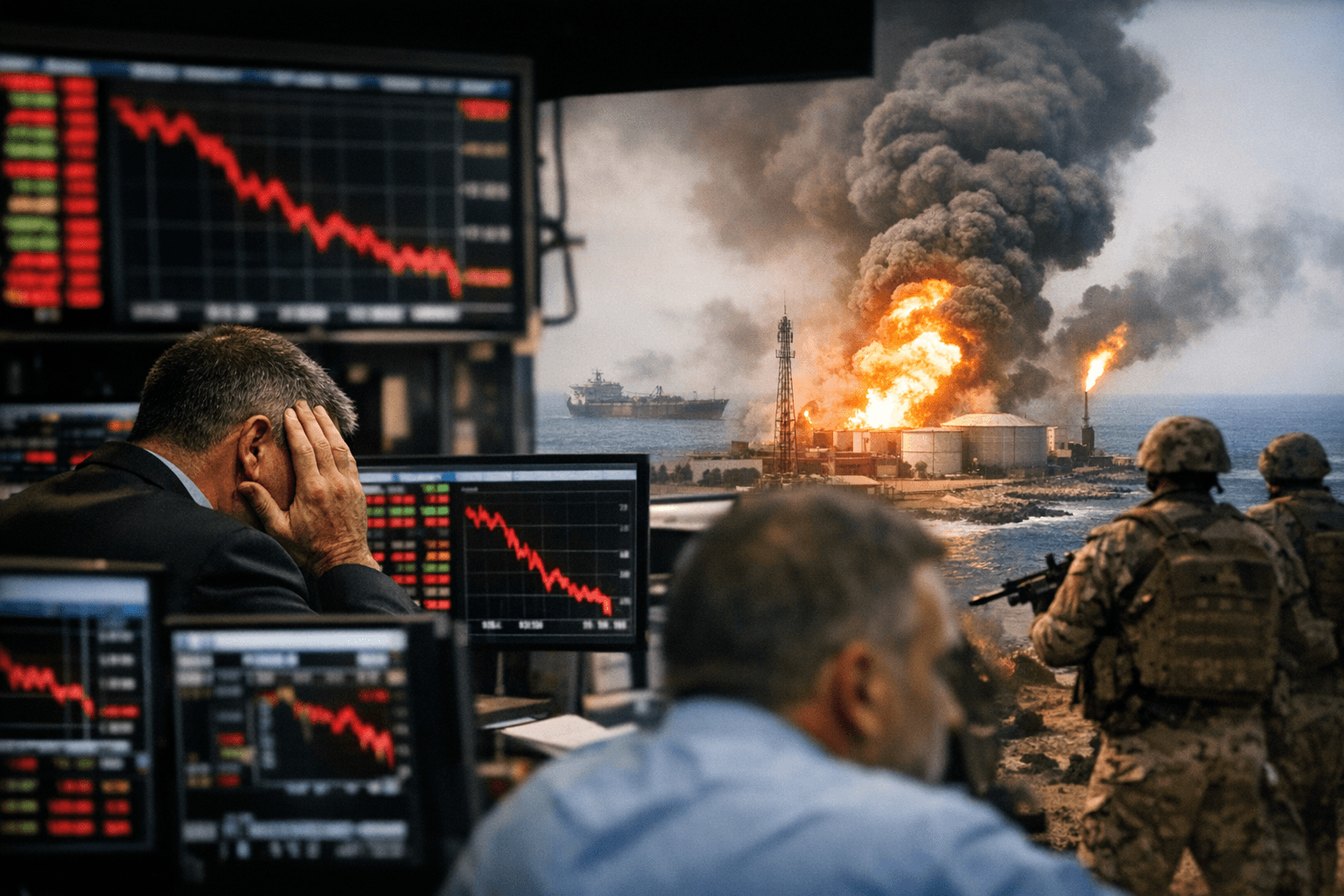
Global markets plunged and oil prices spiked as fighting involving Iran, Israel and U.S. forces intensified, triggering sharp risk‑off moves and renewed concerns about energy supply. The Dow experienced dramatic intraday swings, with one account saying it "briefly plunged more than 1,000 points in one session before settling" and other reports putting the drop at more than 400 points as the S&P 500 fell nearly 1 percent. Futures, bond markets and regional bourses also reflected heightened uncertainty.
Energy markets moved first and fastest. Brent crude has been trading in a wide band in recent days, with one snapshot showing Brent around $73 a barrel and other intraday trading pushing it briefly above $85 a barrel for the first time since July 2024. Traders cited the narrow maritime chokepoint at the Strait of Hormuz, through which roughly 20 percent of global oil supply passes, as the key transmission mechanism for the shock to prices and shipping costs. "Some oil majors and top trading houses suspended crude oil and fuel shipments via the Strait of Hormuz because of the attacks," four trading sources said, amplifying fears of a supply interruption.
Logistics costs soared. Hiring a supertanker to move oil from the Middle East to China hit an all‑time high of more than $400,000 per day, nearly double the cost of the prior week, according to London Stock Exchange Group data. Sanne Manders, president of logistics platform Flexport, described the passage as "effectively closed," a signal to markets that routing and insurance costs could keep upward pressure on fuel prices even absent a sustained production shock.
Economists and strategists warned that a continued supply disruption would feed quickly into inflation and monetary policy decisions. William Jackson, chief emerging markets economist at Capital Economics, said "Even if the conflict was contained, Brent might rise to about $80" and that "A prolonged conflict affecting supply could cause oil prices to jump to around $100, potentially adding 0.6-0.7 percentage points to global inflation." That scale of shock would complicate central bank tradeoffs already in play and could increase the likelihood of a more hawkish Federal Reserve if headline and core inflation indicators move higher.
Regional markets are particularly exposed. Ryan Lemand, CEO and co‑founder of Neovision Wealth Management, said, "I suspect markets will be down if these hostilities continue through the day." He added a projection that "Depending on the scale of the conflict, Gulf equities could drop by 3-5%." Market watchers flagged upcoming trading in Middle East bourses, including Saudi Arabia and Qatar, as early indicators of investor appetite in the region.
The conflict has also dented traditional havens. Bitcoin, once touted as a crisis hedge, "fell 2% on Saturday and has shed more than a quarter of its value in two months," underscoring a broader risk‑off posture across asset classes. The UK Office for Budget Responsibility warned in its fiscal outlook that the escalation could have "very significant impacts on the global and UK economies," highlighting how commodity shocks can quickly transmit to growth and public finances.
Military rhetoric raised the stakes for shipping. Ebrahim Jabbari, an adviser to the commander‑in‑chief of Iran's IRGC, told state television that ships "should not come to this region. They will certainly face a serious response from us." Taken together, the price moves, suspended shipments and sharply higher freight costs are forcing traders to reprice inflation risk and to consider how long central banks will tolerate higher prices before shifting policy.
Know something we missed? Have a correction or additional information?
Submit a Tip