Markets Reel as Oil Surges Amid Trump's Iran Threats and Escalating Tensions
Brent crude pushed above $111 a barrel as Trump threatened to demolish Iranian infrastructure, with the Strait of Hormuz blockade now strangling 20% of the world's oil supply.
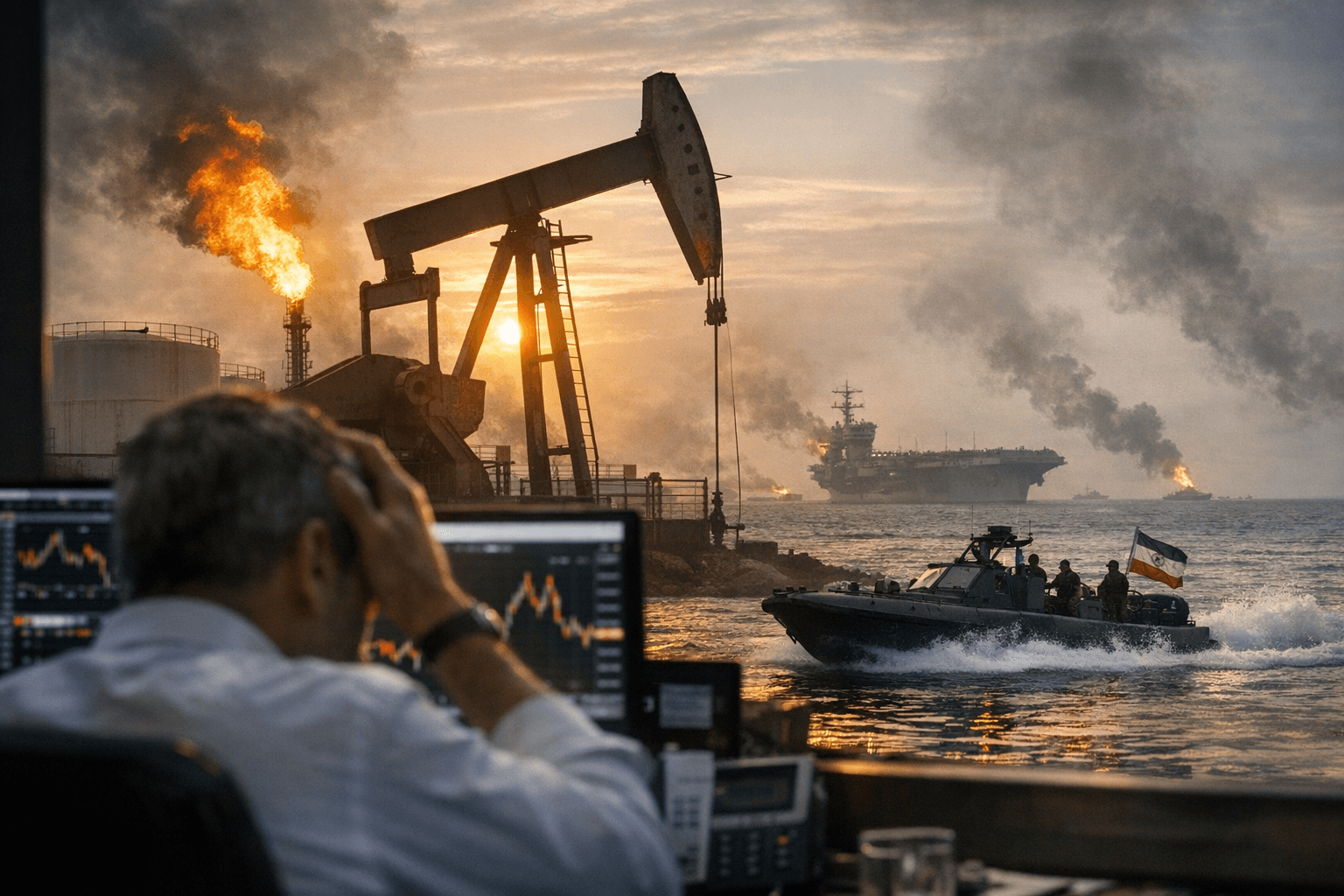
With a self-imposed April 6 deadline expiring and no deal in sight, President Donald Trump escalated his confrontation with Iran in terms markets found impossible to ignore. Brent crude climbed 1.9% on Sunday to trade above $111 a barrel after Trump renewed threats to attack Iranian energy infrastructure, and earlier in the week WTI had touched $113 before settling around $111, a surge of roughly 11% in a single session. The message from futures pits was unambiguous: traders stopped pricing a resolution and started pricing a prolonged energy shock.
The catalyst was language that left little room for diplomatic interpretation. In a Sunday social media post, Trump threatened to destroy Iran's power plants and bridges if the Strait of Hormuz remained closed, then followed with a demand that Iranian leaders open the waterway or "you'll be living in Hell." He told ABC News that if no deal materialized, "their whole country is gone." In his April 1 prime-time address, he had already pledged to strike Iran "extremely hard over the next two to three weeks." Markets had rallied ahead of that speech, betting it would signal a wind-down; when it did the opposite, the reversal was swift.
The strait has been effectively shut since early March, with maritime traffic down roughly 98% at its nadir. Before the blockade, approximately 20% of global oil supply transited the waterway daily. The disruption has already cascaded through the physical market: benchmark tanker rates on the Middle East Gulf-to-China VLCC route surged to $423,000 per day in early March before moderating to $356,000, a 121% year-on-year increase. Morgan Stanley flagged reports that an Indian LNG carrier was charged a passage fee of $1 million to $2 million simply to transit, a signal that risk premiums are being individually negotiated, not just indexed. Goldman Sachs analysts warned those security premiums are being "permanently repriced" into forward curves, not treated as episodic.
The inflationary arithmetic is straightforward and alarming. The OECD revised its 2026 U.S. headline inflation forecast upward to 4.2%, citing the rule of thumb that every 10% rise in oil prices adds roughly 40 basis points to global inflation. TD Securities strategist McKay estimated nearly 1 billion barrels of supply are at risk by month-end, comprising around 600 million barrels of crude and 350 million barrels of refined products including jet fuel, diesel, and gasoline. With oil stored on tankers drawing down quickly, he warned that onshore inventories could fall to multi-year lows as early as August: "As market inventory buffers erode, the physical tightness seen thus far in Asia begins to cascade globally."
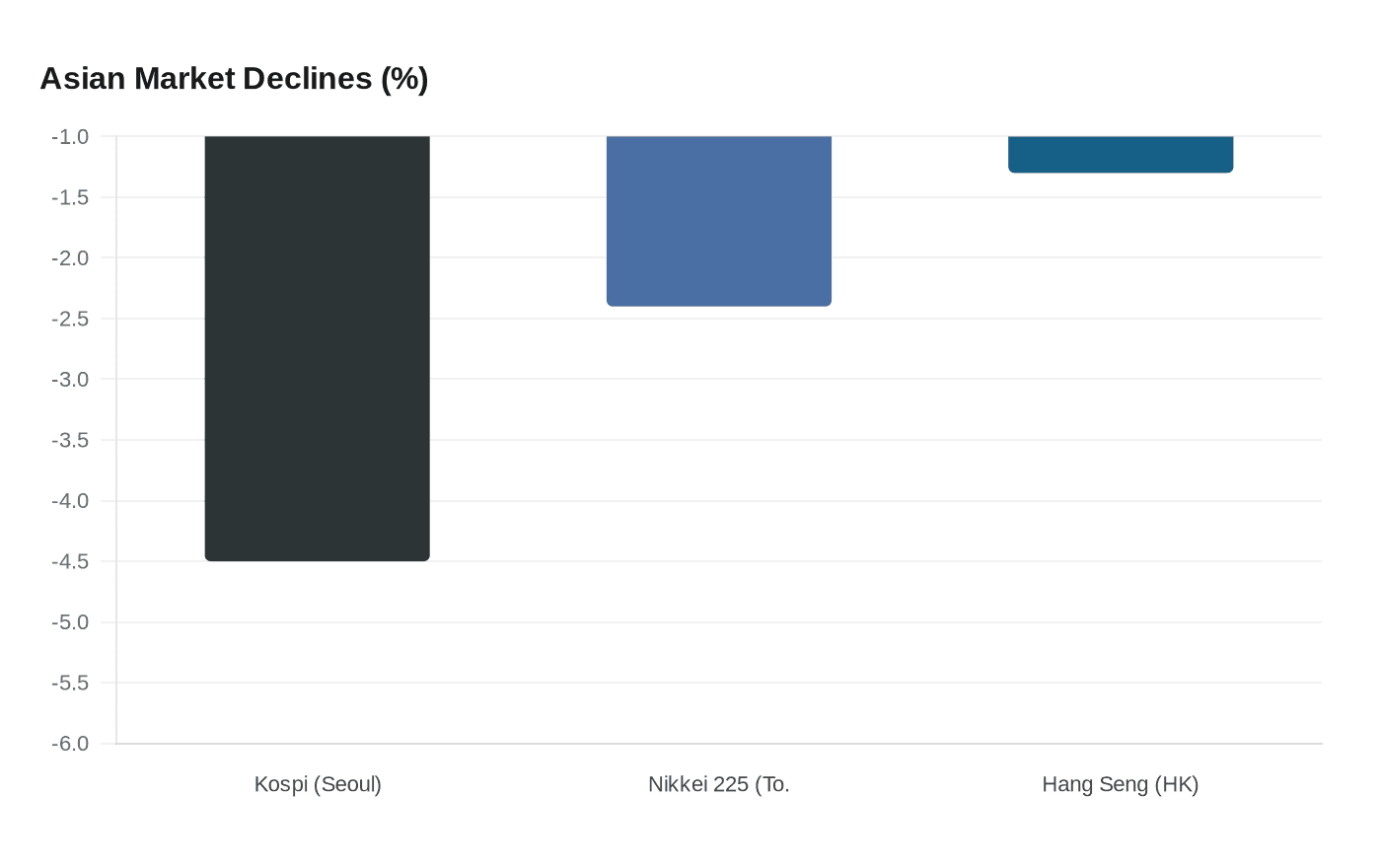
Equity markets absorbed the turbulence unevenly. The S&P 500 slumped as much as 1.5% intraday before paring losses to a 0.1% decline; the Dow shed 142 points. Asian markets bore the brunt of the initial shock after Trump's April 1 address, with Seoul's Kospi falling 4.5%, Tokyo's Nikkei 225 sliding 2.4%, and Hong Kong's Hang Seng dropping 1.3%. The bond market, meanwhile, refused to play its traditional safe-haven role. Luke Hickmore, investment director at Aberdeen Investments, noted that government bonds had "defied safe haven status" since the conflict began because surging oil prices raise inflation risks directly: "When oil prices rise sharply, inflation risks rise with them." The 10-year Treasury yield settled at 4.31%, offering little shelter.
Trump's April 6 deadline itself was already an extension of an earlier ultimatum he issued on March 21. Oman met with Iranian officials on Sunday to discuss reopening the strait, and OPEC+ agreed to add 206,000 barrels per day to output beginning in May. Neither development meaningfully cooled prices. J.P. Morgan Research calculated that if Brent remains elevated through mid-year, global GDP growth for the first half of 2026 could be depressed at an annualized rate of 0.6%. For households, that arithmetic translates directly: elevated diesel prices filter into grocery shelves, elevated jet fuel into airfares, and elevated oil broadly into the 401(k) accounts that fund retirement. The market is not pricing a quick exit. It is pricing a world in which the Strait of Hormuz remains a geopolitical weapon with no clear plan for disarmament.
This article was produced by Prism’s automated news system from verified source data, official records, and press releases, then run through automated quality and moderation checks before publishing. The system is built and supervised by the people who set the standards it runs under. Read our full AI policy.
Did this article answer your question?

