Oil Prices Rise as Mixed Signals Cloud U.S.-Iran War Outlook
Oil surged 11% after Trump warned of 2-3 more weeks of "extremely hard" strikes on Iran, even as Tehran denied any peace talks were underway.
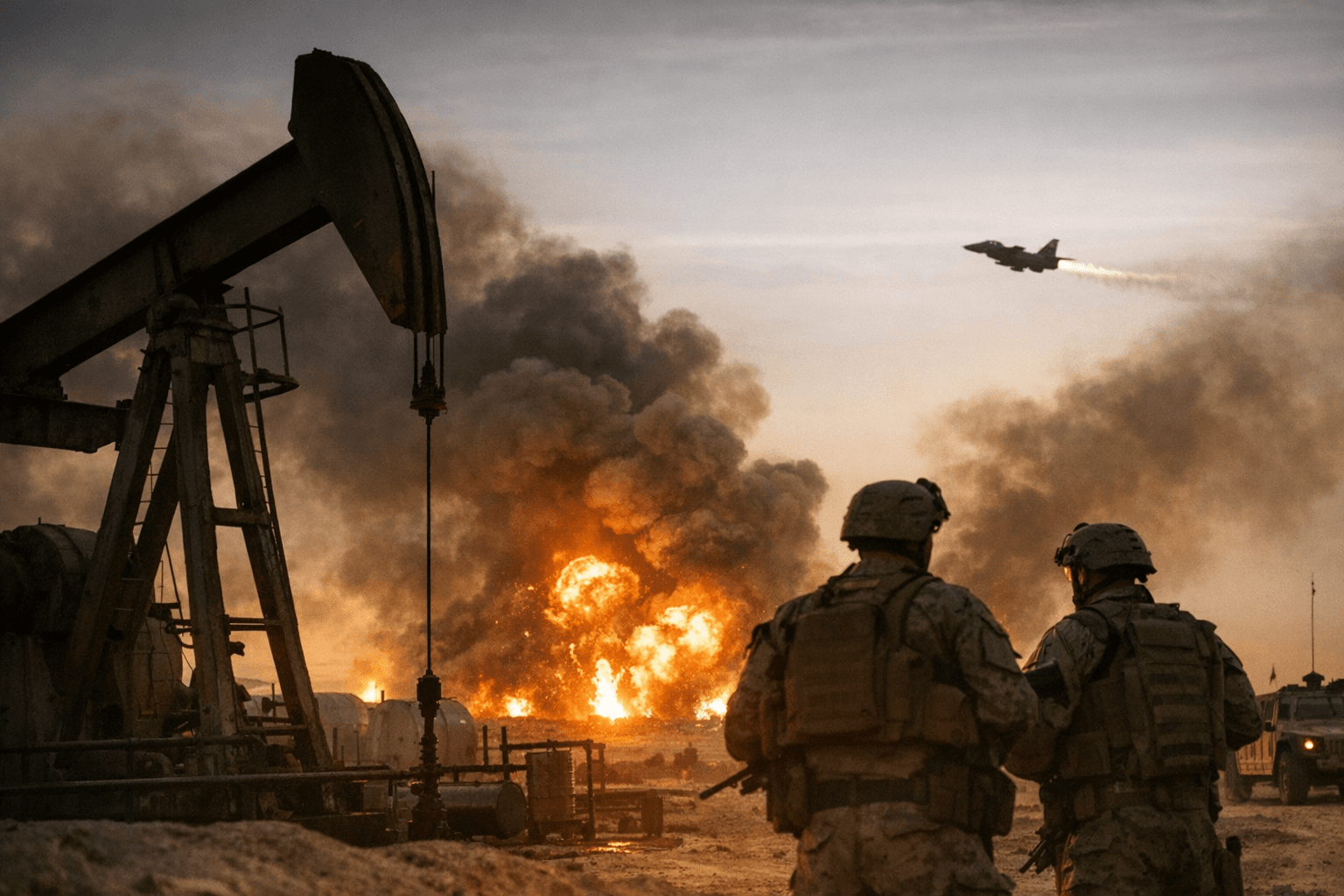
Oil markets swung sharply upward after President Donald Trump warned of two to three more weeks of "extremely hard" strikes against Iran and threatened to target the country's civilian energy infrastructure, even as Iranian officials flatly denied that any peace talks were underway. U.S. oil prices surged 11% following Trump's address to the nation, a spike that captured the central contradiction driving market volatility: simultaneous signals of escalation and diplomacy, with neither side's account fully credible to traders.
The conflict, now in its 34th day, began February 28, 2026, when the United States joined Israel in launching airstrikes on Iran. That assault was itself a second act; the U.S. had previously joined Israeli strikes on Iranian nuclear facilities in June 2025, nine months before the current war began. Iranian Foreign Ministry spokesman Esmail Baqaie underscored the diplomatic irony, saying Iran was "attacked while in the middle of a diplomatic process — for the second time within nine months."
Despite Trump's assertion on March 24 that Iran agreed to "never have a nuclear weapon" and wants "to make a deal so badly," Iranian parliament speaker Mohammad Bagher Qalibaf posted on X on March 23 that "No negotiations have been held" with the United States, accusing Trump of making the announcement to "manipulate the financial and oil markets and escape" the consequences of the conflict. Iranian President Masoud Pezeshkian also wrote directly to the American people, asking: "Is America First truly among the priorities of the U.S. government today?"
The market disruption centers on Iran's closure of the Strait of Hormuz, the narrow waterway between Iran and Oman connecting the Persian Gulf to the Gulf of Oman. Approximately 20 million barrels per day of crude and oil products flowed through the strait in 2025; that volume has slowed to "a trickle" since the conflict began, according to the International Energy Agency. The exposure is not evenly distributed. In 2024, 84% of crude oil and condensate shipments through the strait were destined for Asian markets, with China receiving roughly one-third of its total oil supply via the waterway. Beijing holds approximately 1 billion barrels in reserve, estimated as a few months of supply. Europe, meanwhile, sources 12% to 14% of its liquefied natural gas from Qatar through the same chokepoint, with analysts warning the continent faces scarcity pricing on diesel. Marine fuel prices in Singapore spiked sharply, with buyers reluctant to purchase beyond immediate needs. Parts of Africa are already experiencing supply disruptions, and the broader economic fallout extends to fertilizer markets, as the Persian Gulf accounts for a major share of global production and exports.
On the diplomatic front, Bahrain proposed a UN Security Council resolution authorizing countries to use "all defensive means necessary" to secure transit passage through the strait, with a vote expected Friday. Saudi Crown Prince Mohammed bin Salman spoke with Russian President Vladimir Putin amid expectations that Moscow would not block the measure; similar expectations existed for Beijing. Israel separately stated support for full denuclearization of Iranian atomic energy establishments along a "Libya model," referencing Libya's 2003 voluntary disarmament under international oversight.
IEA member-government emergency oil stocks exceeded 1.2 billion barrels at the end of Q4 2025, including approximately 415 million barrels in the U.S. Strategic Petroleum Reserve. Oil futures had briefly dropped 1.4% earlier in the cycle when Trump first announced negotiations, illustrating how reactive markets have become to each claim and counter-claim. With both governments now asserting contradictory accounts of whether talks exist at all, and Trump threatening further strikes on Iran's energy infrastructure if no deal materializes, that volatility is unlikely to resolve until one version of reality proves out.
This article was produced by Prism’s automated news system from verified source data, official records, and press releases, then run through automated quality and moderation checks before publishing. The system is built and supervised by the people who set the standards it runs under. Read our full AI policy.
Did this article answer your question?

