Markets tumble after Trump threatens tariffs as oil spikes and jobs surprise
President Trump's threat of a "massive increase" in China tariffs and a surprise February jobs loss roiled markets, sending stocks lower and oil above $90.
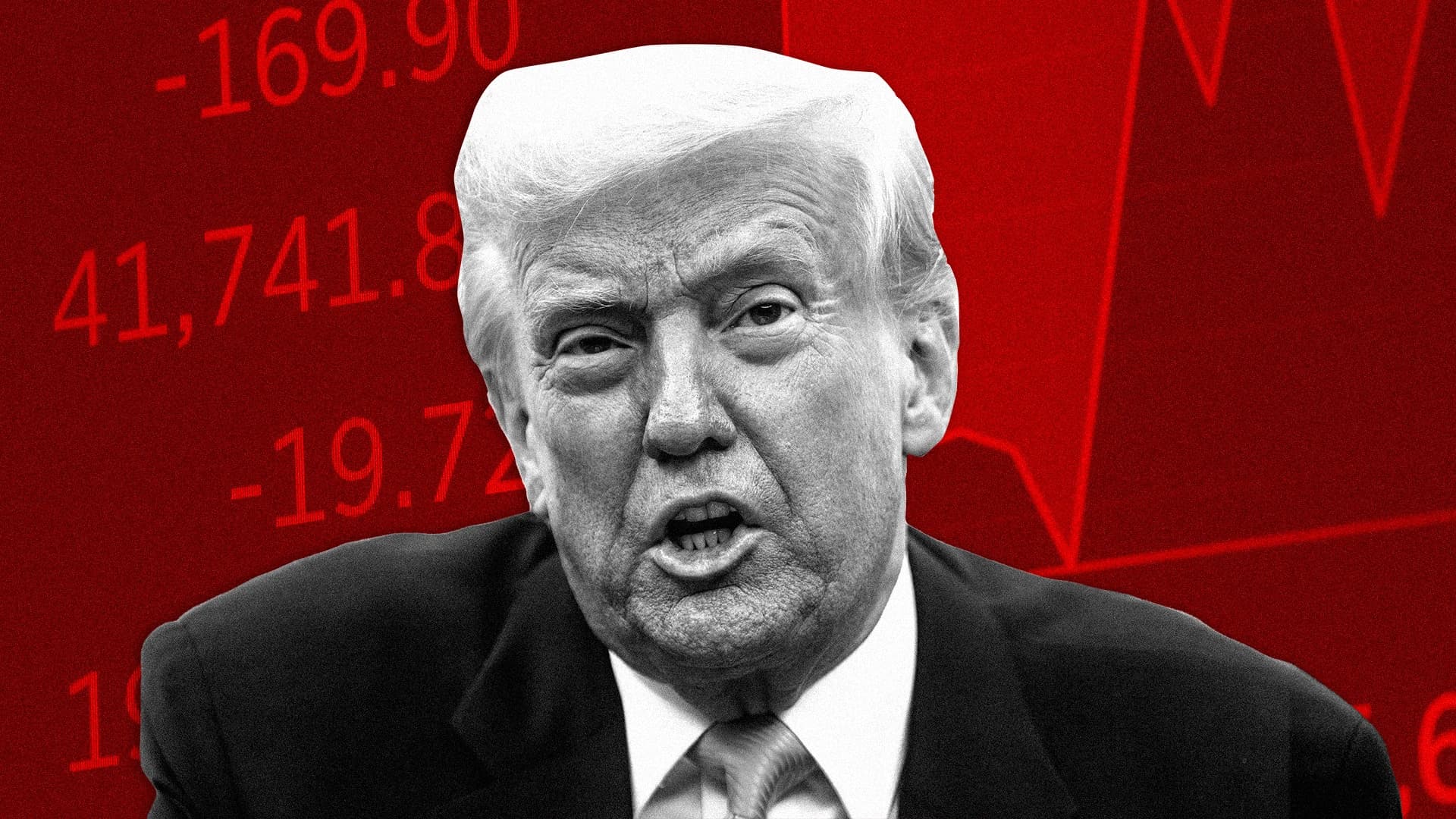
U.S. stocks plunged after President Donald Trump said he was considering a "massive increase" in tariffs on imports from China and headlines flagged a surprise jobs loss for February, feeding fresh volatility across equities, commodities and bond markets. CNN's John Towfighi reported that "US stocks closed sharply lower Friday" as the Dow fell 879 points, or 1.9%, the S&P 500 dropped 2.71% and the Nasdaq Composite slid 3.56%, with the S&P shedding roughly $1.56 trillion in market value in one day, according to FactSet data.
Trump's social media post included the line "There is no way that China should be allowed to hold the World 'captive'" over rare-earth exports, and Investopedia cited what Trump told reporters aboard Air Force One: "I don't want anything to go down, but sometimes you have to take medicine to fix something," according to reports. Investopedia also noted that unconfirmed reports the tariffs might be delayed were "quickly denied by the White House."
Energy markets moved sharply as well. Yahoo Finance headlined oil "tops $90," and other snippets in the coverage described oil as surging to its highest price since 2023. CNN quoted Robert Yawger, a commodity specialist at Mizuho Securities, saying the flare-up in tensions "stoked concerns of a 'demand destruction event,' where a trade war weighs on economic growth and demand for oil." Yawger added, "It’s a mini mirror image of what happened in April," referring to a prior spring slump in oil tied to recession fears.
Monetary and macro context added to the swings. A Bloomberg Closing Bell segment noted that Federal Reserve Chair Jerome Powell's remarks earlier in sessions had reinforced bets on an October rate cut amid labor-market weakness, and that two-year yields had "hovered near the lowest since 2022." The Bloomberg transcript said Powell also indicated the central bank may stop shrinking its balance sheet in the coming months, a move described as "a key move to preserve liquidity in overnight funding markets."
The week showed extreme intraday moves and sharp reversals across sessions. Investopedia reported that on Monday the Dow "closed 0.9% lower, a decline of about 350 points, after rising as much as 2.3% during a brief surge" and that the blue-chip index swung more than 2,500 points between its low and high within the first hour. Investopedia added that the major indexes "were coming off their worst week since the early days of the Covid pandemic in March 2020," saying the S&P 500 had declined 10.5% over two days and the Dow lost nearly 4,000 points in that stretch.

By contrast, PBS, citing AP Business Writers Matt Ott and Elaine Kurtenbach, recorded a dramatic relief rally earlier in the week when "the Dow Jones Industrial Average shot to a gain of 2,962 points, or 7.9%," the Nasdaq leaped 12.2% and the S&P logged its third-best day since 1940, with the S&P rising by 474.13 points to 5,456.90. PBS also noted that Delta Air Lines "soared 23.4%" after pulling financial forecasts for 2025 and reported international moves including London's FTSE 100 down 2.9%, Tokyo's Nikkei 225 down 3.9% and Shanghai up 1.3%.
Financial firms are recalibrating risk. Investopedia reported Goldman Sachs analysts told clients they are cutting their 2025 GDP forecast and raising their recession probability to 45% from 35%, citing a "sharp tightening in financial conditions, foreign consumer boycotts, and a continued spike in policy uncertainty that is likely to depress capital spending by more than we had previously assumed."
The coverage contains different index figures tied to separate sessions: CNBC's live-updates headline said "Dow falls 500 points"; CNN reported the 879-point Friday drop; Investopedia described a roughly 350-point Monday close and the 2,500-point intraday swing; PBS recorded the nearly 3,000-point Wednesday rally. Readers should note those numbers reflect distinct trading days and swings captured by the various sources. A photo in the CNN coverage was credited to Timothy A. Clary/AFP/Getty Images.
Beyond market math, sustained policy-driven volatility, surprise employment data and higher energy costs raise risks for households and communities. Lower asset values, job losses and rising fuel bills tend to hit lower-income families hardest, with consequences for financial security and access to health care and public services. Policy clarity and targeted support will matter for both markets and the social safety net as the situation evolves.
This article was produced by Prism’s automated news system from verified source data, official records, and press releases, then run through automated quality and moderation checks before publishing. The system is built and supervised by the people who set the standards it runs under. Read our full AI policy.
Did this article answer your question?