Markets Waver as Iran Ceasefire Talks Raise Oil Supply Concerns
Brent crude surged above $103 a barrel for a 42% monthly jump as U.S.-Iran ceasefire talks sent Wall Street swinging, with Iran rejecting a 15-point U.S. peace plan.
Brent crude holding above $103 a barrel tells you everything about what a near month-long war has done to global energy markets. The war, launched by the U.S. and Israel on February 28, has roiled energy and stock markets worldwide, disrupted shipping, and resulted in casualties across the Middle East. On Wednesday, Wall Street staged a tentative rally on ceasefire hopes, only to face a fresh wave of Iranian rejections that sent traders scrambling to recalibrate.
U.S. stocks rose Wednesday and global oil prices fell, as traders and investors were buffeted by constant headlines about the war in Iran. The S&P 500 index was up about 0.4%, the Nasdaq Composite closed 0.7% higher, and the Dow jumped 305 points. Commercial aerospace and CPU-related stocks led the rally. The gains proved fragile: reports that Iran had responded negatively to the proposal briefly knocked index futures off their pre-market highs and lifted oil prices off their morning lows.
The diplomatic picture remained deeply contradictory. The White House insisted that peace talks with Iran are ongoing, even as Tehran publicly rejected U.S. overtures and issued fresh conditions of its own. Trump's envoys sent a 15-point ceasefire plan to Iran via Pakistan, which stated it is ready to host peace talks. According to people familiar with the matter, Washington's plan stipulates that Iran dismantle its main nuclear facilities and use a reduced missile arsenal in self-defense only. Iran's foreign minister told state media the country had no intention to hold talks with the United States, though a U.S. proposal is being reviewed by top authorities in Tehran. Iranian Foreign Minister Abbas Araghchi said that an exchange of messages between the two countries via mediators "does not mean negotiations with the U.S."
Iran's state media outlined its own counter-demands. State media said Iran would reject the U.S. ceasefire offer and had laid out its own list of conditions; Press TV, citing a senior political-security official, reported that Iran's five-point counteroffer would give Tehran control over the Strait of Hormuz. Iran also wants guarantees that the U.S. and Israel will not resume attacks, reparations for damages, and recognition of its authority over that critical waterway. President Trump insisted Iran was desperate to make a deal, telling congressional Republicans Wednesday night: "They want to make a deal so badly, but they're afraid to say it."
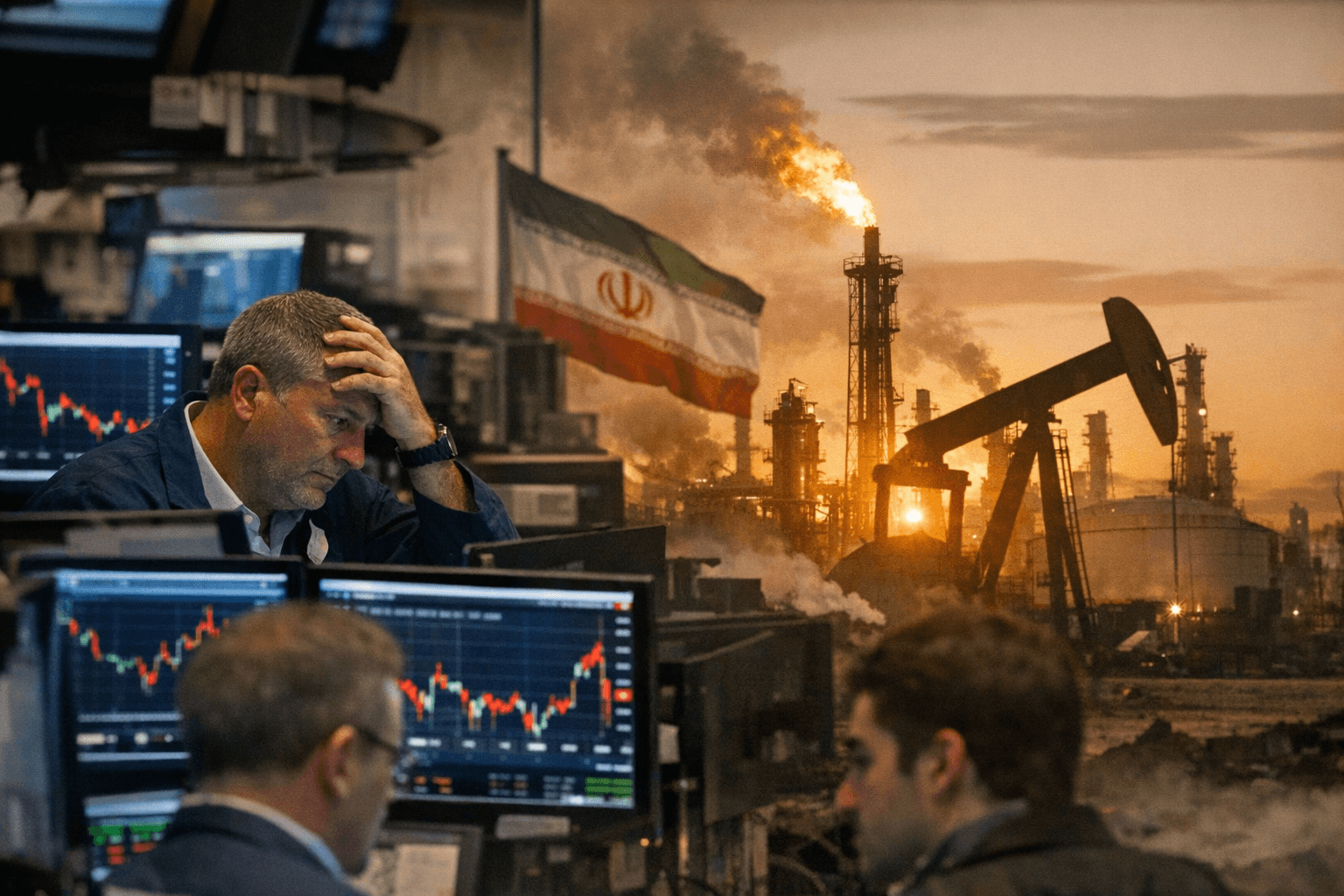
The energy stakes could hardly be higher. Oil climbed as the U.S. and Iran offered conflicting comments on efforts to end the war that has shuttered the Strait of Hormuz, choked off swathes of crude production, and stoked concerns of a global energy crisis. On Monday, just five ships passed through the strait, according to data compiled by S&P Global Market Intelligence. On Tuesday, the total was six. On many days since the war started, not a single ship has passed through. Brent crude futures hit $103.35 per barrel on Wednesday, up 1% on the day and set for a 42% jump for the month. Brent then settled at $102.22 a barrel after sliding 2.17% on the day as ceasefire hopes briefly lifted sentiment. On Thursday, oil rose again after Iran signaled it had no intention of holding direct talks; Brent added 1.95% to $104.21 per barrel.
Matthias Scheiber, senior portfolio manager and head of the Multi Asset team at Allspring Global Investments, captured the market's central dilemma: "If you look at what the U.S. wants to achieve, what Israel wants to achieve, and what Tehran wants to achieve, it will be very hard to reconcile all these points." He added: "We still think there is a case to make for structurally higher energy prices for the moment."
The inflationary pressure from soaring oil prices has reshaped Federal Reserve expectations entirely. The 10-year U.S. Treasury yield hovered around 4.4%, near its highest level since August 2025, driven by ballooning inflation expectations and the pricing out of Fed rate cuts. While markets have begun pricing in the risk of rate hikes amid elevated inflation expectations, TD analysts said the Fed is more likely to remain in a "wait and see" mode, with its leadership still leaning toward rate cuts later in 2026. Bets on rate hikes briefly gained traction before being pared back. The dollar held firm near recent highs, on track for a 2% monthly gain.
Asian markets reflected the month's damage. Japan's Nikkei edged up 0.6% in early trading Thursday but remains 10% below its pre-conflict level. MSCI's broadest index of Asia-Pacific shares outside Japan edged 0.23% lower, set for an 8.7% monthly decline, its steepest since October 2022. South Korean stocks fell 1.2%. Chinese equities listed in the U.S. outperformed, with the Nasdaq Golden Dragon China Index closing up 1.86%; JD.com surged 8.3%, Kingsoft Cloud gained 6.71%, and PDD Holdings jumped 4.61% after its earnings release.
Chris Weston, head of research at Pepperstone, said: "While the headline flow points to a more constructive tone, markets remain unsure which signals to trust and act upon." He added: "Price action suggests participants expect further twists and turns, even as the probability of a negotiated outcome edges higher."
Paul Stanley at Granite Bay Wealth Management argued the volatility does not yet signal capitulation: "We haven't seen a major drawdown, and that suggests retail investors are continuing to buy into weakness." He sees a potential catalyst on the horizon: "If tensions begin to ease, institutions may have to move quickly off the sidelines, and that could create a powerful rebound." Earnings season beginning in mid-April may also help markets refocus on fundamentals, the economy, and artificial intelligence, away from the daily churn of ceasefire headlines.
Since the war started, markets have experienced several days of whipsaw action driven by back-and-forth statements, with analysts at Bespoke Investment Group writing in a client note: "There's really no way to know at this point what the facts are regarding the state of negotiations, as neither side has any real incentive to conduct talks via the press." Until the Strait of Hormuz reopens, that uncertainty is the price of admission for every investor in the room.
This article was produced by Prism’s automated news system from verified source data, official records, and press releases, then run through automated quality and moderation checks before publishing. The system is built and supervised by the people who set the standards it runs under. Read our full AI policy.
Did this article answer your question?

