Maryland man gets 15 months for online hate threats against Black, Muslim communities
A federal judge gave Raymond Pumphrey 15 months for a stream of online threats that targeted Black and Muslim communities and politicians, followed by 3 years of supervision.

A federal judge in Baltimore sentenced Raymond Pumphrey, 47, of Brooklyn, Maryland, to 15 months in prison for posting threats that targeted Black and Muslim communities online. U.S. District Judge Adam B. Abelson also ordered three years of supervised release after Pumphrey completes the prison term.
Pumphrey used YouTube and other social media sites to spread hateful rhetoric and threaten violence. The posts included threats to kill Black people in multiple large U.S. cities and threats against politicians and members of their families. He was charged with making threats transmitted by interstate communication, a federal offense that carried a maximum penalty of five years in prison.

Pumphrey pleaded guilty on February 19, 2026, and sentencing had been set for June 29 at 10 a.m. Assistant U.S. Attorney Michael Aubin handled the case, and U.S. Attorney Kelly O. Hayes credited investigators from FBI Baltimore and U.S. Secret Service Baltimore.
CAIR Maryland welcomed the guilty plea on February 20, 2026: the threats caused fear and trauma for families targeted by hate-fueled rhetoric and online intimidation. The group urged stronger protections against bias-motivated crimes.
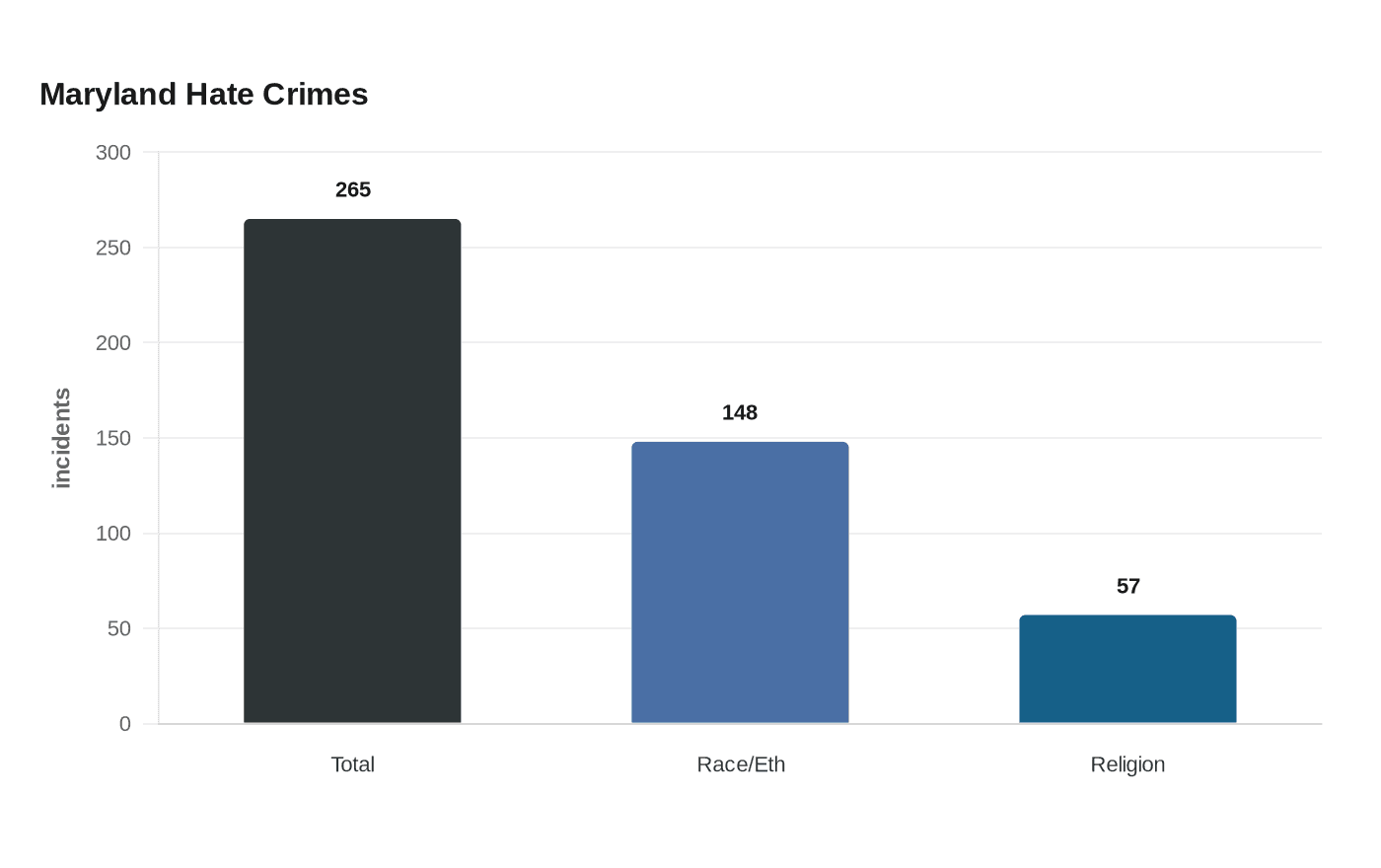
The FBI counted 11,679 hate crime incidents and 14,243 victims nationwide in 2024. Maryland recorded 265 total hate crimes in 2023, including 148 race, ethnicity or ancestry incidents and 57 religion incidents.
Maryland Attorney General Anthony G. Brown announced guidance for residents, schools, businesses, nonprofits and community groups on responding to online hate, harassment and cyberbullying on May 27, 2026. It covers how to preserve evidence and report incidents.
This article was produced by Prism’s automated news system from verified source data, official records, and press releases, then run through automated quality and moderation checks before publishing. The system is built and supervised by the people who set the standards it runs under. Read our full AI policy.
Did this article answer your question?