Mattel raises profit forecast, tops sales estimates as entertainment gains grow
Mattel lifted its profit outlook after first-quarter sales rose to $862 million, as entertainment and licensing gains helped offset softer North American demand.
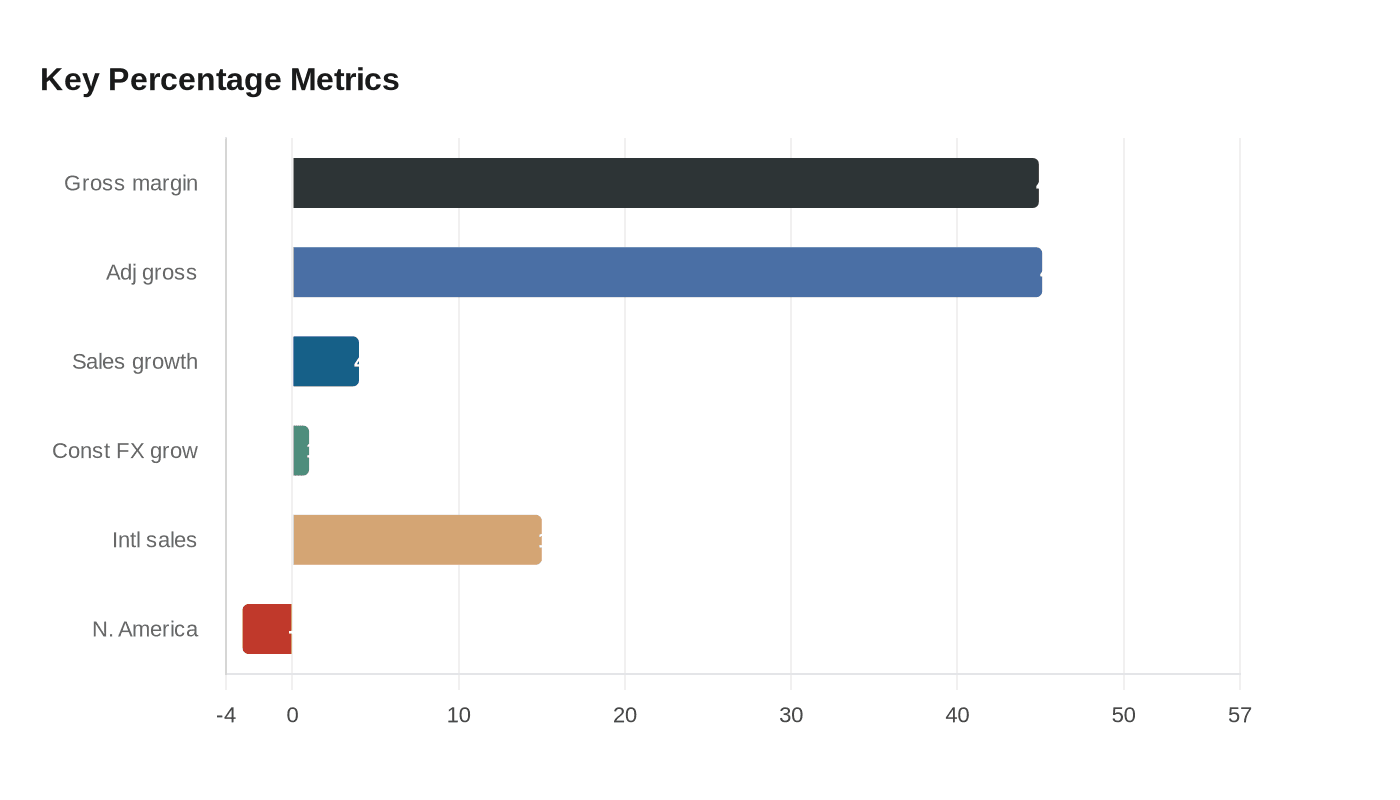
Mattel is leaning harder on movies, games and licensing to carry a toy business that is still selling, but no longer relying on toys alone. The El Segundo, California, company raised its annual profit forecast after first-quarter 2026 net sales rose to $862 million, up 4% as reported and 1% in constant currency, beating Wall Street’s sales estimate and signaling that its franchise strategy is gaining traction.
The quarter was mixed on the surface. Gross margin slipped to 44.9% from stronger levels a year earlier, while adjusted gross margin was 45.1%. Mattel reported an operating loss of $103 million and an adjusted operating loss of $70 million, yet it still posted net income of $61 million, reversing a loss of $40 million in the same period a year ago. The company also repurchased $200 million of shares and kept its full-year buyback target at $400 million.
Chief Executive Ynon Kreiz said Mattel was seeing “top-line acceleration” in second-quarter-to-date business and pointed to the June 5, 2026 global theatrical release of Masters of the Universe as a key catalyst. Chief Financial Officer Paul Ruh said the company was seeing momentum and expected to achieve full-year 2026 guidance.
The numbers underscore how central the entertainment pivot has become. Mattel’s 2025 filings describe it as a “leading global play and family entertainment company,” and the company has spent the past year sharpening a brand-centric model built around Barbie, Hot Wheels, Fisher-Price, American Girl, Thomas & Friends, UNO, Masters of the Universe, Matchbox, Monster High, MEGA and Polly Pocket. That push is meant to turn characters and brands into longer-lived revenue streams through films, franchise development, licensing and digital partnerships.
Mattel has accelerated that effort in 2026. The company completed full ownership of Mattel163 in early March and said its digital strategy will now include integration of the mobile games studio and the launch of two self-published mobile games. On March 31, Mattel and Amazon MGM Studios debuted the official trailer for Masters of the Universe, adding marketing momentum ahead of the film’s June release. Mattel also announced a multi-year global licensing partnership with Paramount for Teenage Mutant Ninja Turtles Matchbox, another sign that it wants tighter control over how it monetizes intellectual property across categories.
Regional performance showed the limits of the old toy model and the value of broader reach. First-quarter sales rose 15% in international markets but fell 3% in North America, suggesting demand abroad is helping offset a softer domestic backdrop. For investors, the key question is whether that mix represents durable demand or a temporary lift from entertainment and franchise-driven buzz. For now, Mattel has shown it can still grow sales while reworking itself into something closer to an IP company than a pure toy maker.
This article was produced by Prism’s automated news system from verified source data, official records, and press releases, then run through automated quality and moderation checks before publishing. The system is built and supervised by the people who set the standards it runs under. Read our full AI policy.
Did this article answer your question?
%3Amax_bytes(150000)%3Astrip_icc()%2FCertificate-of-deposit-2301f2164ceb4e91b100cb92aa6f868a.jpg&w=1920&q=75)