McCartney joins Colbert for final Late Show farewell at CBS
Paul McCartney closed Colbert’s final Late Show with Hello, Goodbye as CBS retired the 33-year franchise after a financial call.
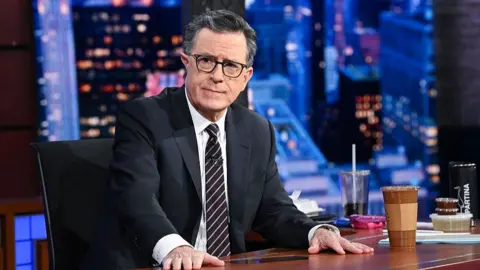
Paul McCartney helped Stephen Colbert bring down the curtain on The Late Show with Stephen Colbert, singing Hello, Goodbye with Colbert and the band in a farewell that doubled as a signal of how much television has changed. The final episode aired Thursday, May 21, 2026, and turned the Ed Sullivan Theater in New York City into a reunion room for a format that once sat at the center of American nightly life.
CBS had announced in July 2025 that it would end the show in May 2026 and retire the Late Show franchise after 33 years. The network called the move a purely financial decision and said it was not tied to the show’s performance or content, a distinction that underscored the pressures facing late-night television as audiences drift across streaming, clips and fragmented digital feeds. Colbert had hosted the program for about 11 years, taking over in September 2015 after David Letterman’s long run ended.
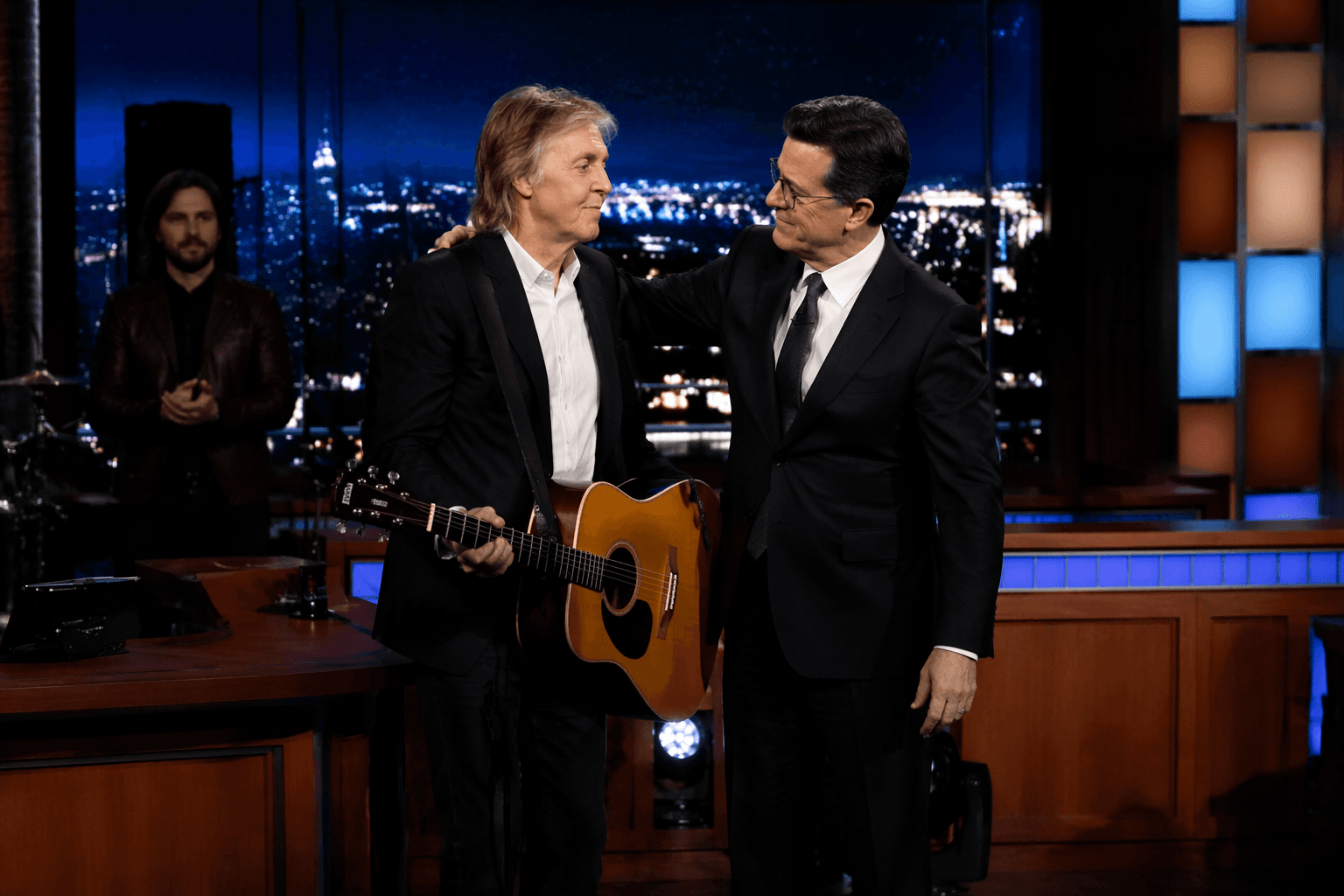
The finale packed in a roster that looked like a sendoff for an entire entertainment ecosystem. Alongside McCartney, the broadcast featured David Letterman, Bryan Cranston, Paul Rudd, Ryan Reynolds, Jon Stewart, Jimmy Kimmel, Jimmy Fallon, Seth Meyers, John Oliver, Neil deGrasse Tyson, Tig Notaro, Tim Meadows, Elvis Costello, Jon Batiste and Louis Cato. Colbert chatted with McCartney before joining him on stage for the performance, and Costello and Batiste were among those who added to the final musical moment.
McCartney’s presence carried special historical weight because The Beatles’ 1964 debut at the Ed Sullivan Theater helped turn the venue into a cultural landmark. At the end of the show, McCartney was given the ceremonial duty of turning out the lights, a symbolic handoff from one era of mass-audience television to another that no longer exists in the same form. The finale reportedly ran about 20 minutes longer than the show’s usual one-hour slot, stretching the goodbye just a little further than the schedule allowed.
Letterman, who hosted the franchise from 1993 to 2015 before Colbert took over, called the cancellation a huge mistake. His reaction reflected more than nostalgia for one program. It pointed to the shrinking role late-night hosts once played as shared national figures, when a single network stage could still gather politicians, comedians, musicians and viewers around one cultural reference point. Colbert’s final broadcast showed how rare that kind of reach has become.
This article was produced by Prism’s automated news system from verified source data, official records, and press releases, then run through automated quality and moderation checks before publishing. The system is built and supervised by the people who set the standards it runs under. Read our full AI policy.
Did this article answer your question?