McDonald’s Centralized Crew Trainer Resources Standardize Training Pathways and Assessments
McDonald’s centralized crew trainer and coach materials standardize station training, tie skill reporting to scheduling, and define interview and on‑job evaluation steps for trainer qualification.
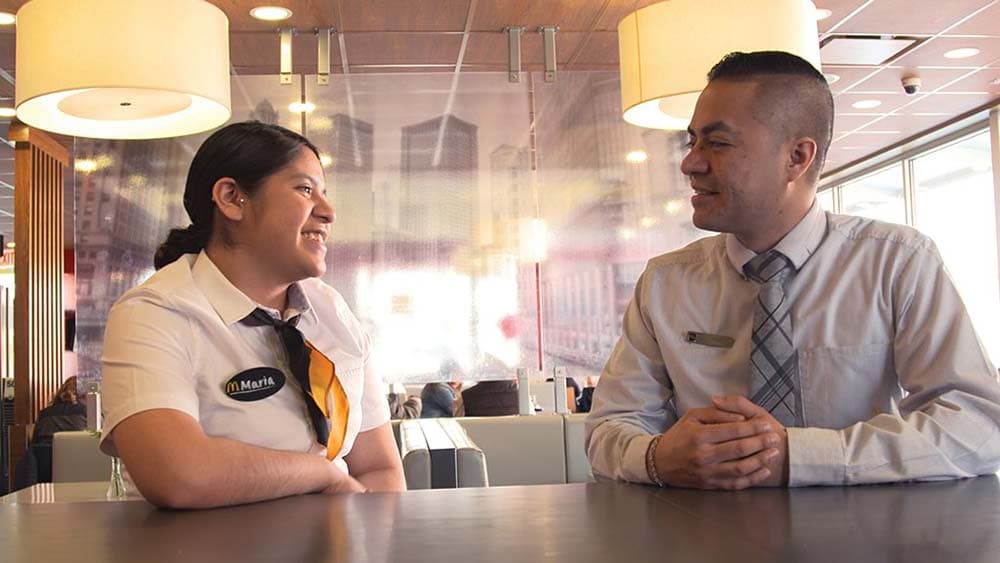
McDonald’s has consolidated a set of Crew Trainer and Coach resources intended to standardize frontline training across restaurants and make skill levels visible to scheduling systems. The package centers on station‑specific modules, a defined candidate assessment pathway and two linked reporting tools that managers and owners must use to track readiness and assign shifts.
At the center of the system is FRED and two reporting tools used by trainers. “The Training Tracking Report lets the Trainer assign credit for trackable FRED content,” one Playbook extract notes, while “Skill Level Reporting tracks eRestaurant station skill levels, which then communicates the crew’s station ratings to eRestaurant for scheduling.” Both training tracking and station skill views can be pulled by employee or by station, giving managers data to match staffing to demand. The Playbook specifies that “Your Owner/Operator must give permission for eRestaurant to send skill level information to Fred@McD by accepting the Skill Level Report DataPass agreement,” making owner sign‑off a gating step for automated schedule integration.
Training content is organized by station and trainee type. Core station modules named across internal materials include Hospitality, Fries and Fryer (also listed as Fries & Hashbrowns), Grill, Beverages, and Service or order taking, with Foundations modules such as “Making Our Food.” Kilroyfamilymcd’s deployment index lays out separate pathways for “BRAND NEW CREW, NEW-TO-ROLE CREW, RETURNING CREW” and instructs that “Hospitality and Foundations are important training for all Crew Members, no matter what station they’re working! It is highly recommended that all new Crew Members start with these modules, and you can train everyone as a group.” The same Playbook invites managers to consider reopening scenarios and asks managers to assess factors such as “How many brand new Crew members will you have?” and “How much time will you have to train.”
Becoming a certified Crew Trainer follows a consistent candidate process in McDonald’s corporate guidance. Prospective trainers face a face‑to‑face interview that “will last for around 30 minutes” and an On the Job Evaluation; “You will then complete a 2 hour OJE working on the floor. This will give the interviewer an insight into how you perform in the restaurant.” Candidates also conduct an OJE training session in a customer facing role where they “will complete a training session on another employee,” preparing by reviewing the relevant FRED module and Verification. The three‑step method candidates must apply is “See It, Try It, Check It.” After the session “your Manager will review the interview and OJE feedback and if you are successful enrol you onto the Crew Trainer Journey. If unsuccessful, you will receive feedback from your manager.”
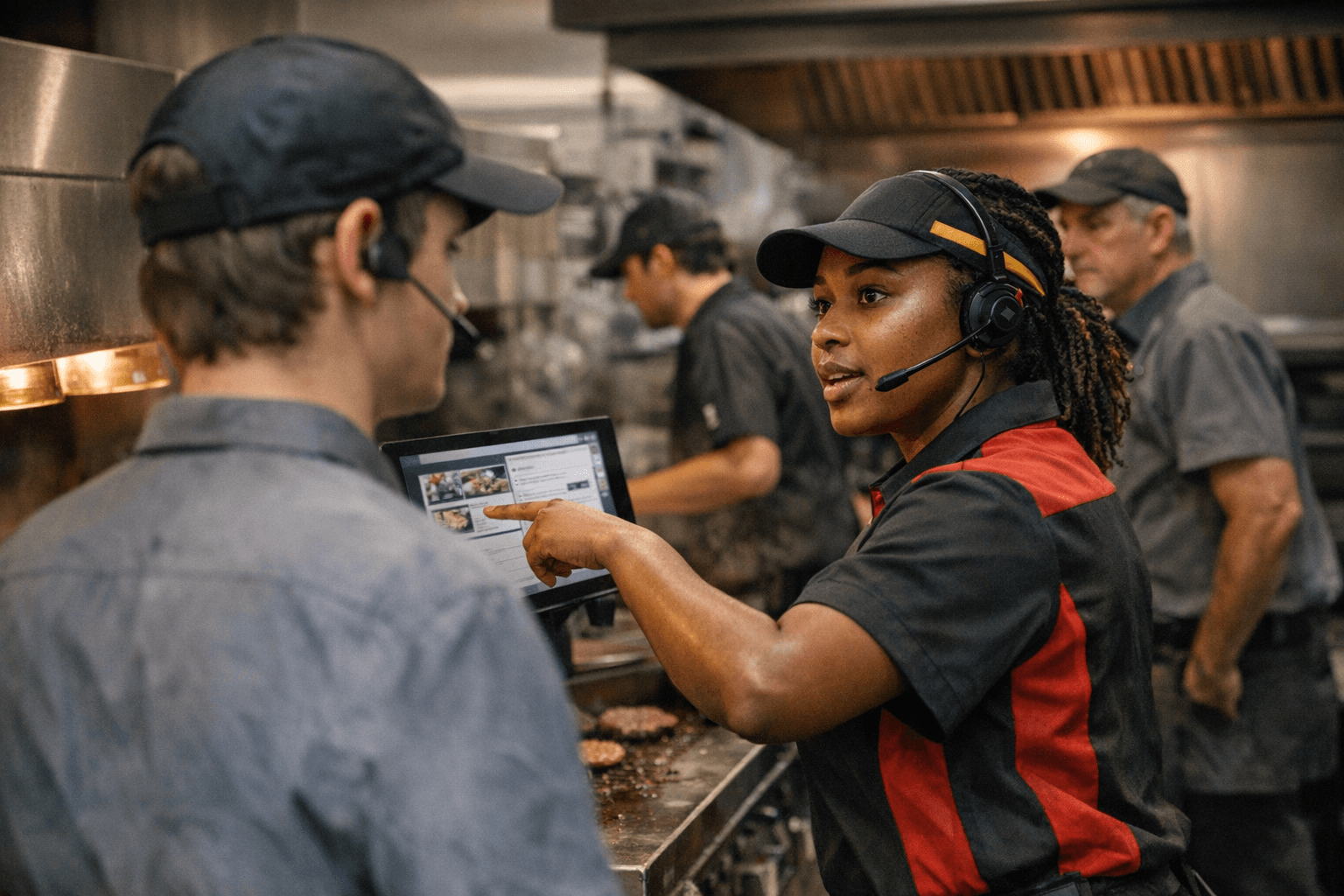
Trainer competencies emphasize mindset and coaching technique alongside operational skills. Study lists used for Crew Trainer preparation include “Roles of a Crew Trainer, Importance of Mindset, Training and Coaching, Improving Guest Experience, Coaching Process, Learning Styles and Gold Standard.” Redgames Learning frames the portal as: “Access useful tools and resources for Crew Academy here. A Crew Trainer / Coach's Guide. Your guide to delivering a successful training experience for new crew.”
The system sits alongside standard HR and safety expectations at the restaurant level. A local owner/operator bio used in HR materials profiles Carrie, noting she founded a nonprofit and later became an owner/operator who “will be your Owner/Operator contact should you need one.” The HR packet includes SDS and hazard communication instruction in a 16‑section format and lists required training such as “HOW TO IDENTIFY HAZARDOUS CHEMICALS” and “HOW TO READ AND UNDERSTAND WARNING LABELS AND SAFETY DATA SHEETS.”
For crew and managers, the changes mean more consistent on‑the‑job expectations and clearer pathways for advancement to Crew Trainer, while also making owner acceptance of data sharing a practical step that affects how skill ratings influence scheduling. The next phase for reporters and practitioners is to confirm whether owners across markets have accepted the Skill Level Report DataPass agreement, how widely FRED tracking is in use, and how the Crew Trainer Journey is affecting shift assignments on the floor.
Know something we missed? Have a correction or additional information?
Submit a Tip