Melinda French Gates adds $215 million to women’s health push
Melinda French Gates added $215 million to Pivotal, lifting her women’s health giving to $600 million in two years as menopause care gaps persist.
Melinda French Gates added $215 million to Pivotal to expand women’s reproductive and midlife health work, pushing her total support for women’s health to $600 million over the past two years. The new money arrives as menopause remains one of the most common and least consistently treated transitions in primary care, even though it affects all those assigned female at birth and can bring hot flushes, night sweats, joint pain, low mood, vaginal dryness and sleep disturbances.
The funding underscores a problem that is bigger than any one philanthropist. A 2025 survey-based study found that most women with troublesome menopausal symptoms still do not receive effective, evidence-based therapy, despite the availability of safe hormonal and non-hormonal treatments. The consequences spill into daily life and the broader economy: untreated symptoms can disrupt sleep, concentration and work participation, while longer-term health risks, including cardiovascular disease, raise the stakes for earlier recognition and better follow-up.
Policy makers are trying to catch up. In May 2024, a bipartisan group of women senators introduced the Advancing Menopause Care and Mid-Life Women’s Health Act, which would authorize $275 million over five years for federal research, provider training and public education. A new version of the bill is listed in the 119th Congress, signaling that menopause care has moved from a private discomfort to a national health-system issue that lawmakers now see as worthy of federal action.
The legislative push reflects a gap in training and access that many patients encounter in ordinary office visits. The Menopause Society says its purpose is to equip health-care professionals to improve care during the menopause transition and beyond, while the American College of Obstetricians and Gynecologists maintains clinical guidance and patient resources on diagnosis and treatment. The very existence of those separate efforts points to uneven expertise in primary care, where many women still leave with no diagnosis, no treatment and no plan.
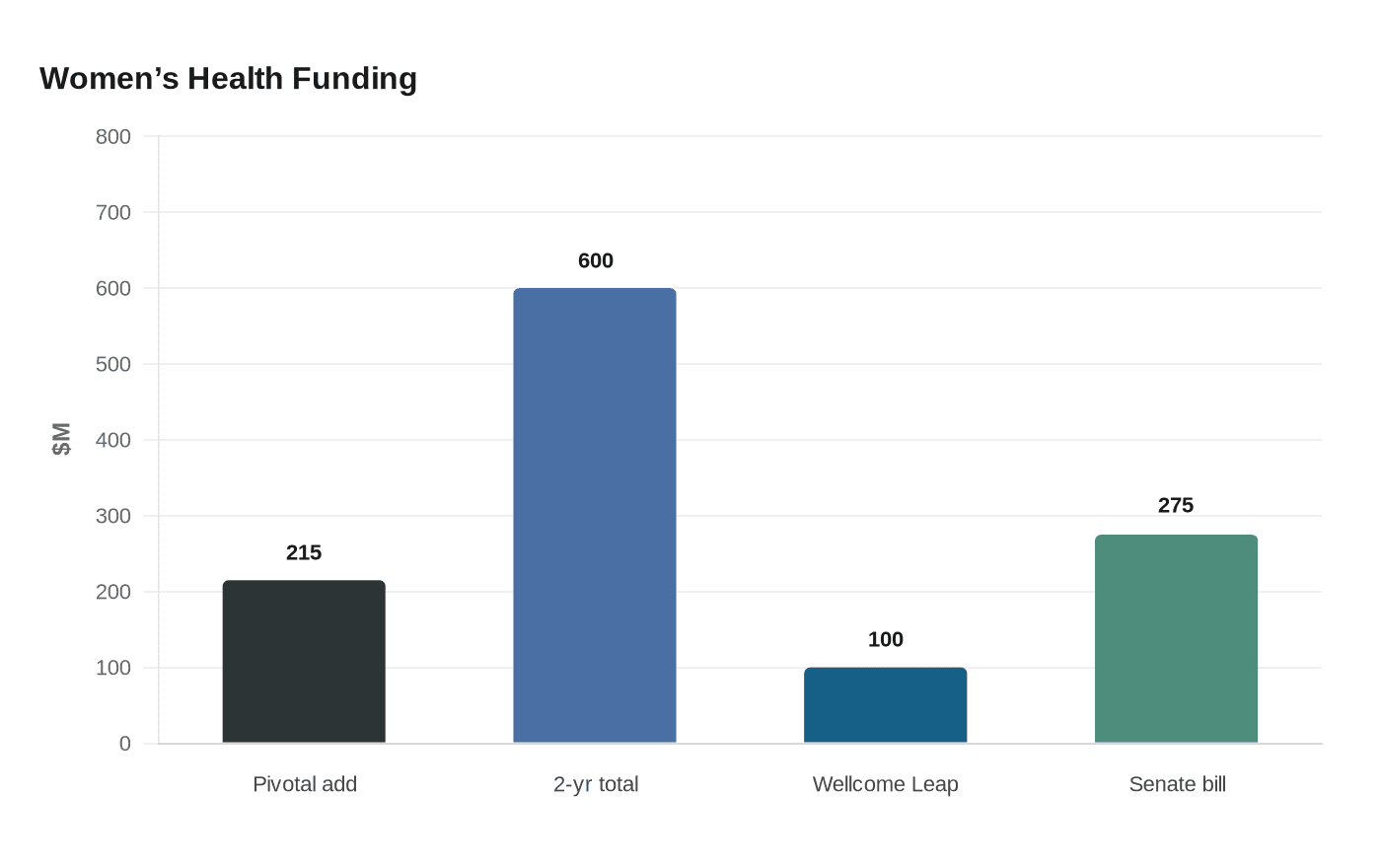
French Gates has been building that case for more than a year. In September 2025, she and Wellcome Leap announced a $100 million women’s health research partnership focused on cardiovascular health, autoimmune disease and mental health. The latest $215 million commitment widens that bet at a moment when the evidence base is clear and the policy window is open. The Lancet has called menopause a global health and wellbeing issue requiring urgent attention, and the new money suggests the next fight is not about whether the problem exists, but whether health systems will finally treat it as a priority.
This article was produced by Prism’s automated news system from verified source data, official records, and press releases, then run through automated quality and moderation checks before publishing. The system is built and supervised by the people who set the standards it runs under. Read our full AI policy.
Know something we missed? Have a correction or additional information?
Submit a Tip