Meloni secures Senate confidence on 2026 budget, clears major hurdle
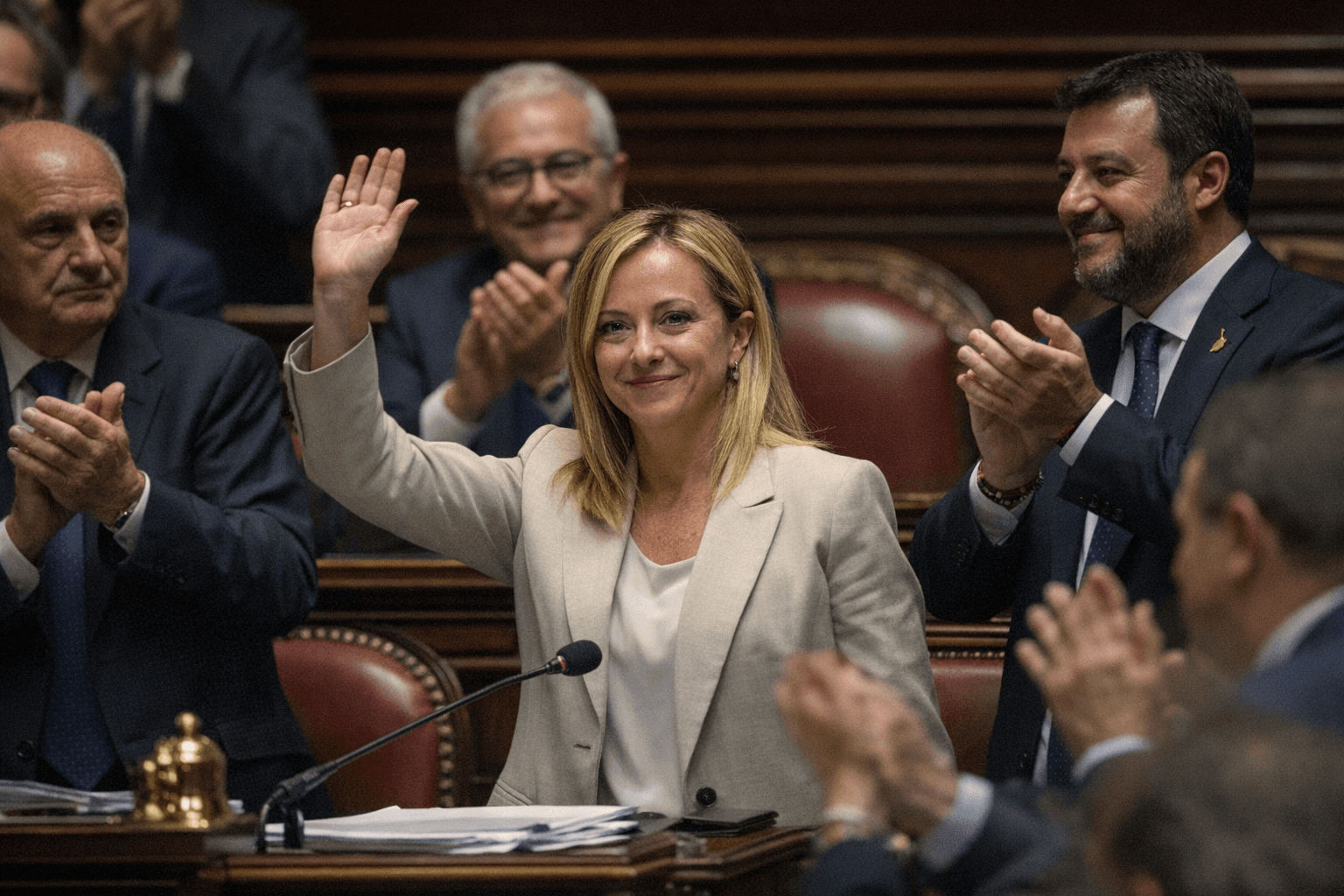
Prime Minister Giorgia Meloni’s government wins a Senate confidence vote on its draft 2026 budget, keeping the consolidated bill on track for final parliamentary approval before New Year. The outcome matters for Italy’s fiscal outlook because the plan aims to cut new borrowing below 3 percent of GDP while enacting €22 billion of new spending and tax measures.
Prime Minister Giorgia Meloni’s government wins a crucial vote of confidence in the Senate on its draft 2026 budget, clearing a central parliamentary hurdle one day before the Christmas recess and sending the consolidated bill to the lower house for final consideration. The Senate tally was widely reported as 113 in favor and 70 against, though some accounts recorded a slightly different count of 110 yes, 66 no and 2 abstentions. Parliamentary officials say the consolidated manoeuvre passed and will move to the Chamber of Deputies for debate scheduled on December 30.
The budget law includes roughly €22 billion of new spending and tax measures and is framed by the government as the tool to reduce Italy’s new borrowing to below 3 percent of gross domestic product in 2026. That objective is central to Rome’s stated plan to comply with European fiscal rules and to emerge from the EU’s excessive deficit procedure that has long constrained Italian policy choices. Italy enters the process with one of the highest debt ratios in the euro area, and European institutions have repeatedly urged faster deficit reduction.
The government linked a so called maxi amendment to the confidence motion, making passage in the upper house a required step to carry the consolidated text forward. Economy Minister Giancarlo Giorgetti participated in the parliamentary general discussion and allied senators defended a package that combines selective revenue measures with tax relief for workers. Parliamentary proceedings referenced a €43 billion figure in describing reductions in taxes on workers, and lawmakers identified revenue streams that include levies on non EU shipments, measures on short term rentals and higher taxation of financial transactions and financial income.
Opponents in parliament criticized elements of the manoeuvre during days of debate, arguing that politically chosen measures may weaken medium term fiscal consolidation or unevenly affect households and businesses. Supporters from the governing coalition, led by Meloni’s Fratelli d Italia party, pointed to claims made in the chamber that Italy meets 12 of 13 indicators under the European macroeconomic imbalance framework, an assertion used to argue that the budget balances corrective commitments with growth friendly measures.
With the Senate step complete, the bill faces a final round in the Chamber of Deputies. If lawmakers there approve the text on December 30, the budget is slated to come into force on January 1, 2026. The timing is tight, and parliamentary amendments in Montecitorio could alter specific revenue or spending lines. Rome will also be watching reactions in Brussels, where Commission monitors are expected to assess Italy’s path toward the sub 3 percent borrowing target and its broader fiscal trajectory.
The vote underlines the political trade offs facing the government as it seeks to meet European fiscal demands while delivering tax cuts and targeted spending that reflect campaign promises and coalition priorities. The coming days will determine whether the approved manoeuvre remains intact through the final legislative step or whether further revisions appear as deputies weigh the consolidated text.
This article was produced by Prism’s automated news system from verified source data, official records, and press releases, then run through automated quality and moderation checks before publishing. The system is built and supervised by the people who set the standards it runs under. Read our full AI policy.
Did this article answer your question?


