Mercedes-Benz Pledges $4 Billion to Alabama Plant, Citing Tariff Pressures
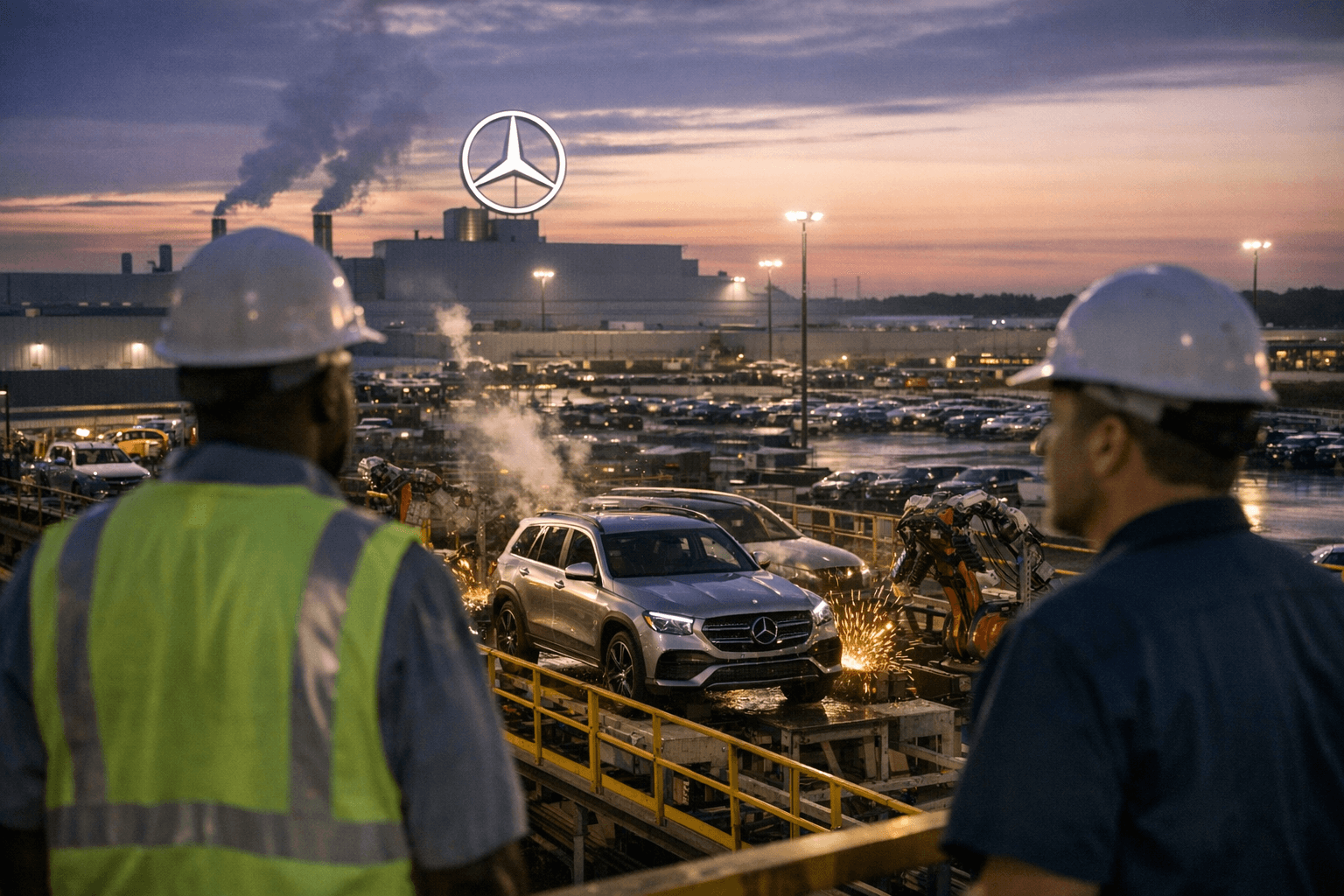
Mercedes-Benz pledged $4 billion to its Vance, Alabama plant through 2030, explicitly tying the investment to shielding margins from U.S. import tariffs on vehicles and parts.
Mercedes-Benz committed $4 billion to its Vance, Alabama assembly complex, tying the investment explicitly to U.S. tariff pressure and pledging to deepen the plant's role as the company's primary hub for high-volume SUV production through 2030.
The announcement, made at the Mercedes-Benz U.S. International facility in Tuscaloosa County on March 31, coincided with a milestone celebration: the plant's five-millionth vehicle rolling off the line after more than 30 years of operations in the state. Mercedes-Benz Group Chairman Ola Källenius described the newly refreshed GLE and GLS SUVs unveiled at the event as "symbols of our commitment to Alabama."
Jason Hoff, CEO of Mercedes-Benz North America, framed the $4 billion spend as a direct response to recent U.S. trade policy. Localizing production for high-volume models, Hoff said, "just makes good business sense" given the tariff environment now facing imported vehicles and parts.
The investment is structured to serve both near-term and longer-horizon goals. In addition to the refreshed GLE and GLS lines already running at Vance, the company said later phases will include localizing assembly of the compact GLC, a model currently built outside the U.S. That shift would further insulate Mercedes from duties on vehicles shipped from Europe.
U.S. Department of Transportation leadership and Alabama state senators attended the announcement and praised the commitment as a jobs and manufacturing win for the region. The plant already exports a significant share of its Alabama output, and the new capital injection is intended to preserve and expand that export role while simultaneously reducing tariff exposure on U.S.-market vehicles.
The $4 billion carries both defensive and offensive logic for the automaker. Producing more vehicles domestically shields margins from import duties, currency volatility and logistics costs. At the same time, expanded capacity at Vance positions Mercedes to scale production of luxury SUVs, among the most profitable segments in its global lineup.
Whether the Mercedes commitment prompts other foreign automakers to accelerate similar reshoring of U.S. assembly remains an open question, particularly as tariff, logistics and nearshoring pressures continue reshaping global production strategies. Local workforce training programs, supplier network buildout and infrastructure permitting timelines will ultimately determine how quickly the pledged capital converts into additional production lines at the Alabama complex.
This article was produced by Prism’s automated news system from verified source data, official records, and press releases, then run through automated quality and moderation checks before publishing. The system is built and supervised by the people who set the standards it runs under. Read our full AI policy.
Did this article answer your question?

%3Amax_bytes(150000)%3Astrip_icc()%2FCertificate-of-deposit-2301f2164ceb4e91b100cb92aa6f868a.jpg&w=1920&q=75)
