Merz and Lula tout EU-Brazil trade ties at Hannover fair
Merz and Lula used Hannover to push an EU-Mercosur deal that opens a market of more than 700 million people on May 1.
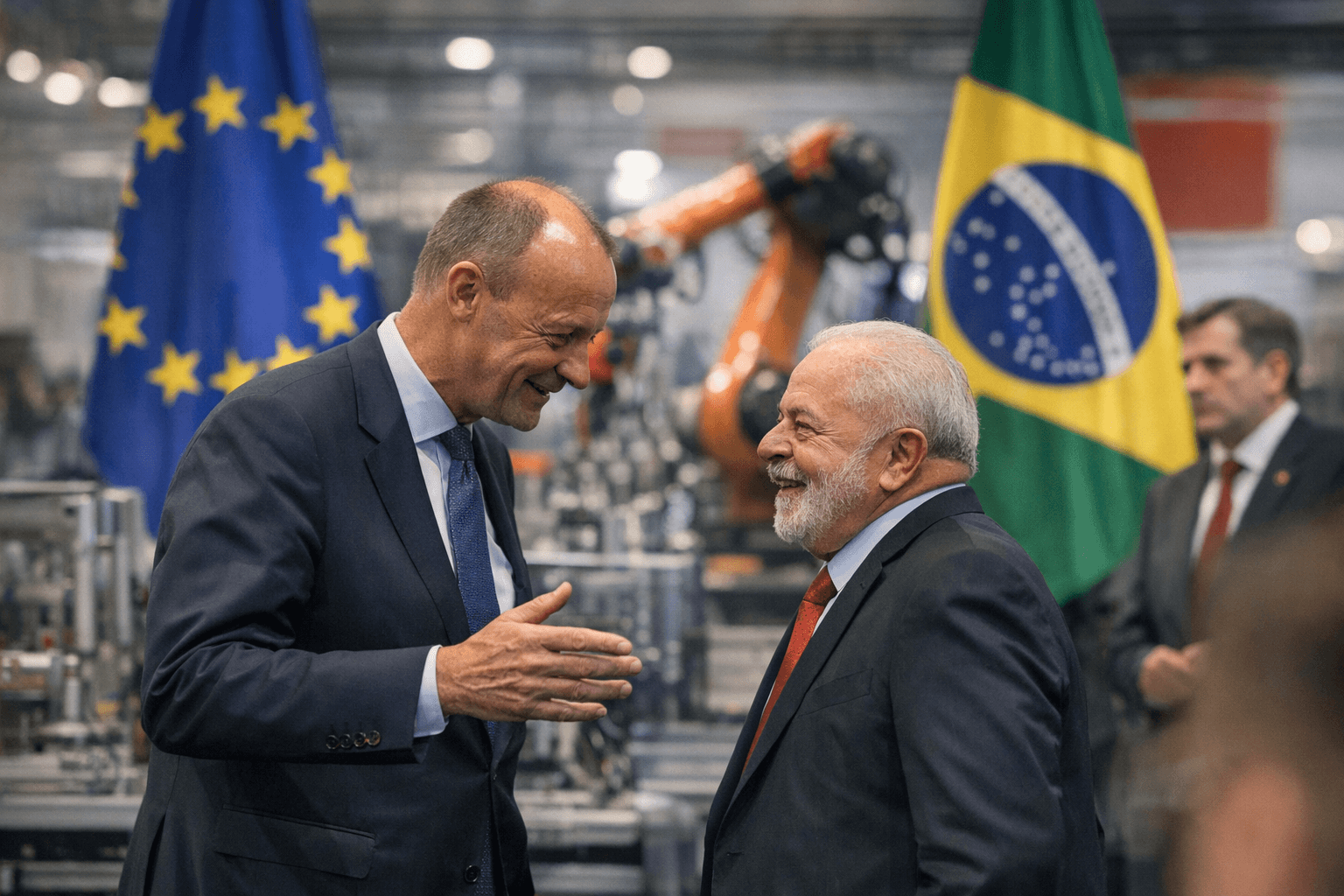
Friedrich Merz and Luiz Inacio Lula da Silva turned the opening of Hannover Messe into a pitch for industrial alignment, arguing that Europe and Brazil should deepen trade, investment and supply-chain ties just as protectionist pressure rises elsewhere.
Standing at a fair built around factories, automation and energy technology, the German chancellor and Brazilian president welcomed the EU-Mercosur agreement’s provisional entry into force on May 1. The deal links the European Union with Argentina, Brazil, Paraguay and Uruguay, and the European Commission says the bloc is Mercosur’s second-largest goods trading partner, with EU exports to the region totaling €57 billion in 2024. Services exports reached €29 billion in 2023, while EU foreign direct investment stock in Mercosur stood at €390 billion that year.
The political message was plain: neither side wants to be trapped in smaller economic blocs or forced into purely national industrial strategies. For Brazil, the agreement offers a way to strengthen its manufacturing base and export profile, especially in sectors showcased at Hannover under the theme “The Industry of Today,” from robotics and digital industries to energy technologies and machinery. For Germany, it offers a steadier foothold in a region where firms are looking for dependable partners as global competition intensifies.
The timing mattered. Hannover Messe 2026 is Brazil’s partner-country showcase, and the fair said more than 1,500 German companies already operate in Brazil. It also said Germany announced 41 new investment projects in Brazil between January and September 2025 worth US$3.5 billion, with more than 90% of that money going into manufacturing and electricity. That mix fits the broader logic of the deal: trade rules on paper, industrial capacity in practice.
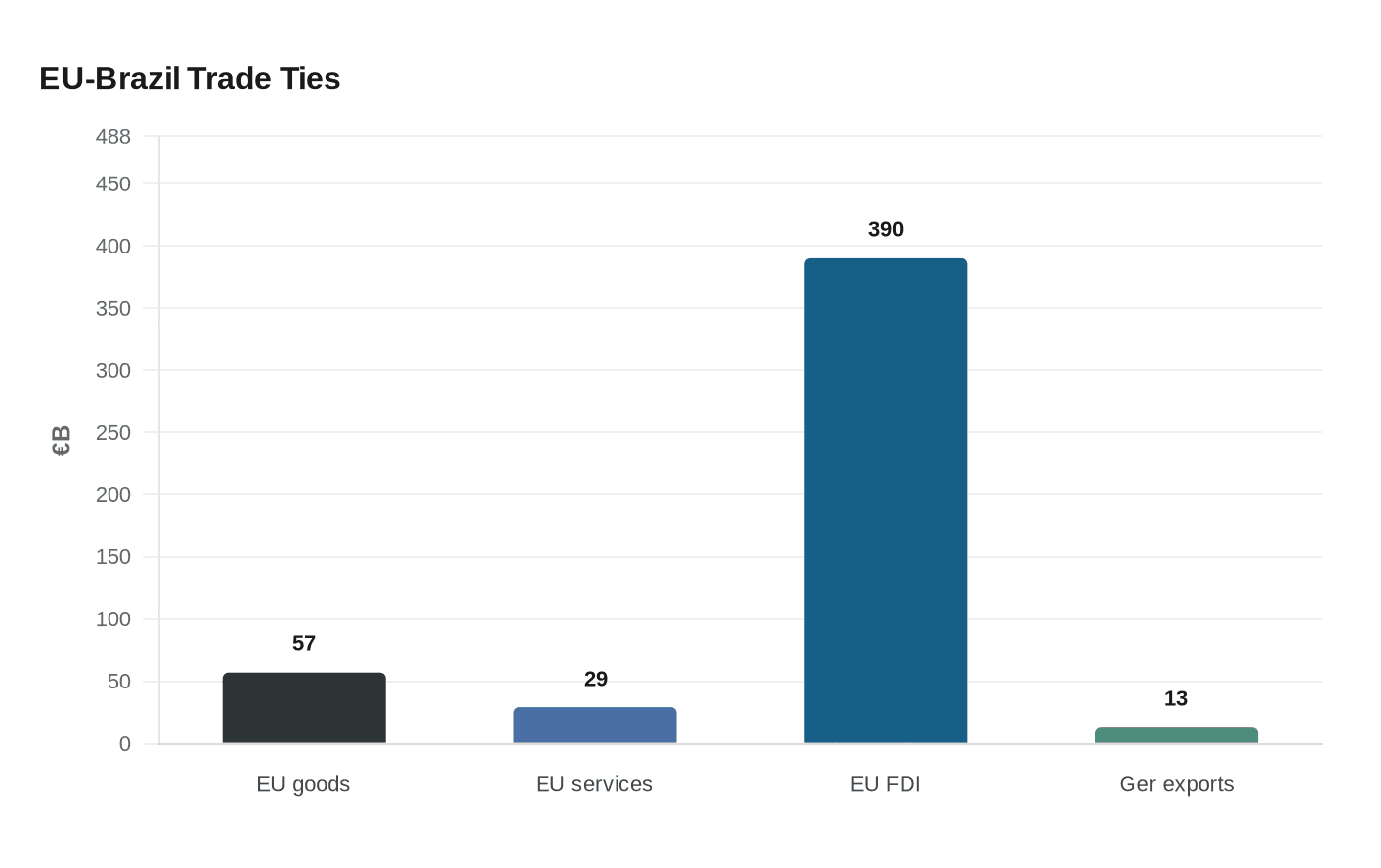
Merz, in remarks published by the German government, said Brazil is Germany’s most important trading partner in South America and said German firms exported more than €13 billion in goods to Brazil in 2024. He also said the EU-Mercosur agreement would make the participating economies stronger, more independent and more resilient.
The pact itself has become a test of whether large trade projects can still move ahead in a more fragmented geopolitical climate. The European Commission says the agreement aims to lower tariff and non-tariff barriers, boost trade and investment, and support sustainable development. Euronews reported that the Commission finalized provisional application from May 1 despite a legal challenge at the Court of Justice of the European Union and a parliamentary vote that had suspended ratification, while Germany and Spain pushed for faster access to new markets.
The deal caps more than 25 years of negotiations and would create a free-trade area of more than 700 million people, covering about a quarter of global GDP. France remains one of its loudest critics, with farmers warning about cheaper beef, poultry and sugar imports. In Hannover, Merz and Lula presented a different calculation: in a protectionist era, supply chains are a strategic asset, and Europe and Brazil are better off building them together.
This article was produced by Prism’s automated news system from verified source data, official records, and press releases, then run through automated quality and moderation checks before publishing. The system is built and supervised by the people who set the standards it runs under. Read our full AI policy.
Did this article answer your question?

