Merz urges voters to judge government on record, not AfD branding
Merz told AfD voters to "look closely" as Saxony-Anhalt heads toward a September 6 election where the far right could win power for the first time.

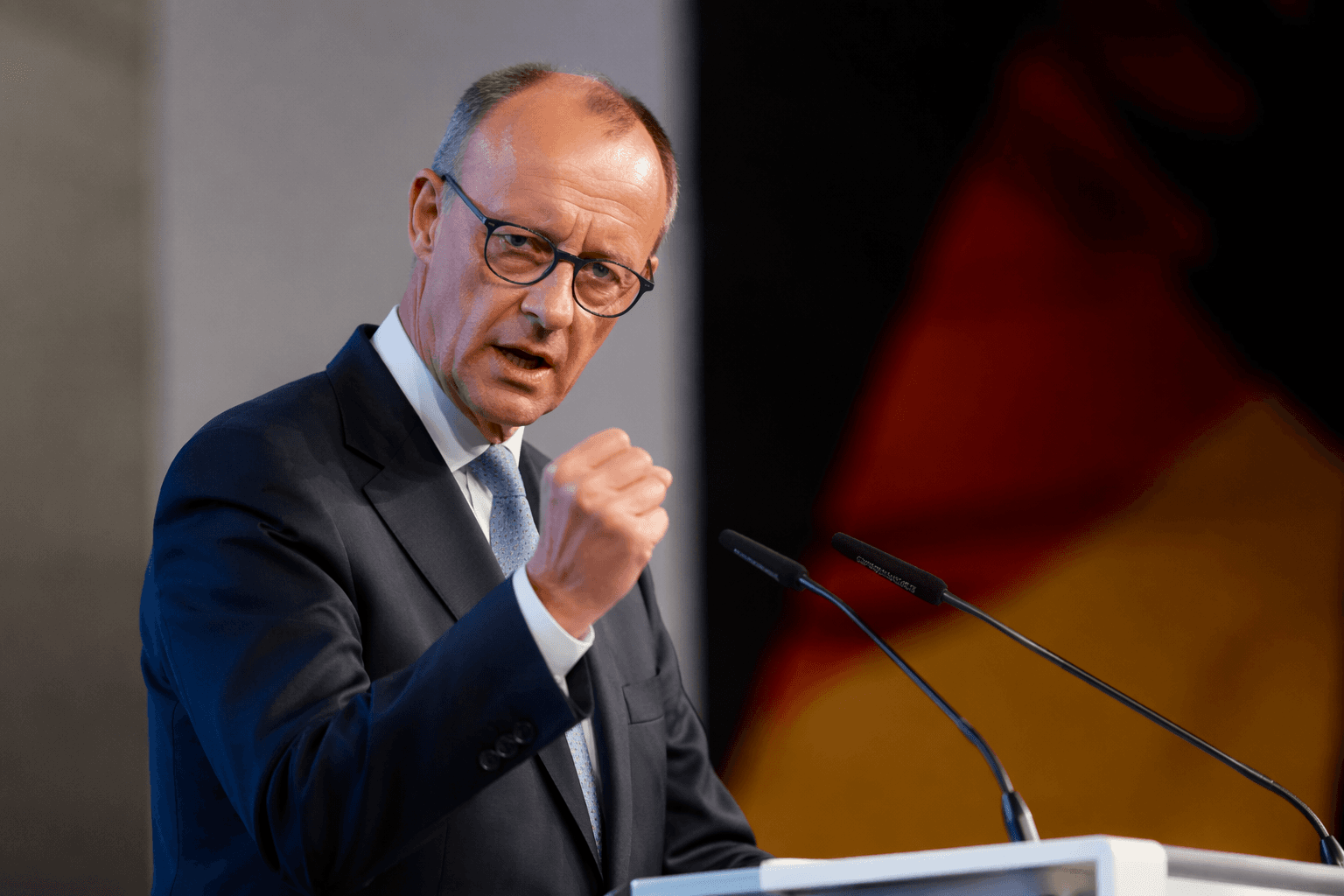
Friedrich Merz used a summer press conference to make a direct appeal to voters drifting toward the far-right Alternative for Germany, telling them his government should be judged on what it has done, not on online noise or political branding.
Merz said he was speaking to AfD voters as well and urged them, "Look closely." The message was aimed squarely at eastern Germany, where the AfD has built durable support by turning dissatisfaction, migration fears and distrust of institutions into electoral strength. Saxony-Anhalt, where voters go to the polls on September 6, has become the sharpest test of whether a governing conservative party can blunt that appeal without helping normalize the far right’s agenda.
A poll released on May 7 put the AfD at 41 percent in Saxony-Anhalt, ahead of Merz’s Christian Democratic Union at 26 percent. It was the first time the party had crossed the 40 percent mark in a German state poll, a threshold that sharpened the prospect of the AfD leading a regional government for the first time. The Landtag of Saxony-Anhalt has 83 seats, and 42 are needed for a majority.
Merz paired his outreach with a hard line on coalition politics, ruling out any cooperation with the AfD and reinforcing Germany’s long-standing firewall against formal deals with the far right. That stance leaves him trying to win back skeptical voters on performance while denying the AfD the legitimacy that comes with power-sharing.
The timing matters as much as the message. Saxony-Anhalt’s parliament set the election date in May 2025, giving parties years to prepare for a vote that has now become a referendum on the federal government’s standing in the east. Merz said he wanted voters to look beyond social media and examine what his government was actually doing, a pitch designed to challenge the AfD’s online-driven style of opposition.
The stakes reach beyond one state. A strong AfD result would deepen pressure on Merz’s coalition, feed arguments that mainstream conservatives are losing ground in the east and strengthen a party that is already shaping Germany’s national debate. A reversal would suggest that a governing center-right party can still compete for disaffected voters without opening the door to the far right.
This article was produced by Prism’s automated news system from verified source data, official records, and press releases, then run through automated quality and moderation checks before publishing. The system is built and supervised by the people who set the standards it runs under. Read our full AI policy.
Did this article answer your question?