Met Office warns of 36C heatwave as amber alert expands across England
Heat is set to hit 36C by Tuesday as amber warnings spread across southern England, Wales and the Midlands, with older people and children most exposed.

Temperatures across England and Wales were set to climb again after a slightly cooler Saturday, with forecasters warning that parts of the country could touch 36C by Tuesday. The Met Office’s amber extreme heat warning now stretches across most of southern England, southeastern Wales, eastern Wales and much of the Midlands, with water safety flagged as a particular concern and the heaviest risks falling on older people, babies, young children and anyone with underlying medical conditions.
The warning was issued on Friday 19 June and updated on Saturday 20 June. It is due to run until Tuesday 23 June, while the UK Health Security Agency has kept an amber heat-health alert in place for the East of England, South East, South West and London until 8pm that day. East Midlands and West Midlands remain under yellow alerts. The alert system, run by UKHSA with the Met Office since 2004, is meant to give the NHS, local authorities, emergency responders and the voluntary sector early warning when temperatures threaten health and services.

The Met Office said the warning was impact-based, designed to highlight the likely effects of extreme heat on lives and property rather than simply to describe hot weather. That matters for schools, hospitals, rail lines and workplaces, which can all feel the strain when temperatures rise sharply. Schools are not normally advised to close, because attendance is usually still manageable safely, but the guidance makes clear that the heatwave is also an infrastructure story, not just a comfort issue.
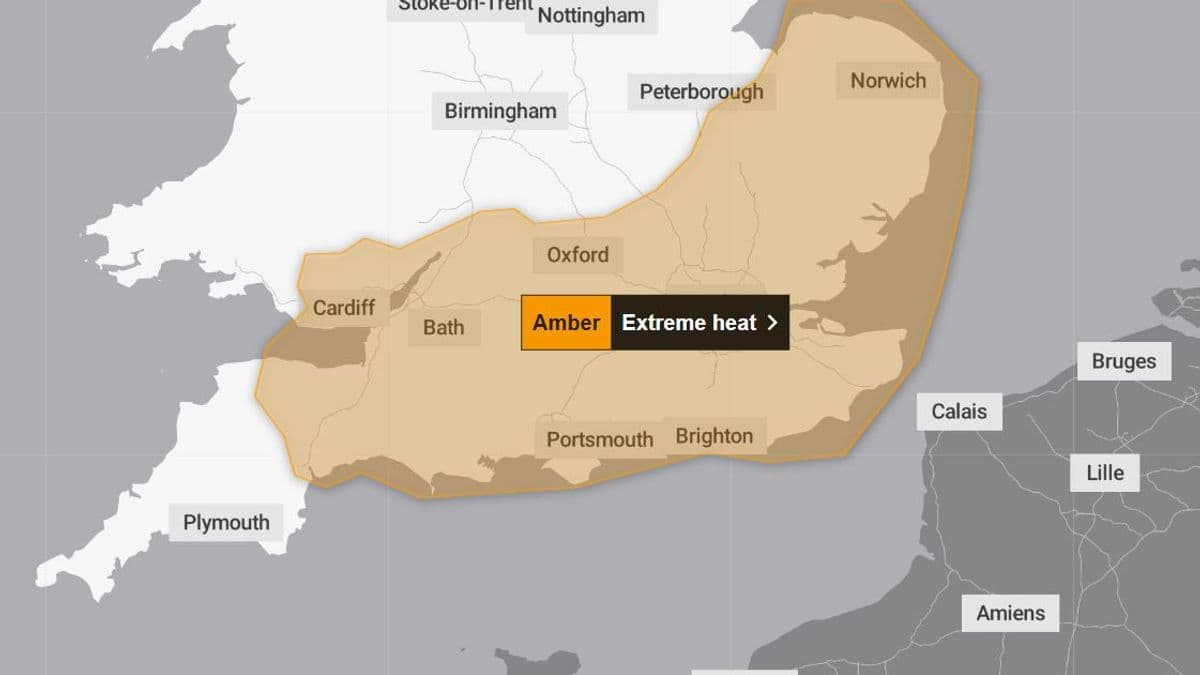
Forecasters said settled conditions were building across southern and eastern parts of the UK, intensifying through the weekend and into early next week. Many parts of southern and eastern England were expected to meet heatwave thresholds, a reminder that the country is now repeatedly confronting heat severe enough to test public health planning, transport and building resilience.

The scale of the risk has an unmistakable precedent. The UK’s hottest day on record came in July 2022, when temperatures reached 40.3C, and the first ever red extreme heat warning that year triggered a national emergency. With heat-health alerts now becoming a familiar feature of recent summers, the latest warning again puts the focus on who is most exposed and whether public services can stay ahead of the next surge.
This article was produced by Prism’s automated news system from verified source data, official records, and press releases, then run through automated quality and moderation checks before publishing. The system is built and supervised by the people who set the standards it runs under. Read our full AI policy.
Did this article answer your question?