Meta revenue surges 33%, but higher AI spending rattles investors
Meta’s revenue jumped 33% to $56.31 billion, but a capex outlook of up to $145 billion sent investors fleeing as they weighed AI returns against rising costs.

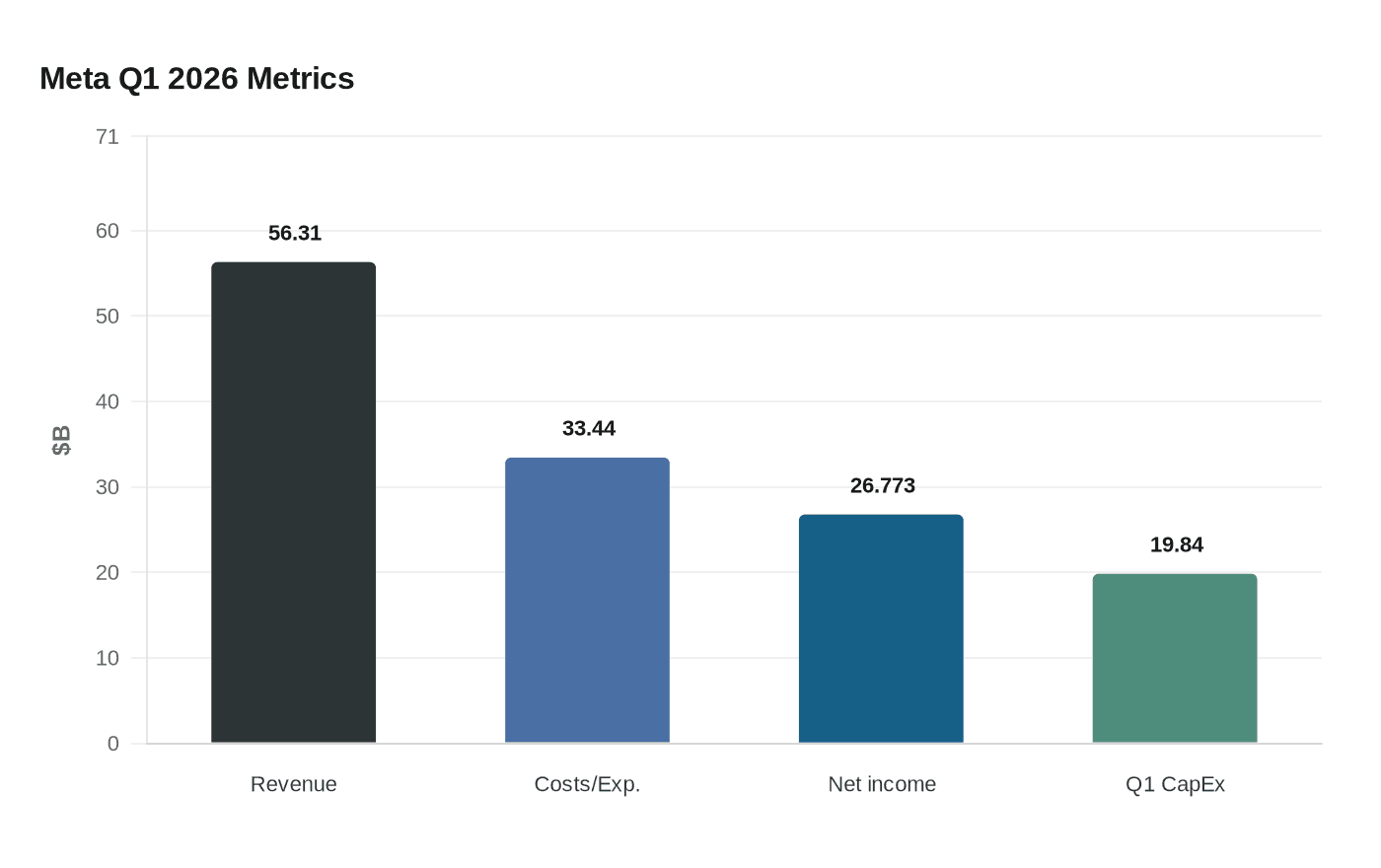
Meta Platforms delivered a sharp revenue beat, but Wall Street’s bigger focus was the bill attached to its AI ambition. First-quarter 2026 revenue rose 33% from a year earlier to $56.31 billion, net income reached $26.773 billion and diluted earnings per share came in at $10.44, yet shares fell about 5% in extended trading after the company lifted its full-year capital-spending outlook to as much as $145 billion.
The ad business still showed real pricing power. Meta said average price per ad increased 12% year over year, a key signal that its core monetization engine is benefiting from stronger demand and better ad delivery. The company also said revenue would have risen 29% on a constant-currency basis, underscoring how much of the reported acceleration came from genuine operating strength rather than currency swings. Costs and expenses climbed to $33.44 billion, but the revenue line still outpaced them by a wide margin.

The problem for investors was not the quarter just reported, but the spending plan ahead. Meta raised its 2026 capital-expenditure forecast to between $125 billion and $145 billion from a prior range of $115 billion to $135 billion, citing higher component pricing and additional data-center costs. First-quarter capital expenditures were $19.84 billion. The company said it remained committed to investing aggressively in artificial intelligence infrastructure and talent even as it pursues cost savings through planned layoffs, leaving the market to judge whether the payback on that spending will justify the scale.
Mark Zuckerberg framed the quarter as a positive step in Meta’s AI push, saying it marked “strong momentum across our apps” and the release of the first model from Meta Superintelligence Labs. But the company’s user trends were less clean than the revenue headline suggested. Meta said internet disruptions in Iran weighed on user growth, a reminder that engagement data can be distorted by outside forces even when ad pricing is improving.
Investor unease also reflected the legal and regulatory overhang around Meta’s youth-safety business. The company said it continued to face scrutiny on youth-related issues and had additional U.S. trials scheduled this year that could result in a material loss. In March 2026, a New Mexico jury ordered Meta to pay $375 million in a child-sexual-exploitation case, a verdict that raised the stakes as the company tries to sell the market on the long-term payoff from AI spending. For now, Meta is growing fast, but it is asking investors to underwrite that growth with an even larger bet on the future.
This article was produced by Prism’s automated news system from verified source data, official records, and press releases, then run through automated quality and moderation checks before publishing. The system is built and supervised by the people who set the standards it runs under. Read our full AI policy.
Did this article answer your question?