Metakaku RFID Pearls Aim for Industry Transparency, Says Innovator David Wong
Metakaku RFID tags are embedded inside the bead nuclei of akoya, South Sea and Tahitian cultured pearls and GIA will record each pearl’s unique ID on its lab reports.

Metakaku® inserts a wireless RFID tag into the bead nucleus of cultured pearls so each stone carries a unique reference number that GIA can detect and add to its lab documentation. The process was described in reporting around an interview with David Wong by Reema Farooqui (Feb 20, 2026), and samples of bead-cultured akoya, South Sea and Tahitian pearls embedded with RFID tags were submitted to GIA by Fukui Shell Nucleus Factory for evaluation.
Fukui Shell Nucleus Factory is named in TheJeweller IE as the developer of the RFID beads and as the party that submitted the RFID-embedded samples to GIA. TheJeweller IE also notes Metakaku has been in development for over a decade and is now being introduced to key producers in French Polynesia, Myanmar, Indonesia, Japan and China, indicating a multi-region rollout rather than a single-market pilot.
GIA’s role is central to the proposal. Tom Moses, identified as GIA’s Executive Vice President and Chief Laboratory and Research Officer, framed the change as a response to consumer demand for sustainable, traceable gems: “With sustainability becoming more important to consumers, this technology plays a vital role in telling the complete story of these gems.” Moses added that integrating RFID details into GIA reports represents a significant step forward in traceability and transparency within the pearl industry.
David Wong, described in press materials as the innovator behind Metakaku and Hong Kong-based in LinkedIn promotion, positioned the technology as a storytelling tool for pearls. As he put it in TheJeweller IE: “Stories have the power to create meaningful connections with pearls, inspiring us to seek deeper understanding and build stronger bonds with these precious gems. Through Metakaku, we hope to provide value and new perspectives that encourage exploration and inspire greater opportunities for every single pearl that is harvested.”
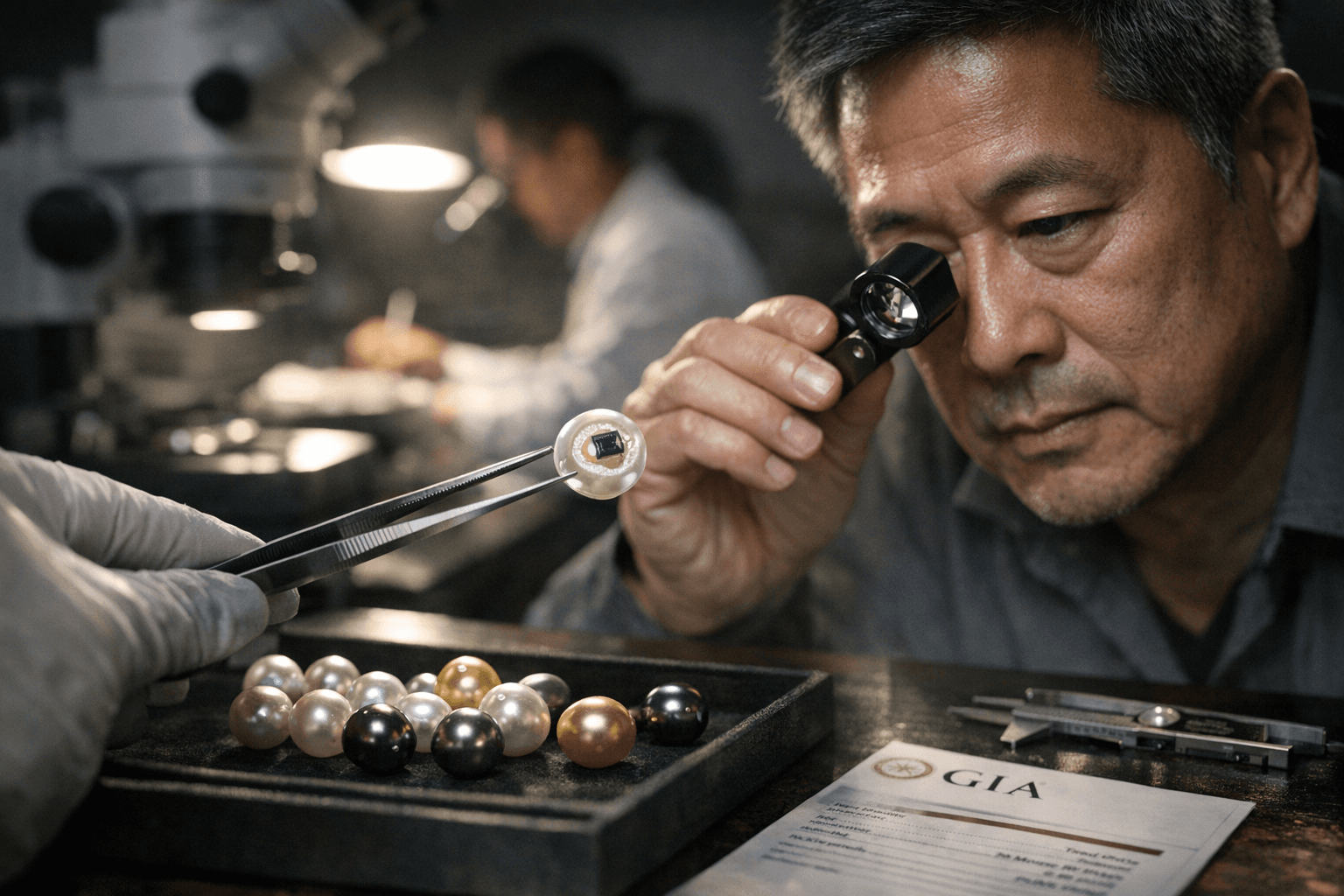
The technical framing in Diamond World and TheJeweller IE links the RFID identifier to GIA’s 7 Pearl Value Factors - Size, Shape, Colour/Color, Nacre, Lustre/Luster, Surface and Matching - so that each electronically identified pearl can be traced alongside its assessed quality attributes. Diamond World also recalled GIA’s long history in pearl identification since 1949 and its involvement in revising U.S. FTC pearl guidelines, underscoring why GIA endorsement matters for industry uptake.
Important technical and commercial questions remain unanswered in the material supplied: sources do not specify whether the tags are passive or active, their dimensions or read range, nor is there data on longevity of an embedded RFID inside nacre. A LinkedIn reader asked, “Any data suggesting how long lasting this tech is expected to be?” and no answer was provided in the available reporting. There are also no firm timelines, pricing details, or clarified corporate relationships between David Wong and Fukui Shell Nucleus Factory in the excerpts.
Metakaku’s pitch — a decade in development, samples at GIA, and an explicit pathway to producers across French Polynesia, Myanmar, Indonesia, Japan and China — places traceability at the center of pearl provenance. Whether the technology becomes a durable, industry-wide standard will depend on the technical durability data, formal GIA implementation timelines, and the pace at which producers and retailers adopt disclosure practices.
Know something we missed? Have a correction or additional information?
Submit a Tip