How Pearls Form: Mollusks Create Gemstones from Aragonite and Conchiolin
Pearls are the only gemstones made by living creatures; nacre’s aragonite plates (about 300–1,500 nm) and conchiolin layers create the orient that defines value.
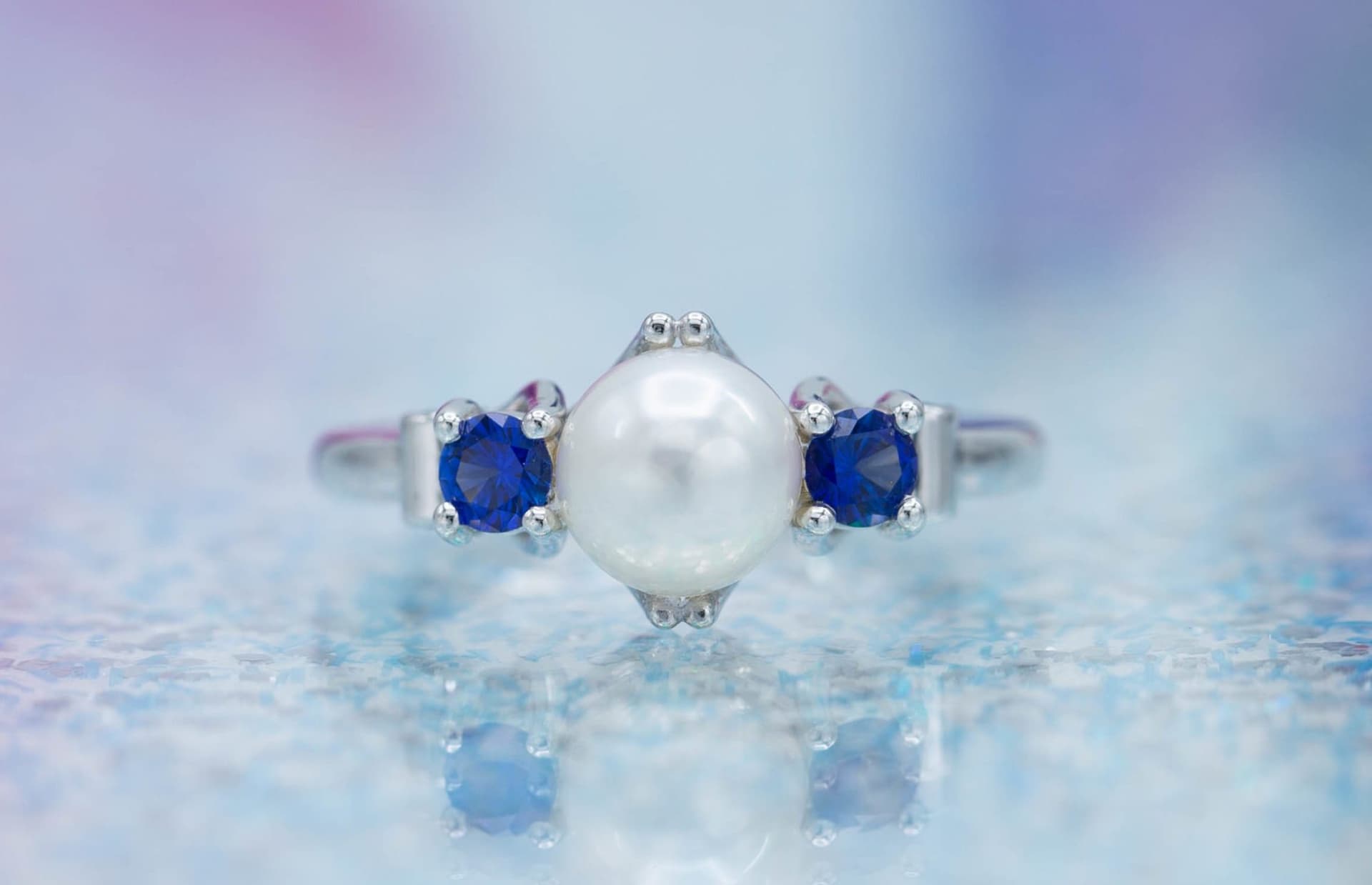
Pearls are unique among gemstones because they are produced by mollusks - oysters, mussels, clams - and not by geological processes; ThePearlSource notes that “Today, over 99% of pearls on the market are cultured pearls,” a statistic that frames both supply and the modern pearl trade.
Nacre, often called mother of pearl, is the material that builds every pearl. Addison Rice’s IGS piece, updated August 17, 2024, defines nacre as alternating layers of aragonite, a form of calcium carbonate, and conchiolin, an organic protein glue. Sources give two pronunciations for nacre: NAY-kur (ThePearlSource) or nay-kah (British Pearl Association). Gem Society explains conchiolin’s role in helping the mollusk precipitate aragonite from surrounding waters and holding the layers together.
The biological process begins when “a foreign substance becomes trapped inside the shell of an oyster or mussel,” ThePearlSource writes. The mollusk isolates the irritant by forming a sac around it; the British Pearl Association analogizes this to human grit in the eye: “This would be similar in comparison to ourselves getting grit in the eye... the mollusc forms a sac around the pearl to isolate it.” Nacre deposition follows: “The mollusk secretes nacre, a mixture of calcium carbonate and proteins, to coat the irritant,” and then “layer upon layer of nacre builds up, gradually forming a pearl,” until the pearl matures, typically in “two to four years,” per ThePearlSource.
The Gem Society supplies the optical detail that links structure to beauty: “Aragonite plates range in thickness from about 300 to 1500 nm, similar to a wavelength of light. Therefore, they can cause diffraction, which appears as iridescence when reflected back to our eye.” The industry calls this luminous effect orient; Gem Society warns that “thicker aragonite plates are too thick for diffraction of visible light. When a pearl has thick aragonite in its outer layers, it appears chalky instead of iridescent.”
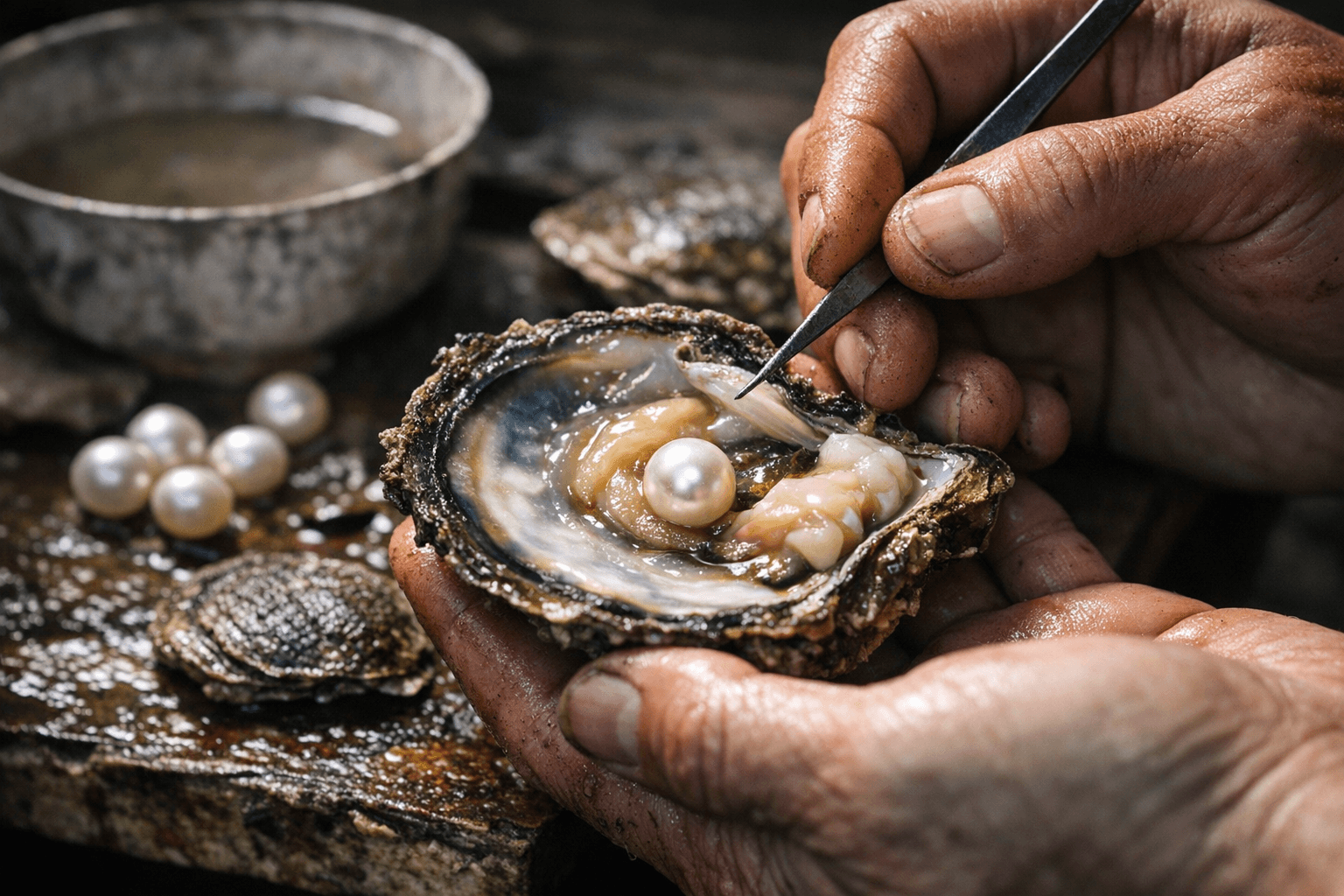
Natural pearls form without human intervention and remain extremely rare: “Natural Pearls – Form entirely by chance in the wild and are extremely rare,” ThePearlSource states. Cultured pearls are produced when farmers intentionally introduce an irritant, often a piece of mantle epithelium, into the mantle; British Pearl Association notes these farms are “many of which are found in Japan and China,” and ThePearlSource emphasizes that cultured and natural pearls are visually and structurally identical.
Species and habitat matter: British Pearl Association names freshwater families Unionoida and Veneroida among the mollusks that produce nacre, and both Gem Society and ThePearlSource stress that oysters thrive in clean, nutrient-rich waters. The British Pearl Association also cautions that “Sadly hundreds of pearl oysters are killed by man searching for the natural pearl,” a conservation claim that underscores why cultured production changed the trade. AmericanPearl distills how the market evaluates pearls, listing Akoya quality factors as Luster, Surface, Shape, Color, Size, while reminding readers that nacre depth, thickness, and evenness remain fundamental to orient and value.
Knowing that pearls are built over two to four years from 300–1500 nm aragonite plates bound by conchiolin reframes them: each pearl is a record of a mollusk’s environment, the farmer’s technique, and the patient layering that produces orient.
Know something we missed? Have a correction or additional information?
Submit a Tip