Clean Pearls Without Ruining Them: Wipe, Mild Soap, Never Soak
Wipe pearls after every wear; for stains use a barely damp cloth with a drop of mild soap—never soak stringed pearls and always let them dry flat before storing.
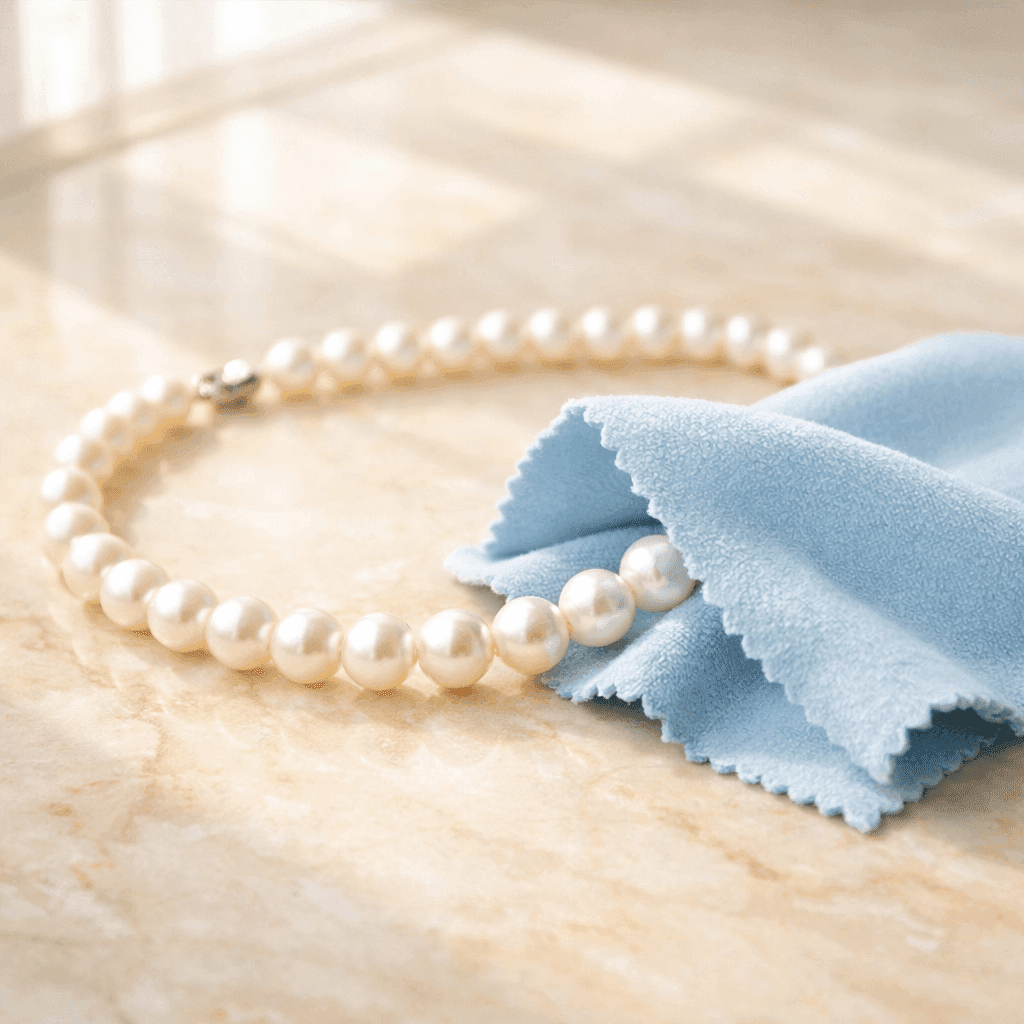
Pearls are unlike other gems: their beauty is a surface story written in nacre and held together by often-delicate silk. As Jessica VandenHouten put it, “Pearls require delicate care to preserve their luster and longevity.” That means a different routine from your gold chain or diamond ring—gentle wiping, cautious spot-cleaning, and a little annual maintenance will keep them luminous for generations.
Why pearls demand special handling Pearl nacre is soft and layered; it can scratch, dull, or be chemically altered by common household products. Many pearl strands are knotted on silk, and that silk loses elasticity and strength when repeatedly soaked or overwet. Jewelers Mutual is blunt: “Do NOT submerge a pearl necklace in water, as it will weaken the silk thread.” Wear helps pearls remain hydrated, but the oils you produce also stress the silk—hence the paradox of frequent wear paired with yearly professional checks.
Everyday care: the 30‑second rule For 90% of cleaning, a quick wipe is both efficient and safe. As Pearlsonly advises: “Get a cloth damp with plain room-temperature water. Not soaking wet—damp. Wipe each pearl. Turn them around. Get all the surfaces. That’s it. Takes thirty seconds for a whole strand.” Use a truly soft, lint-free cloth — microfiber, flannel, or very soft cotton — and keep one in your jewelry box so wiping becomes automatic after every wear. This removes body oils, makeup, and dust that collect during the day without exposing the silk to excess moisture.
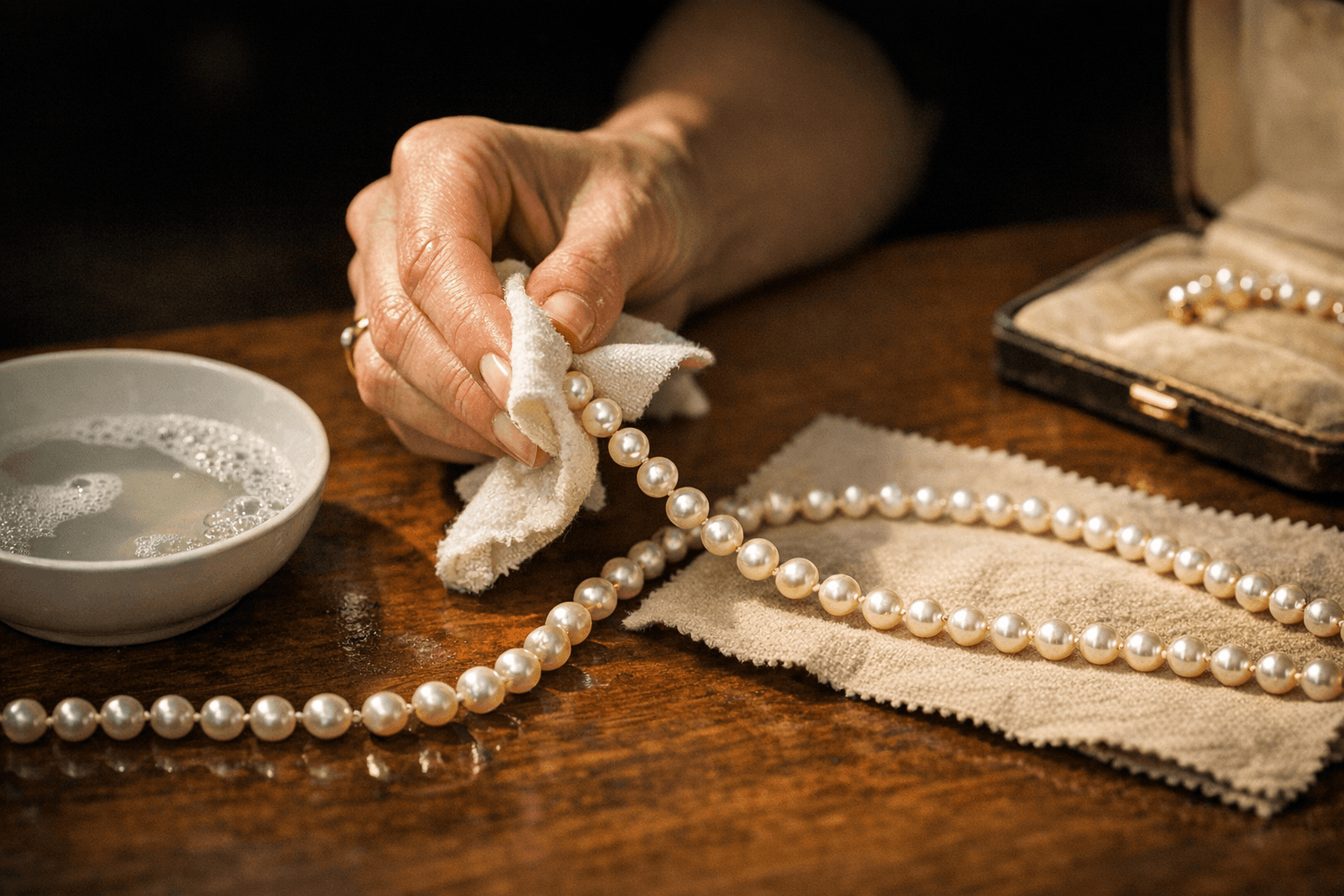
When you need a deeper clean If pearls show visible stains or buildup, move to a two-tiered, wrung-out-cloth method recommended across specialty and lifestyle sources. Follow these steps precisely: 1. Mix a few drops of mild, fragrance-free dish soap or baby shampoo into a bowl of lukewarm (or room-temperature) water; you’re not trying to create suds. 2. Dip a soft, lint-free cloth into the solution and wring it out until it is just damp — not dripping. 3. Gently wipe each pearl one at a time in small circles, avoiding any tugging on the strand. 4. Remove soap residue by wiping again with a clean cloth dampened in plain lukewarm water; if your pearls are strung on silk, do not submerge or rinse—the damp cloth method is the safe alternative. 5. Pat dry with a second soft cloth and lay the piece flat until completely dry before storing. Southern Living and ThePearlSource stress that only pearls not strung on silk may be lightly rinsed under cool running water, and advise practical safeguards like closing your sink drain or rinsing over a second bowl to avoid accidental loss.
Necklaces, knots, and the art of working section by section Always lay strands flat on a towel when cleaning. Pearlsonly warns that “wet string plus gravity equals stress points that eventually snap,” which is why you never clean a hanging necklace. Work a few pearls at a time so you never over-wet one section, and use barely-damp cotton swabs rolled gently around knots to lift oils hiding in the silk without fraying it. Preserve the knots: they’re there so that if a strand ever breaks, only one pearl falls off instead of the whole strand.
What to avoid—no shortcuts, no abrasives Some common “home remedies” are actively harmful. Pearlsonly’s take on popular fixes is unequivocal: “Baking soda gets recommended constantly online. ‘Natural’ and ‘gentle’ they say. Nope. It’s abrasive. Scratches nacre. Same with toothpaste…Terrible idea for pearls.” Also avoid rubbing alcohol, adhesive removers, commercial jewelry cleaners with antibacterial agents, scented or dyed soaps, and polishing cloths that aren’t explicitly non‑abrasive. ThePearlSource warns that “strong detergents, especially those with added scents, dyes, or disinfectants, can strip away the natural sheen of your pearls.” When in doubt, pick the gentlest option.
Sticky residue and stubborn spots For sticker goo or tape residue, resist temptation to scrape or to reach for solvents. Pearlsonly’s method is patient and precise: dampen the spot with water, let it sit a few seconds to soften the adhesive, then roll the residue off gently with a cloth or fingertip; “Slow beats destructive every time with pearls.” Avoid alcohol or adhesive removers—those chemicals can cause more damage than the residue itself.
Drying, storing, and the rhythm of maintenance Do not store pearls until they are completely dry; lingering moisture shortens silk life. The consensus is clear: “Store flat in a soft, separate space to avoid scratches and stretching.” Keep them away from perfumes, hairspray, lotions, and cosmetics by making pearls the last thing you put on and the first thing you take off. ThePearlSource offers a simple habit tweak: keep a soft cloth in your jewelry box to remind you to wipe before storing.
Professional care: annual checks and restringing cadence Industry guidance recommends bringing pearl pieces in for a professional inspection at least once a year. Jewelers Mutual says: “Take them to your jeweler once a year. While you want to wear your pearls often to keep them hydrated, all that body oil doesn't do the silk thread any favors. Make sure to have your jeweler check the integrity of your pearl bracelets and necklaces once a year. They can also give them a thorough, safe cleaning.” For heavily worn strands, consider restringing every few years to maintain strength and prevent breakage, a timeline recommended by luxury-care specialists like Yamron.
- Soft, lint-free cloth (microfiber, flannel, very soft cotton) — essential for everyday wiping.
- Barely-damp cotton swabs — for knot areas and crevices.
- Mild, fragrance-free soap or baby shampoo — only a few drops in lukewarm water for deeper cleaning.
- A soft-bristled brush used only with extreme gentleness and only when supported by a professional-cleaning product.
Tools worth owning—and those to avoid
Avoid abrasive household cleaners, baking soda, toothpaste, rubbing alcohol, adhesive removers, and polishing cloths that are not explicitly marketed as non-abrasive.
The insurance angle and budgeting for care If you protect pieces commercially, note that some jeweler-focused insurers advertise accessible premiums; for example, one online insurer shows marketing copy listing “Jewelry Insurance as low as $15/mo or $180 per year.” Whether you insure or not, budget for annual inspections and the occasional restringing—small investments that preserve value and prevent catastrophic loss.
A simple ethic for lasting pearls The clearest rule you can follow: wipe, spot‑clean if needed, never soak stringed pearls, and store flat only when fully dry. These practices honor what pearls are—biological, delicate, and irreplaceable in their character—and they stop short of the overzealous fixes that do more harm than good. Keep a soft cloth handy, be patient with residue, and let trained hands handle deep or structural work; your pearls will reward that restraint with decades of glow.
Know something we missed? Have a correction or additional information?
Submit a Tip