Meta’s Reality Labs Loses $4 Billion as AI Spending Surges
Reality Labs lost $4.03 billion in a single quarter as Meta raised 2026 capital spending to $145 billion, widening the test of whether the metaverse can pay off.

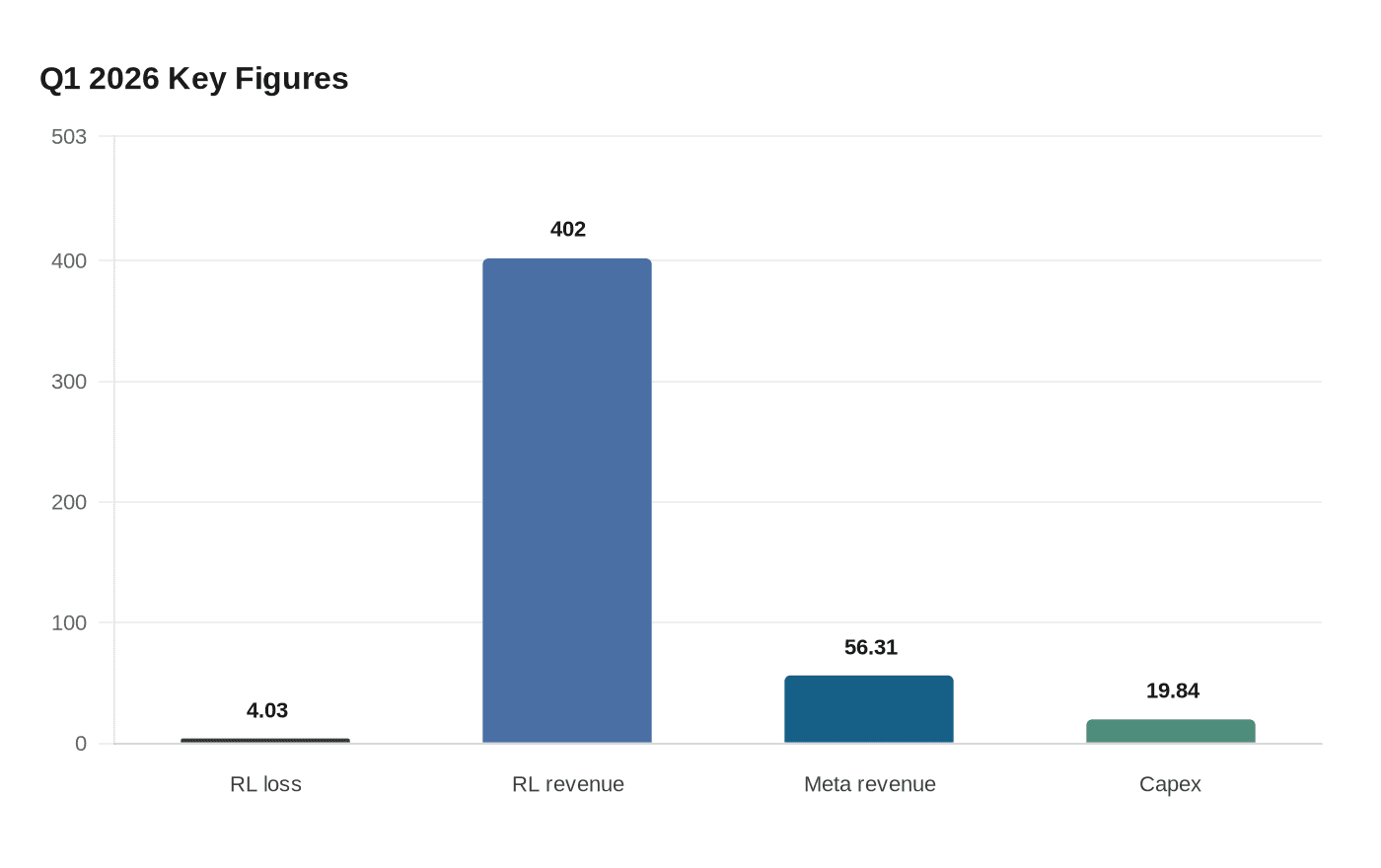
Meta’s Reality Labs kept burning cash at a pace that would strain almost any business, posting a $4.03 billion operating loss on just $402 million in revenue. The latest quarter pushed the unit’s cumulative losses past $80 billion since late 2020, sharpening the question of how long investors will tolerate a hardware bet that is still not close to paying for itself.
The pressure is intensifying even as Meta’s core business remains strong. The company said first-quarter 2026 revenue reached $56.31 billion, up 33% from a year earlier, while capital expenditures hit $19.84 billion. Meta also raised its full-year 2026 capex outlook to between $125 billion and $145 billion, a range that reflects heavier investment in servers, data centers, network infrastructure and AI-related buildout. Total expenses rose to $33.44 billion, up 35% year over year, driven by infrastructure costs and technical hiring.
Reality Labs itself was weaker on the top line, with revenue down 2% from a year earlier. Meta said lower Quest headset sales weighed on results, partly offset by stronger sales of AI glasses. That shift matters because Meta’s hardware strategy is moving away from pure virtual reality and toward AI wearables, a pivot that has already triggered job cuts.
In January 2026, Meta laid off roughly 1,000 Reality Labs employees as part of a reallocation of resources toward AI-powered wearable devices. The company also made additional cuts in March affecting several hundred employees across Reality Labs and other units. Meta has said it plans to eliminate 10% of its workforce and stop filling 6,000 open roles, underscoring how aggressively it is managing costs even while spending more on AI infrastructure.
Mark Zuckerberg framed the strategy as a long-term race. In Meta’s April 29 earnings release, he said the company is “on track to deliver personal superintelligence to billions of people.” That promise now sits beside a business that is still subsidizing its metaverse ambitions with billions in quarterly losses.
The tension has been building for years. Meta changed its name from Facebook in 2021 to reflect Zuckerberg’s belief that work and play would migrate into virtual worlds. But the generative AI boom that followed ChatGPT’s late-2022 debut shifted attention, spending and investor scrutiny toward AI. Andrew Bosworth had argued in December 2024 that 2025 would be the most important year in Reality Labs’ history, saying Meta learned from Orion demos and that glasses were the best form factor for a truly AI-native device.
For now, Reality Labs remains a direct test of whether Meta’s AR and VR ambitions can justify the scale of capital being poured into them, or whether they will increasingly look like a drag on a company whose strongest businesses are already financing the next gamble.
This article was produced by Prism’s automated news system from verified source data, official records, and press releases, then run through automated quality and moderation checks before publishing. The system is built and supervised by the people who set the standards it runs under. Read our full AI policy.
Did this article answer your question?