Mexico economy contracts less than feared in first quarter 2026
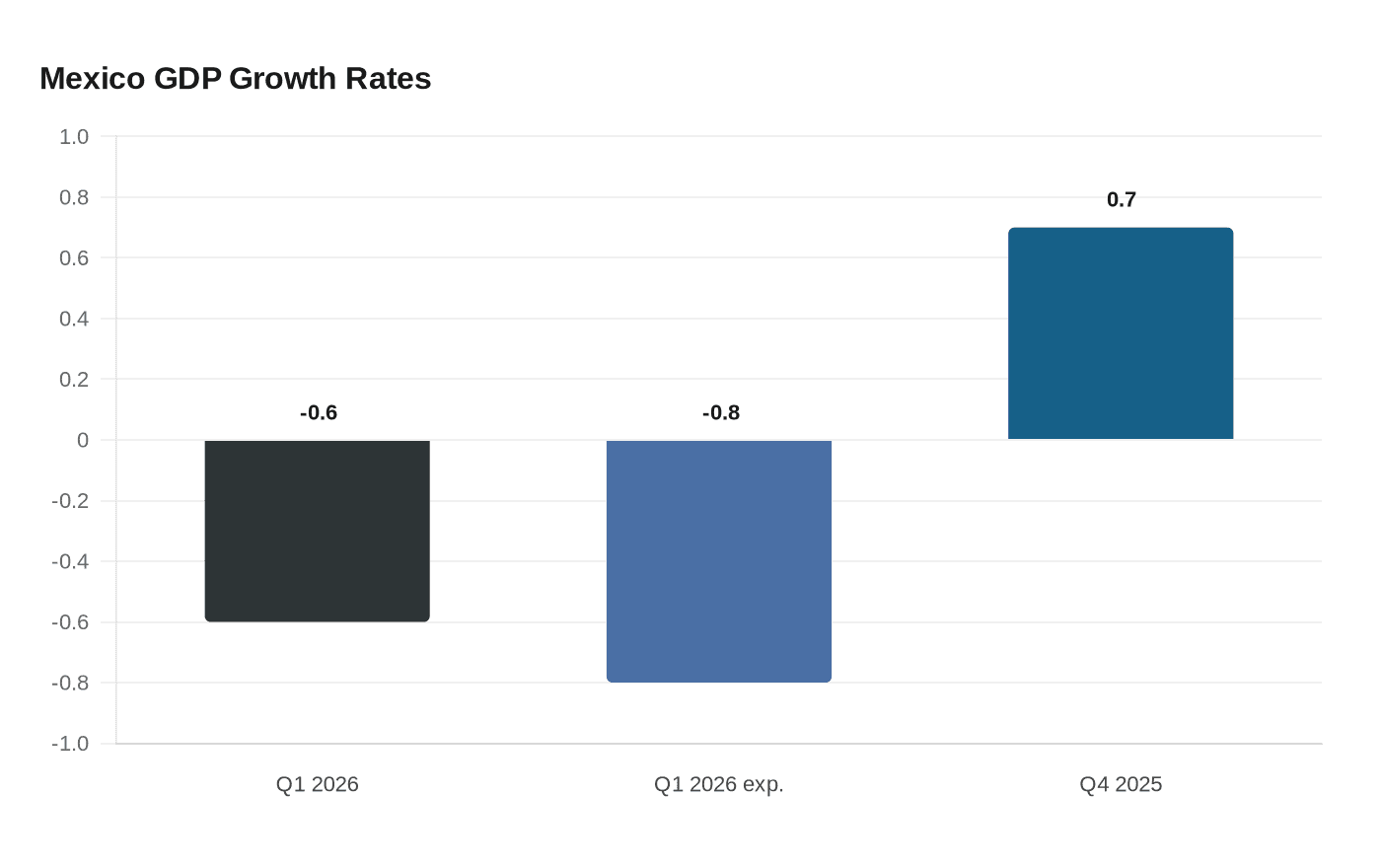
Mexico's economy shrank 0.6% in the first quarter, softer than the 0.8% drop economists expected. The smaller miss still points to fragile growth at a critical trade crossroads.

Mexico’s economy contracted in the first quarter, but the 0.6% decline from the previous three months was milder than the 0.8% drop economists had been bracing for. That gap matters. It suggests Latin America’s second-largest economy avoided the bleakest scenario in the opening months of 2026, even as the data still points to a country losing momentum at a delicate moment for North American manufacturing, cross-border investment and confidence in Mexico’s economic direction.
The weaker reading followed revised growth of 0.7% in the fourth quarter of 2025, underscoring how quickly the economy slowed after a stronger finish to last year. The first-quarter pullback was broad rather than tied to a single shock, reinforcing worries that domestic demand remains soft and that investment has yet to regain a firmer footing. Trade uncertainty and policy uncertainty have also hung over the outlook, leaving businesses to weigh whether the slowdown is temporary or the start of something more sustained.
For investors, the message was mixed. Mexico did not deliver the worst-case outcome, which can help steady sentiment in the short term. But the economy is still moving in the wrong direction, and even a smaller-than-feared contraction can deepen concern that growth is fragile. That matters in a country closely tied to U.S. supply chains, where manufacturing flows, procurement decisions and capital spending all depend on predictable conditions on both sides of the border. Any sign of weakening demand can quickly feed through to hiring, factory output and investment plans.
The numbers also increase the pressure on policymakers. Slower growth narrows fiscal room, complicates efforts to create jobs and tests confidence in the government’s broader economic strategy. At the same time, the data could keep the door open to debate over interest rates later in the year, especially if officials judge that the slowdown is not just a one-off dip. The challenge will be balancing support for growth with inflation control and currency stability, a familiar but sharper tradeoff in an economy that sits at the center of North American production networks.
This article was produced by Prism’s automated news system from verified source data, official records, and press releases, then run through automated quality and moderation checks before publishing. The system is built and supervised by the people who set the standards it runs under. Read our full AI policy.
Did this article answer your question?

