Mexico’s Ancient Ulama Survives Through Children, Family Tradition
Children in Los Llanitos are keeping ulama alive, one hip strike at a time, as families carry forward a sport nearly erased by conquest and neglect.

The five cousins stepped barefoot onto the dirt field in Los Llanitos, a village on Mexico’s Pacific coast, and the adults moved quickly to fasten their protective fajado before play began. Then the children, ages 8 to 13, started striking a heavy rubber ball with their hips, keeping alive a game that has survived for roughly 3,400 years.
A living inheritance, not a museum piece
Ulama is not surviving because institutions have made it easy to preserve. It is surviving because families have decided it must endure. In Los Llanitos and other small towns in Sinaloa, parents, players and organizers are passing down the rules, the equipment and the unwritten habits of the game so that children learn it as a living practice, not as an artifact in a history lesson.
That difference matters. When a tradition is preserved in private devotion rather than broad public support, every match becomes an act of cultural continuity. The scene on the dirt field was not just a sports moment; it was a family decision repeated in real time, with older hands securing the fajado and younger bodies absorbing the demands of a game that asks for balance, memory and endurance.
What ulama is and why it endures
Ulama is one of the oldest surviving ballgames in the hemisphere, with roots in Mesoamerica that stretch back about 3,400 years. Before the Spanish conquest, it was a ritual practice across the region, woven into a broader world of ceremony and identity. The conquest nearly erased it, as colonial rule pushed Indigenous practices to the margins and disrupted the social systems that sustained them.
Even after that rupture, ulama did not disappear entirely. It survived in small pockets of northwestern Mexico, where scattered communities kept enough of the tradition intact for later generations to recover. A late-20th-century revival brought the sport back into view, but revival did not mean security. The game remains practiced in only a handful of towns in Sinaloa, which makes each match unusually fragile and unusually important.
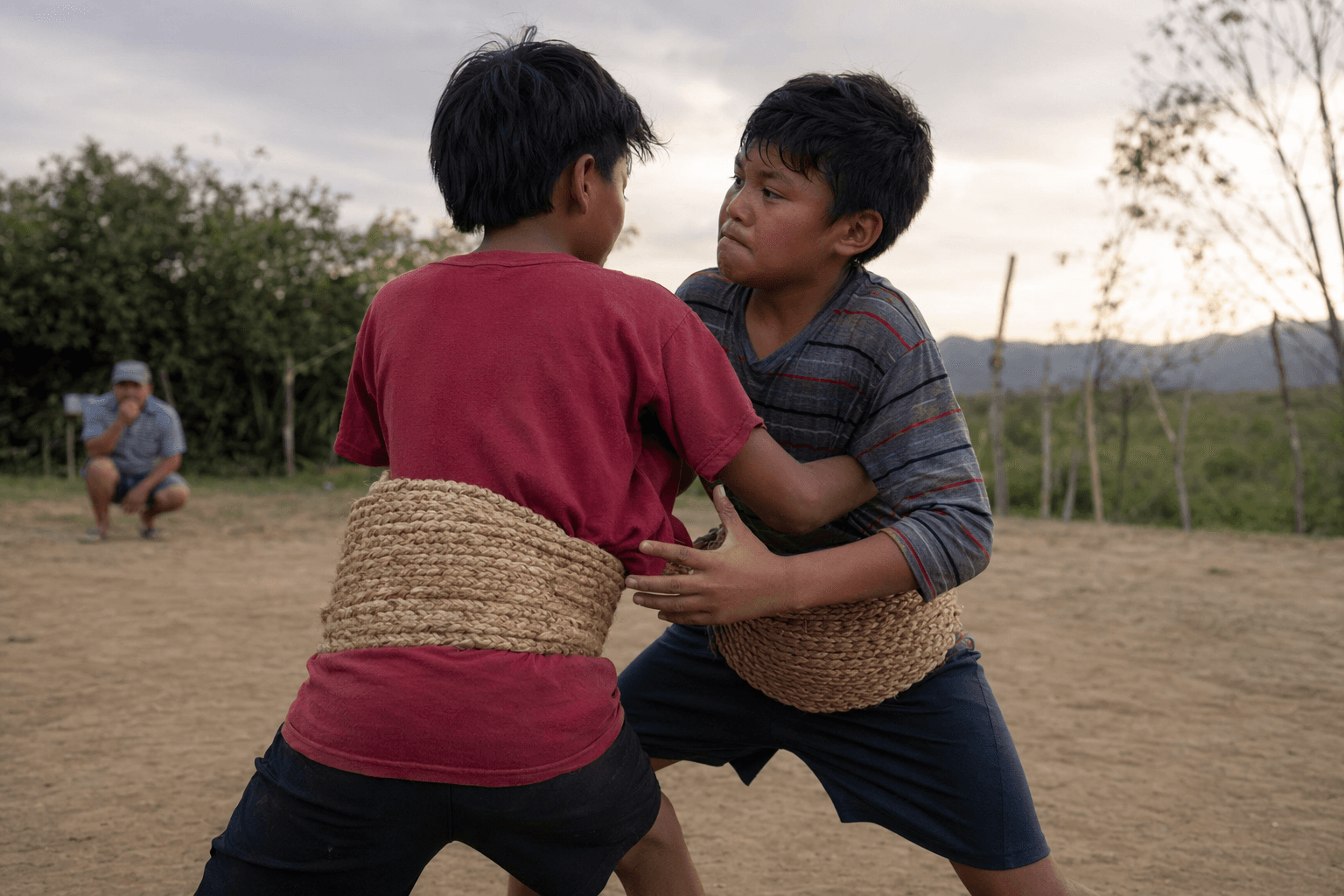
The gear and the rules preserve that continuity. The pre-Hispanic-style fajado secures a loincloth and leather belts around the hips, protecting players as they absorb the force of a ball that weighs about 3.2 kilograms, or roughly seven pounds. Only the hips may touch the ball, so the movement is explosive and technical at once: players must leap, dive and twist to keep it in play.
Why the children matter most
The most striking part of the Los Llanitos scene is not the age of the game, but the age of the players. Five cousins, still young enough to approach the field as both play space and inheritance, are being taught the sport while the people around them still know how to guide them through it. That is how ulama persists: by moving from one generation to the next through family instruction rather than through a formal system of schools or sports federations.
This kind of transmission is labor-intensive. Someone has to teach the stance, the timing and the discipline required to use the hips alone. Someone has to preserve the gear, explain the customs and keep the language of the game alive so the children understand they are entering a tradition with rules, memory and meaning.
The family model is also a social one. In communities where migration, modern entertainment and economic pressure can pull attention elsewhere, ulama survives when households treat it as worth protecting. The children on the field are not simply learning an unusual sport; they are inheriting a local identity that has already survived conquest, near-erasure and long periods of neglect.
The stakes for Sinaloa and for Mexico
Ulama’s endurance is tied to place. It is still practiced in only a handful of towns in Sinaloa, which means the health of the tradition depends on a small number of communities and the people willing to keep showing up. That scarcity raises the stakes of every organized match, every lesson given to a child and every decision by a family to keep the practice going.
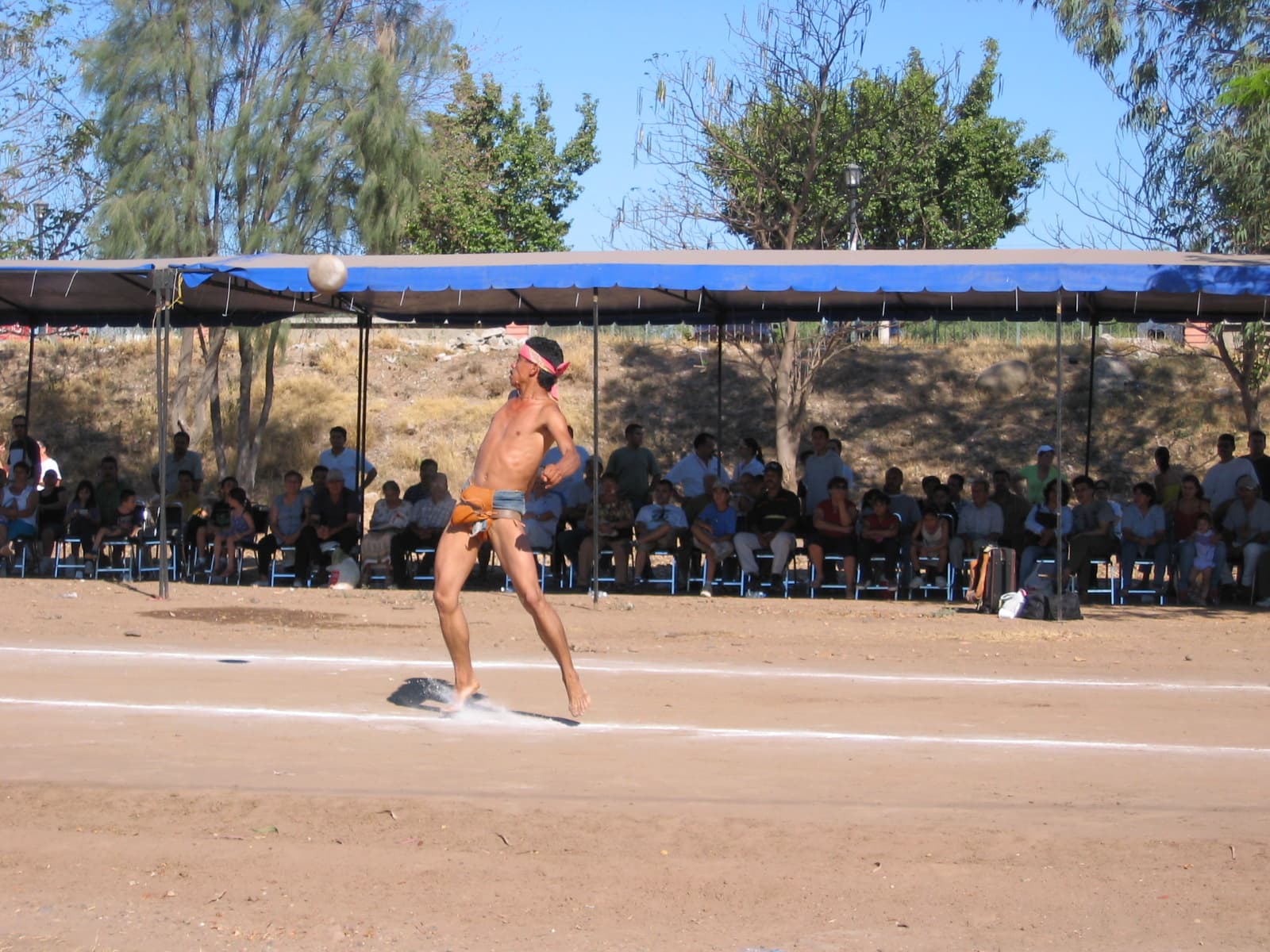
The tradition also carries institutional implications. When a cultural practice survives with little public preservation, it becomes vulnerable to the same pressures that nearly erased it before. A tradition left mostly to families can persist, but it can also narrow, depending on whether younger generations stay connected and whether local organizers can keep the rules and equipment in circulation.
At the same time, ulama has begun to attract attention again because of Mexico’s role in co-hosting the 2026 FIFA World Cup. That global event has opened a narrow window for cultural leaders to connect an internationally visible sporting moment with one of the hemisphere’s oldest games. The possibility is not just symbolic. If handled well, renewed interest could support heritage, community pride and tourism in places often pushed to the margins economically and culturally.
What revival can and cannot do
The World Cup spotlight may help, but it will not preserve ulama by itself. Attention can lift a tradition, yet it can also fade quickly if it is not matched by local commitment and practical support. For the Osuna family, for local players and for organizers in Sinaloa, the real work remains the same: keep the game playable, teach the children and maintain the customs that give ulama its identity.
That is why the scene in Los Llanitos carries so much weight. The children were not performing nostalgia. They were participating in a practice that still depends on bodily knowledge, family discipline and a shared sense that something old remains worth saving. If the game endures, it will be because people like them keep stepping onto the dirt field, fastening the fajado and striking the ball again.
Ulama survives today not as a relic, but as a decision. In the hands and hips of children, guided by their families, it remains a living assertion that an Indigenous tradition can outlast conquest, neglect and distraction when a community refuses to let it go.
This article was produced by Prism’s automated news system from verified source data, official records, and press releases, then run through automated quality and moderation checks before publishing. The system is built and supervised by the people who set the standards it runs under. Read our full AI policy.
Did this article answer your question?

.jpg&w=1920&q=75)
