Michigan Law Requires Schools to Ban Smartphones, Study Tracks District Policies
A Michigan law banning smartphones during instruction takes effect in August, but a review of 779 districts shows implementation will look vastly different across the state.
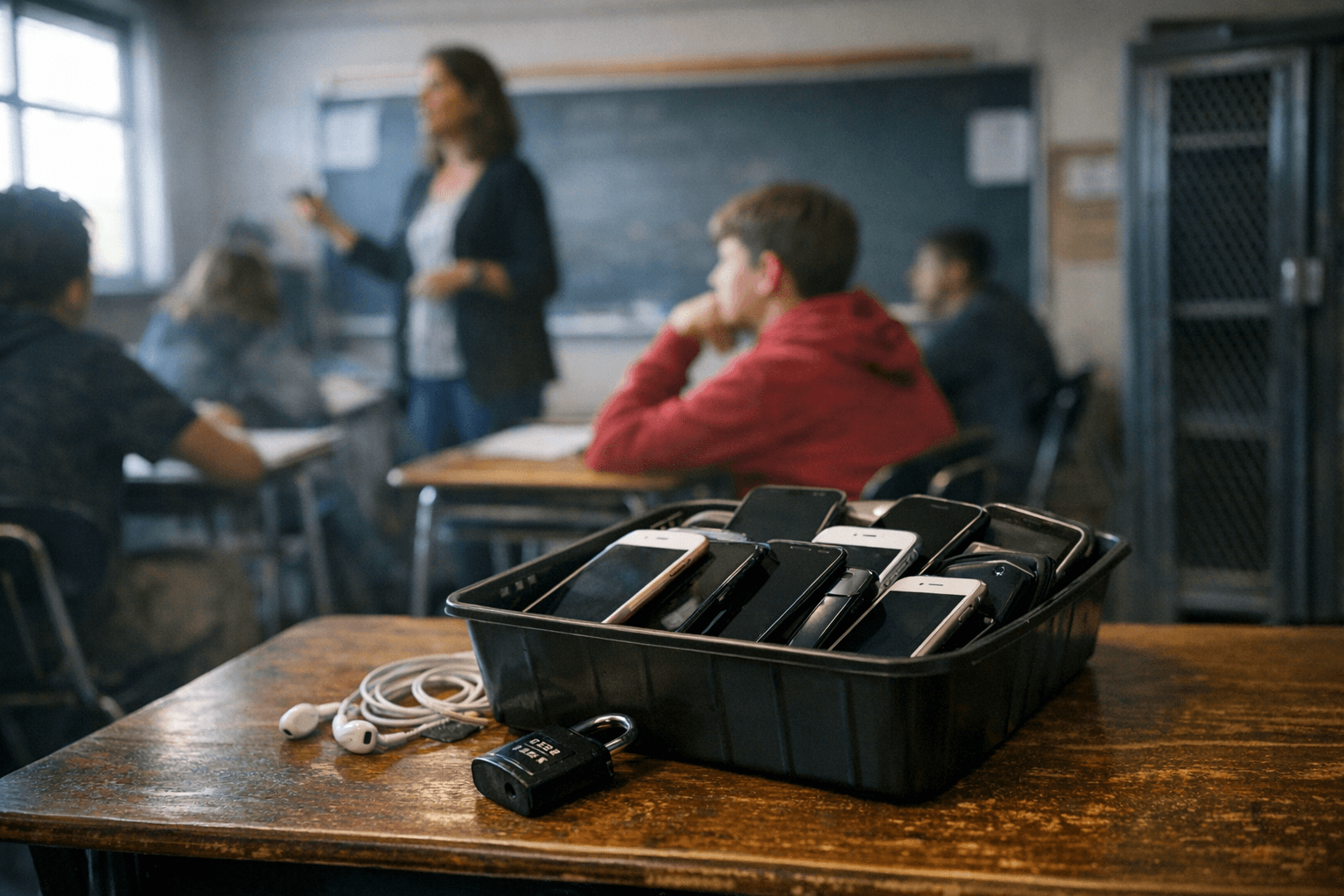
Gov. Gretchen Whitmer signed a law requiring every public and charter K-12 district in Michigan to ban smartphones during instructional time beginning with the 2026-27 school year. A new statewide analysis of 779 districts makes clear that passing the law was the simpler part of the problem.
Researchers at the University of Michigan and partner institutions, working through a CDC-funded project, reviewed local policy documents and district handbooks and conducted teacher surveys to classify how districts approached phone restrictions during the 2025-26 school year. Their dataset covers roughly 95% of Michigan's publicly funded districts.
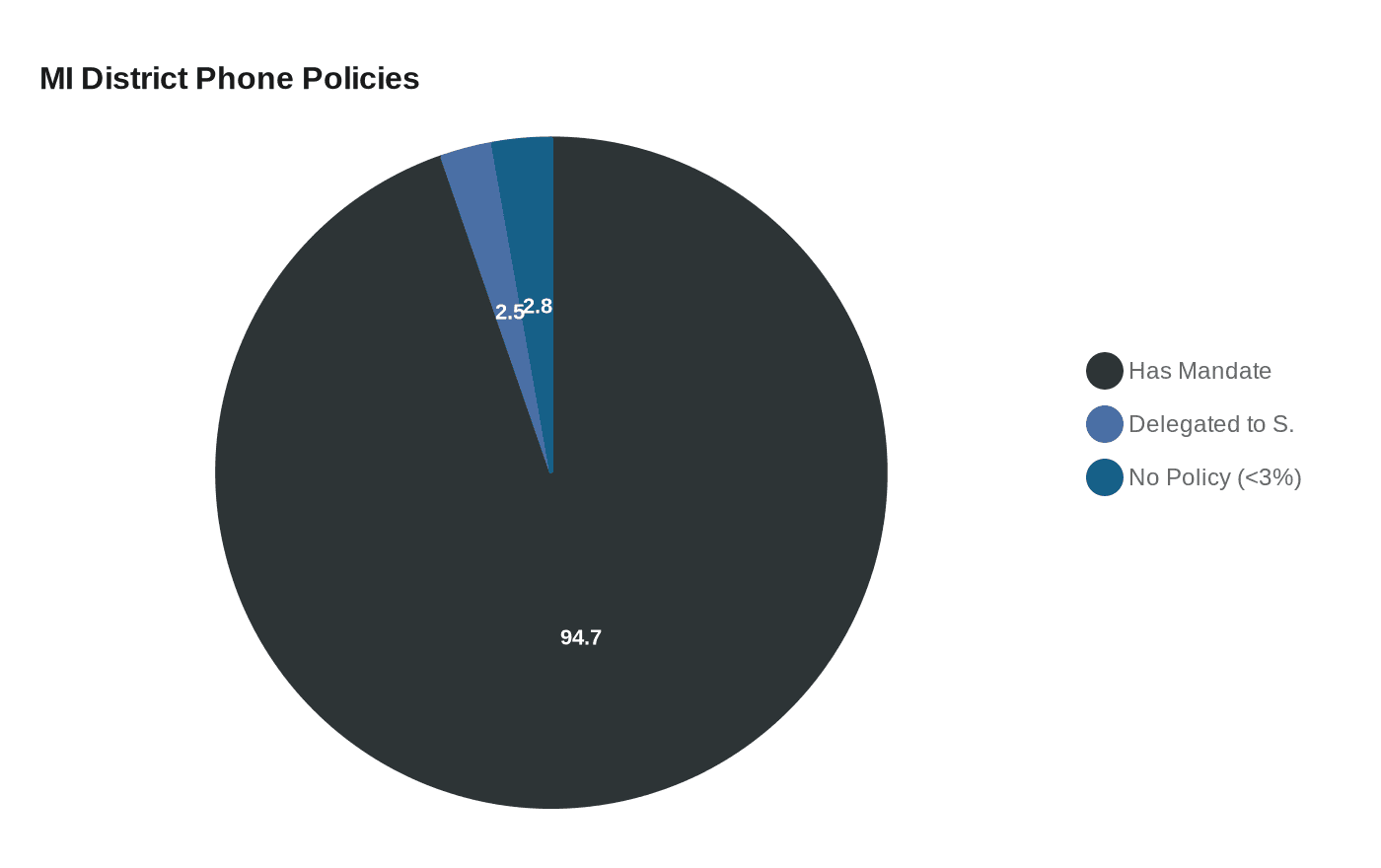
Before Whitmer's law, 94.7% of districts already had phone mandates in place. Another 2.5% delegated policy-setting to individual schools, and fewer than 3% had no stated policy at all. But those figures obscure enormous variation in what rules actually required. Some districts maintained blanket bans during instructional time; others carved out exceptions for medical or educational purposes; still others applied different restrictions by grade level.
That variation is precisely what the new law sets out to standardize, and precisely what makes local implementation so complicated. The legislation requires districts to prohibit smartphone use "during instructional time," a phrase each district must now define in practice. Whether that means confiscating phones at the classroom door, installing secure storage pouches, or setting grade-specific thresholds is a decision that will play out differently in districts from Detroit to the Upper Peninsula.
The urgency behind the law is supported by striking data. Cellphones were used by 97% of young people ages 11-17 during the school day in 2022. Researchers documented both the costs and the legitimate uses of that access. Phone use during school hours is linked to distraction, reduced engagement, and harm to student mental health. At the same time, some students rely on devices to monitor blood glucose levels, contact family members, or report safety concerns.
Those dual realities create a policy design problem no single statewide mandate can fully resolve. Blanket storage requirements can create disproportionate burdens for families without reliable alternative communication methods or those who coordinate after-school logistics through their children's phones. Equity concerns are especially pointed for students who use phones for translation or accessibility support, populations for whom a confiscation-first approach carries real costs.
The research team called for more systematic evaluation of which implementation approaches best support learning and student wellbeing once the law takes effect in August. Districts will need clear training protocols for staff, defined exceptions for health and safety, and data collection systems capable of tracking whether restrictions produce the outcomes lawmakers intended.
The empirical record on what phone restrictions actually do to academic performance and wellbeing remains mixed, and Michigan's scale, nearly 800 districts navigating the same legal requirement from different starting points, will generate evidence that researchers and policymakers in other states will be watching closely.
This article was produced by Prism’s automated news system from verified source data, official records, and press releases, then run through automated quality and moderation checks before publishing. The system is built and supervised by the people who set the standards it runs under. Read our full AI policy.
Did this article answer your question?