Michigan Senate rivals clash over Israel, money in key primary debate
Stevens and El-Sayed clashed over Israel and AIPAC after Mallory McMorrow exited, leaving Michigan's Senate primary a two-way race with national stakes.

Haley Stevens and Abdul El-Sayed met Tuesday night in their first one-on-one televised debate since Mallory McMorrow suspended her campaign, turning Michigan’s Democratic Senate primary into a two-candidate fight over Israel, money and party identity. With the Aug. 4 primary approaching and Sen. Gary Peters’ seat open, the race has become a national marker for whether Democrats want a pragmatist who can win back suburban voters or a progressive who has made foreign policy and donor money central to his case.
McMorrow’s departure on July 5 left Stevens, a moderate suburban Detroit lawmaker, and El-Sayed, a former Wayne County health chief, as the only contenders for the nomination. Democrats are treating the contest as one of the party’s most important Senate battlegrounds, since control of the chamber likely runs through Michigan.
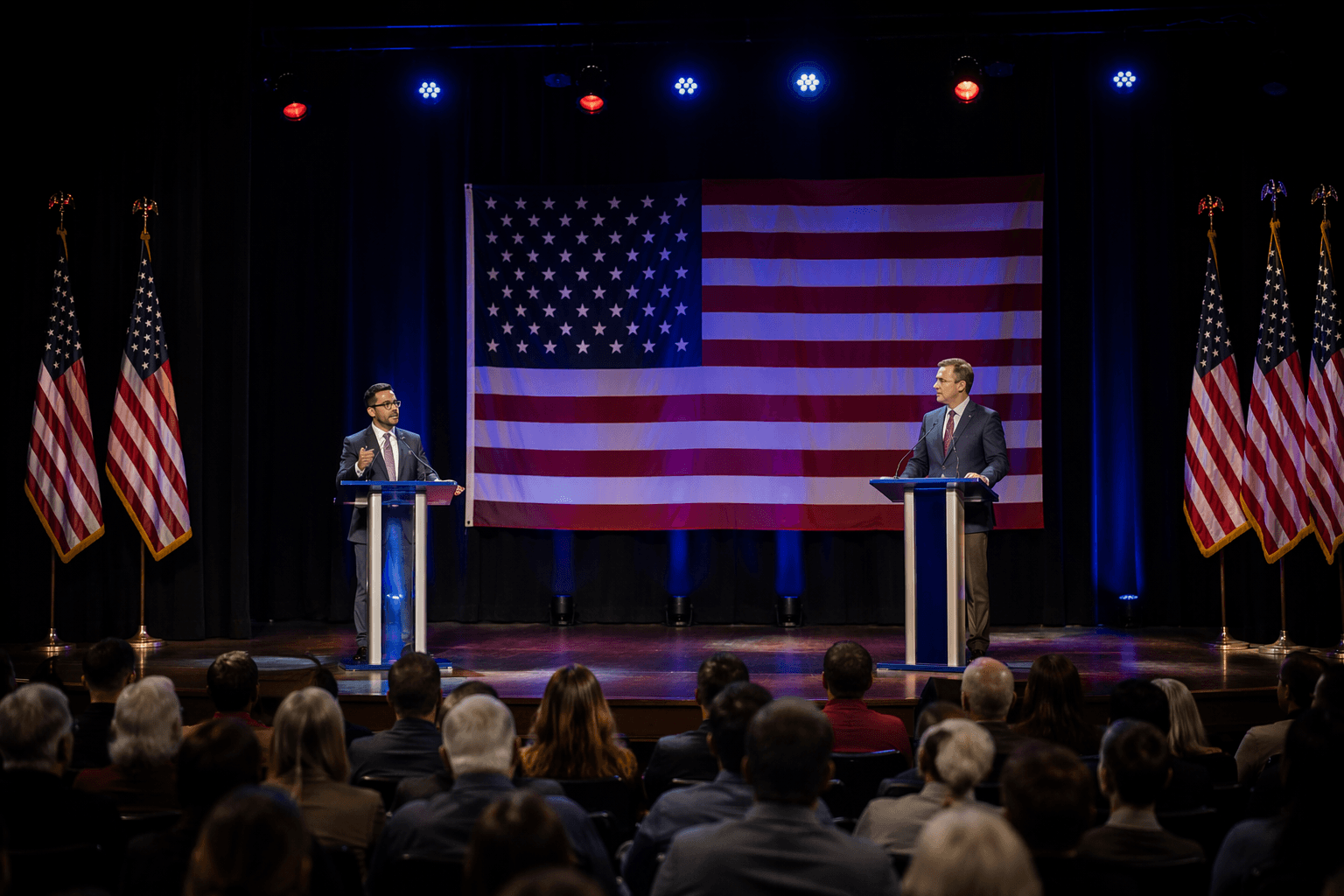
Israel dominated the exchange. Stevens has backed robust U.S. military aid for Israel, while El-Sayed has cast himself as a fierce critic of Israel. Their split has already surfaced repeatedly on the trail, including at the Detroit Regional Chamber’s Mackinac Policy Conference and in a Baptist pastors debate in Detroit, where the candidates also sparred over war and the economy. In the closing weeks of the primary, that argument has become the clearest test of how each candidate is trying to assemble a winning coalition in a state with a sizable Arab American electorate and a deeply divided Democratic base.
Money and transparency were nearly as central as foreign policy. AIPAC’s super PAC has spent more than $10 million in the Michigan Senate race backing Stevens, a level of outside spending that has helped define El-Sayed’s campaign against corporate PAC money. El-Sayed has run as a no-corporate-PAC candidate, making donor transparency part of his argument that Democrats need a cleaner break from the party’s biggest benefactors.
McMorrow’s exit also sharpened the pressure on both remaining candidates. She said in ending her bid that she was grateful to volunteers, donors, staff and family and would stay politically active, but many Democrats had already begun to see her as a long shot for the nomination. With only Stevens and El-Sayed left, every exchange now carries more weight, and every attack over Israel, ICE funding and campaign finance lands in a race that could help decide the Senate majority.
This article was produced by Prism’s automated news system from verified source data, official records, and press releases, then run through automated quality and moderation checks before publishing. The system is built and supervised by the people who set the standards it runs under. Read our full AI policy.
Did this article answer your question?