Microsoft raises Surface prices $500 amid global RAM shortage
Microsoft’s 13-inch Surface Pro and 13.8-inch Surface Laptop now start at $1,499.99, a $500 jump as RAM costs surge.

Microsoft has pushed its flagship Surface laptops into a much higher price band, raising the starting price of the 13-inch Surface Pro and the 13.8-inch Surface Laptop to $1,499.99 each, $500 above their original $999 entry point. The shift turns a global memory shortage into a direct hit for mainstream PC buyers, especially students and business users who once had a premium Surface option below $1,000.
The Microsoft Store now lists the Surface Pro, 13-inch, starting at $1,499.99 with 16GB of memory and configurations up to 32GB. The Surface Laptop, 13.8-inch, also starts at 16GB of RAM and carries the same $1,499.99 opening price. Microsoft is still offering lower-priced Surface models, including a Surface Laptop, 13-inch from $1,149.99 and a Surface Pro, 12-inch from $1,049.99, but those prices leave fewer affordable choices in the company’s higher-end lineup.
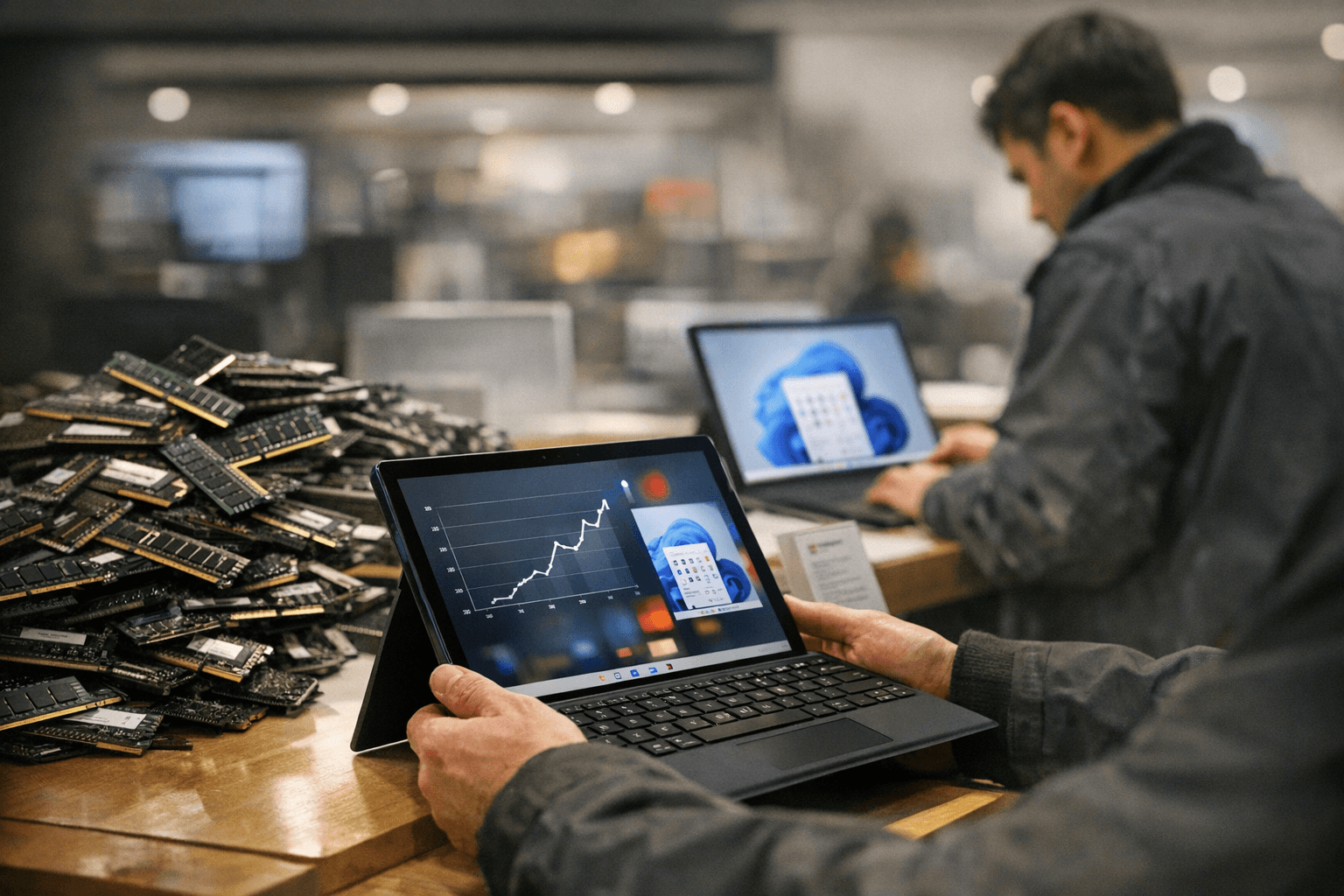
The increases come as IDC warned in December 2025 that the global memory-chip shortage could last well into 2027. IDC said the crunch is being driven in part by AI data-center demand and by manufacturers shifting capacity toward higher-margin HBM and other memory products tied to AI workloads. That combination has tightened supply across the broader RAM market, raising costs for devices that depend on standard memory rather than specialized AI chips.
Microsoft had launched the consumer Surface Pro 11 and Surface Laptop 7 in May 2024 with starting prices of $999, making the current pricing a sharp reversal in less than two years. The company’s Intel-powered business versions of those models arrived in January 2025 at $1,499.99, a sign that the consumer lineup has moved closer to the business tier as component constraints have worsened. Microsoft’s latest pricing now places the base Surface Pro and Surface Laptop alongside the higher-priced Intel models, narrowing the gap between consumer and business machines.
The result is a cleaner illustration of how the memory squeeze is spreading beyond chipmakers and into everyday purchasing decisions. Buyers looking for a lightweight Windows laptop now face fewer premium options under $1,500, higher upgrade costs, and less room to time a purchase around sales or back-to-school budgets. In a market where RAM is increasingly scarce, Microsoft’s Surface line has become one of the clearest examples of the squeeze reaching mainstream consumers.
This article was produced by Prism’s automated news system from verified source data, official records, and press releases, then run through automated quality and moderation checks before publishing. The system is built and supervised by the people who set the standards it runs under. Read our full AI policy.
Did this article answer your question?