Microsoft sued over Azure growth claims and AI spending disclosures
Microsoft is being sued over whether it hid slower Azure growth and the huge AI bill behind its cloud results. The case follows a $357 billion stock wipeout after January earnings.
Microsoft is facing a shareholder lawsuit that says the company misled investors about Azure growth and the scale of the money required to support its artificial-intelligence ambitions. The suit, filed June 12 in federal court in Seattle by the City of St. Clair Shores Police and Fire Retirement System, argues that shareholders were not given a clear enough picture of the capital demands behind Microsoft’s AI push.
The complaint lands against a backdrop of still-strong but less dazzling numbers. Microsoft said fiscal second-quarter revenue reached $81.3 billion, up 17% from a year earlier, while operating income rose 21% to $38.3 billion and non-GAAP diluted earnings per share climbed 24% to $4.14. Microsoft Cloud revenue topped $50 billion for the first time. At the same time, the company reported $37.5 billion in capital expenditures and finance leases, a 66% increase from a year earlier and well above analyst expectations.
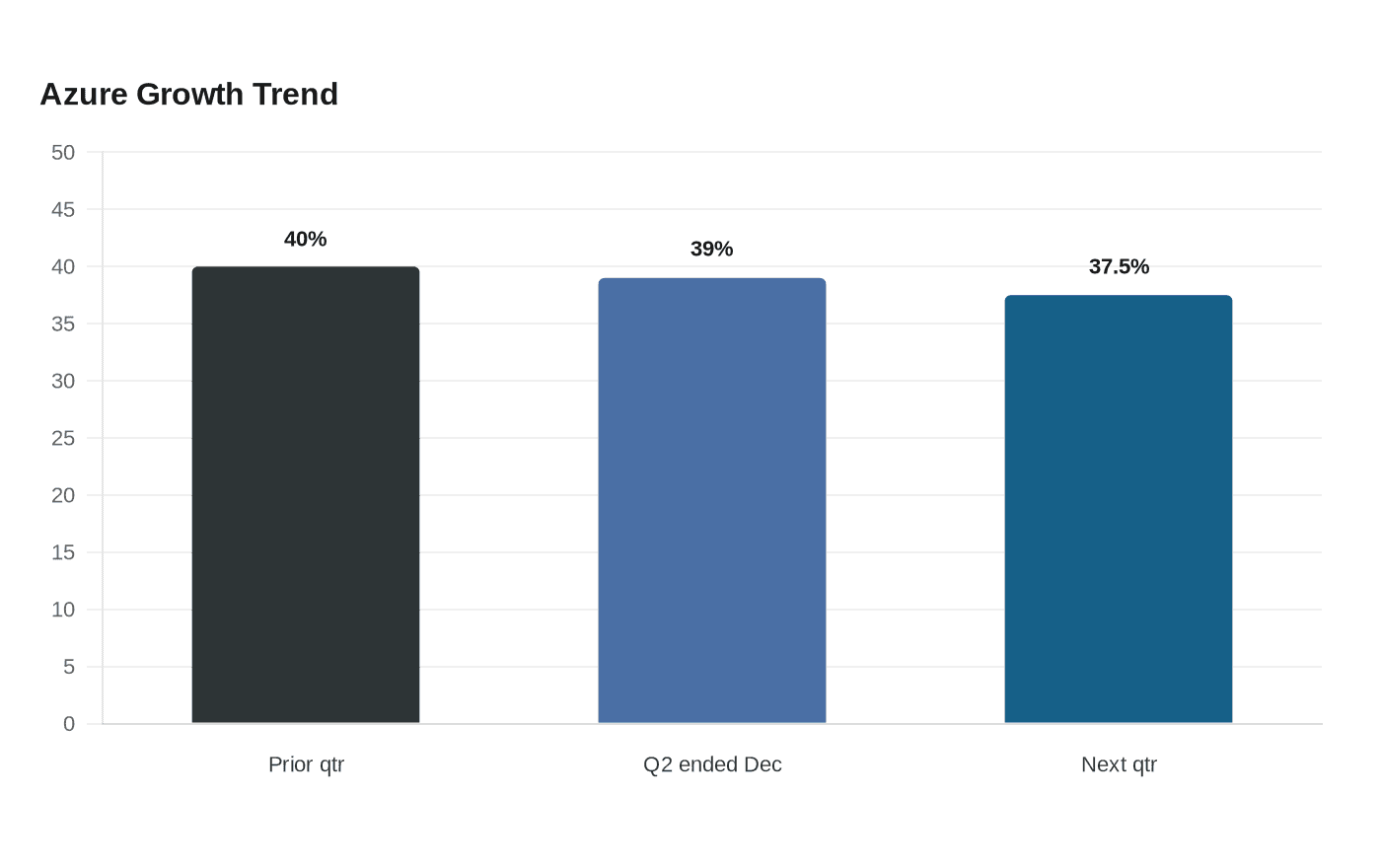
That spending is central to the dispute. Microsoft said Azure and other cloud businesses grew 39% in the fiscal second quarter ended in December, down from 40% in the prior quarter, and forecast constant-currency growth of 37% to 38% for the following quarter. For investors trying to gauge whether AI is driving durable cloud gains or simply driving up costs, the combination of slightly slower growth and surging capex is the key tension.
Wall Street’s reaction to those trade-offs was already visible after Microsoft’s January 28 earnings release. The company’s shares fell about 10% the next day, wiping out roughly $357 billion in market value. At one point, the stock was down as much as 12% intraday before closing at $433.50, a drop that marked the largest single-day dollar loss in Microsoft’s history.
The complaint also names Satya Nadella and Amy Hood and says Microsoft overstated demand for Copilot and other AI products while downplaying problems in product adoption. It further alleges the company had to redirect GPU and CPU capacity toward AI rather than Azure services, underscoring the strain that the buildout can place on an already massive cloud business.
Microsoft returned $12.7 billion to shareholders through dividends and share repurchases in the quarter, a reminder that the company is still generating enormous cash even as it pours tens of billions into infrastructure. The broader question for investors is whether Big Tech’s AI boom is becoming harder to measure, harder to justify and, increasingly, harder to explain.
This article was produced by Prism’s automated news system from verified source data, official records, and press releases, then run through automated quality and moderation checks before publishing. The system is built and supervised by the people who set the standards it runs under. Read our full AI policy.
Know something we missed? Have a correction or additional information?
Submit a Tip