Middle East strikes ground airlines, strand thousands of passengers
Major carriers halted flights and regulators closed airspace after strikes on Iran, canceling thousands of flights and leaving travelers and cargo networks disrupted.
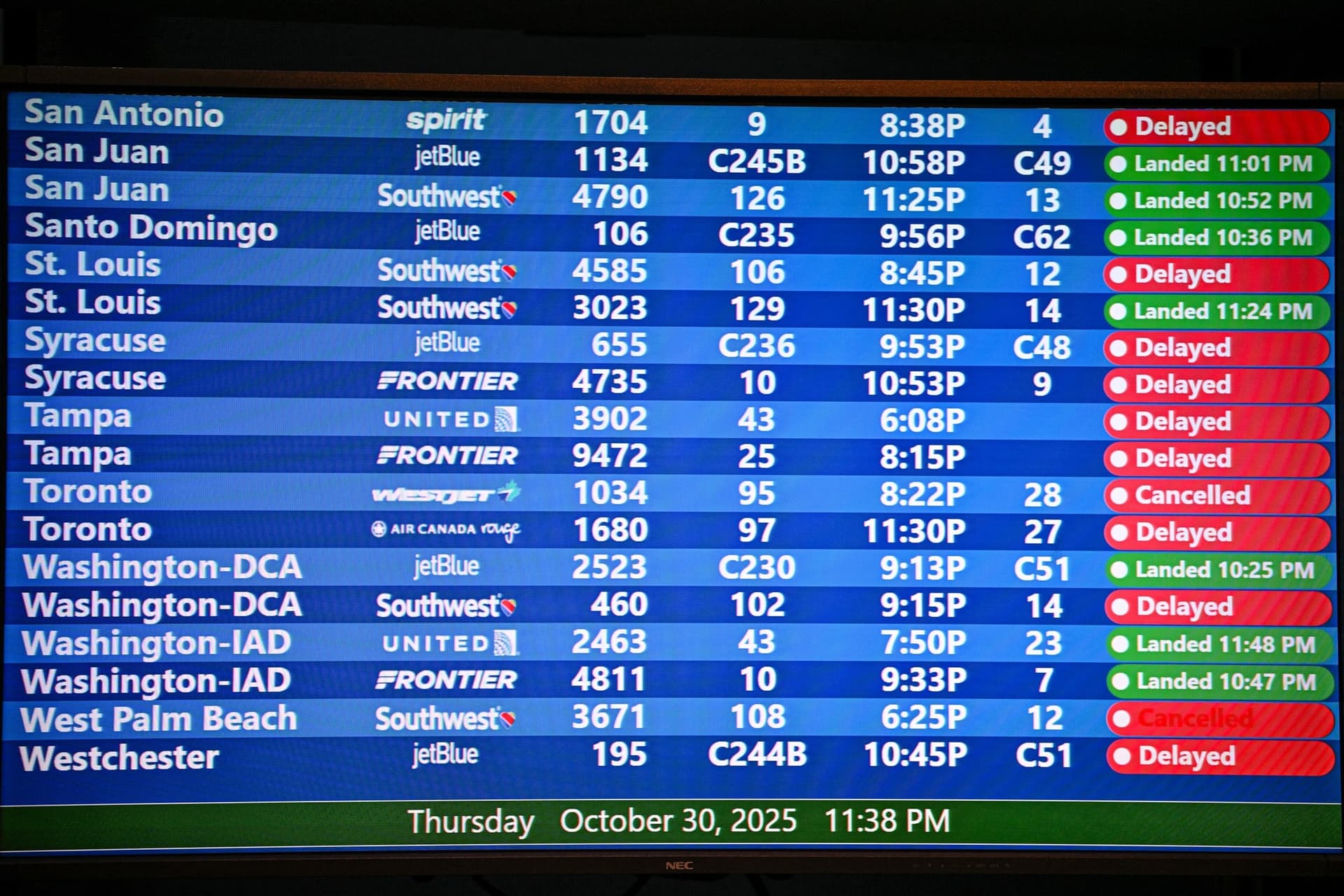
Major carriers including Emirates, Qatar Airways, United and Lufthansa suspended routes and regulators advised avoiding broad swaths of Middle Eastern airspace after U.S. and Israeli strikes on Iran, leaving thousands of travelers stranded and prompting emergency travel warnings. Industry tracker Cirium counted roughly 11,000 flight cancellations in three days, and Bloomberg estimated up to 20,000 passengers were caught in the disruption.
Flight-tracking snapshots from Flightradar24 showed airspace over Iran, Iraq, Kuwait, the United Arab Emirates, Lebanon, Bahrain and Jordan nearly empty early in the crisis. The European Union Aviation Safety Agency issued a Conflict Zone Information Bulletin labeling the situation a “high risk” to commercial aviation and warned that, “Given the ongoing military intervention, retaliatory actions against U.S. and Israeli assets in the region are likely to occur, introducing additional high risks not only to the airspace of Iran but also to that of neighboring states hosting U.S. military bases or otherwise affected by the hostilities and associated military activities, including interceptions.”
Airlines moved quickly to alter operations. Emirates temporarily halted many flights from its Dubai hub, with some specific suspensions running into March 2. Qatar Airways and Etihad extended suspensions into the first days of March as carriers reassessed routing safety and crew positioning. European and Asian carriers from Lufthansa to Air France, KLM, Singapore Airlines and Japan Airlines announced cancellations or turnbacks on affected routes. U.S. carriers adjusted long-haul schedules as well; United canceled U.S. flights to Dubai and limited service to Tel Aviv, while Delta suspended service to and from Tel Aviv for a defined pause.
Airports in the Gulf and beyond also saw immediate effects. Dubai International was closed after being struck during retaliatory operations and airport authorities reported concourse damage and injuries among staff. Abu Dhabi reported that falling debris from an intercepted drone killed one person and wounded seven others, and Kuwait’s airport recorded injuries from a separate strike. Airports in Tel Aviv and Bahrain suspended operations amid the threats. Visuals from the Maldives showed passengers stranded overnight after flights bound for the Middle East were canceled.
Passengers described confusion and long waits when flights were pulled. “We waited for about half an hour. And then, they weren’t saying anything,” one traveler, identified as Pietraru, said after a scheduled departure was canceled. “I went to check with one of the stewardesses, and she told me that the flight had been canceled and they didn’t have any further information at that point.” Pietraru said airline staff later confirmed that “All flights out of the airport were canceled indefinitely.”
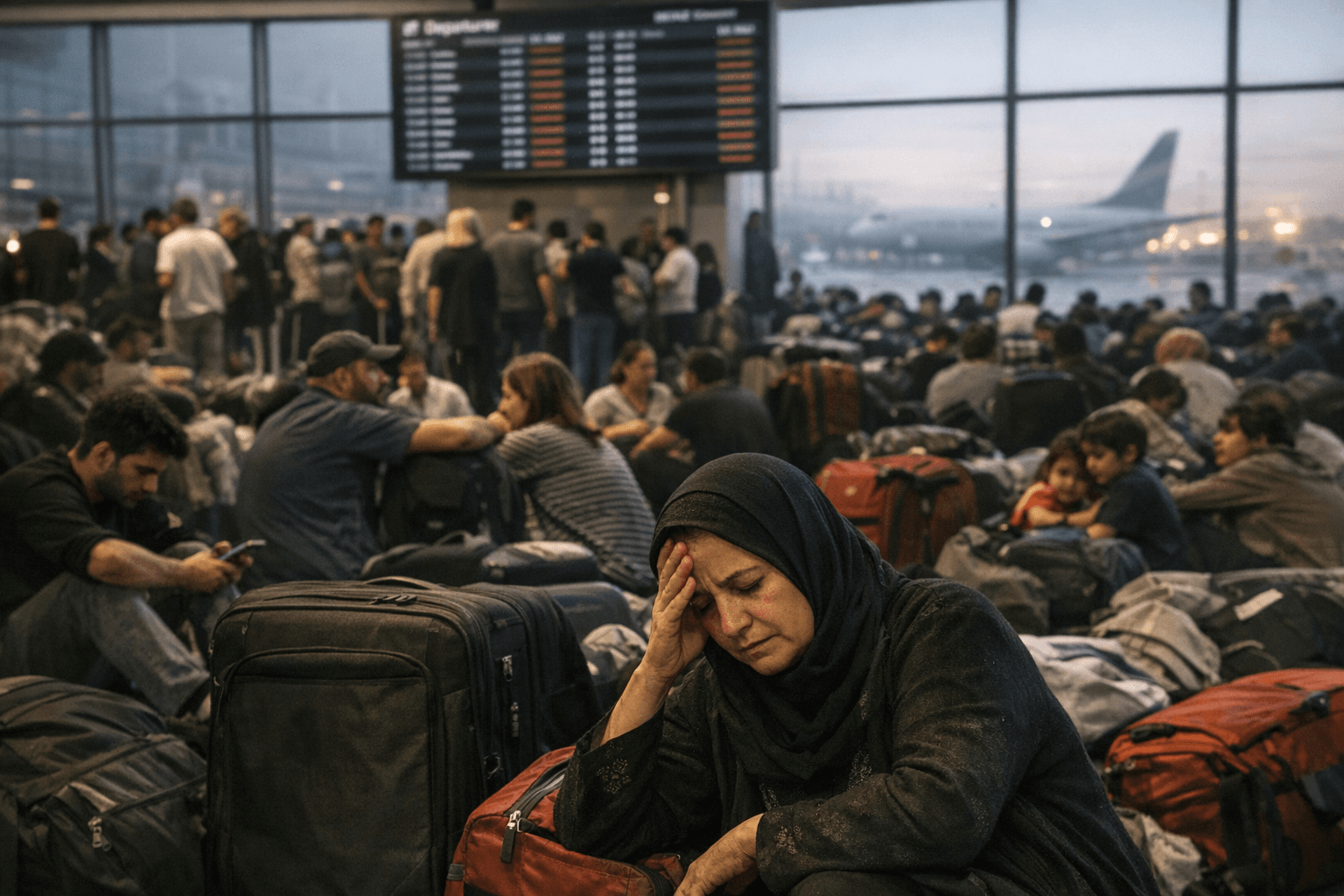
Beyond immediate travel disruption, the crisis has broader public health and equity implications. Hospitals that rely on cross-border referrals, patients traveling for treatment, and people on urgent medical evacuations face delays. Stranded passengers often include low-income and noncitizen workers with limited access to housing or consular support, intensifying humanitarian strains at transit hubs and in small island states where rerouting options are limited.
Governments reacted with advisories and expanded consular assistance; the U.S. Department of State issued a worldwide caution while consular offices scrambled to help nationals remain safe or return home. Travel advisers and industry professionals urged caution. As one travel industry update on LinkedIn put it, “Due to the ongoing war situation in the Middle East, certain airspaces have been temporarily closed till 1st March 2026 until further notice.” The post advised travelers to “reconfirm your flight status,” “stay in touch with your travel consultant,” and “allow flexibility in your schedule.”
Airlines and regulators said the situation would be reassessed as the tactical picture changed. The coming days of CZIB reviews, airline operations bulletins and official notices to airmen will determine whether routes reopen or routings remain constrained, and whether the disruptions to people, healthcare access and fragile communities can be relieved.
This article was produced by Prism’s automated news system from verified source data, official records, and press releases, then run through automated quality and moderation checks before publishing. The system is built and supervised by the people who set the standards it runs under. Read our full AI policy.
Did this article answer your question?

