Middletown Revives In-Person Main Street MLK March; Elder Mary Marshall Keynotes
Middletown returned to an in-person Main Street MLK march for the first time since 2020, concluding with Elder Mary Marshall's keynote and a focus on justice and civic action.
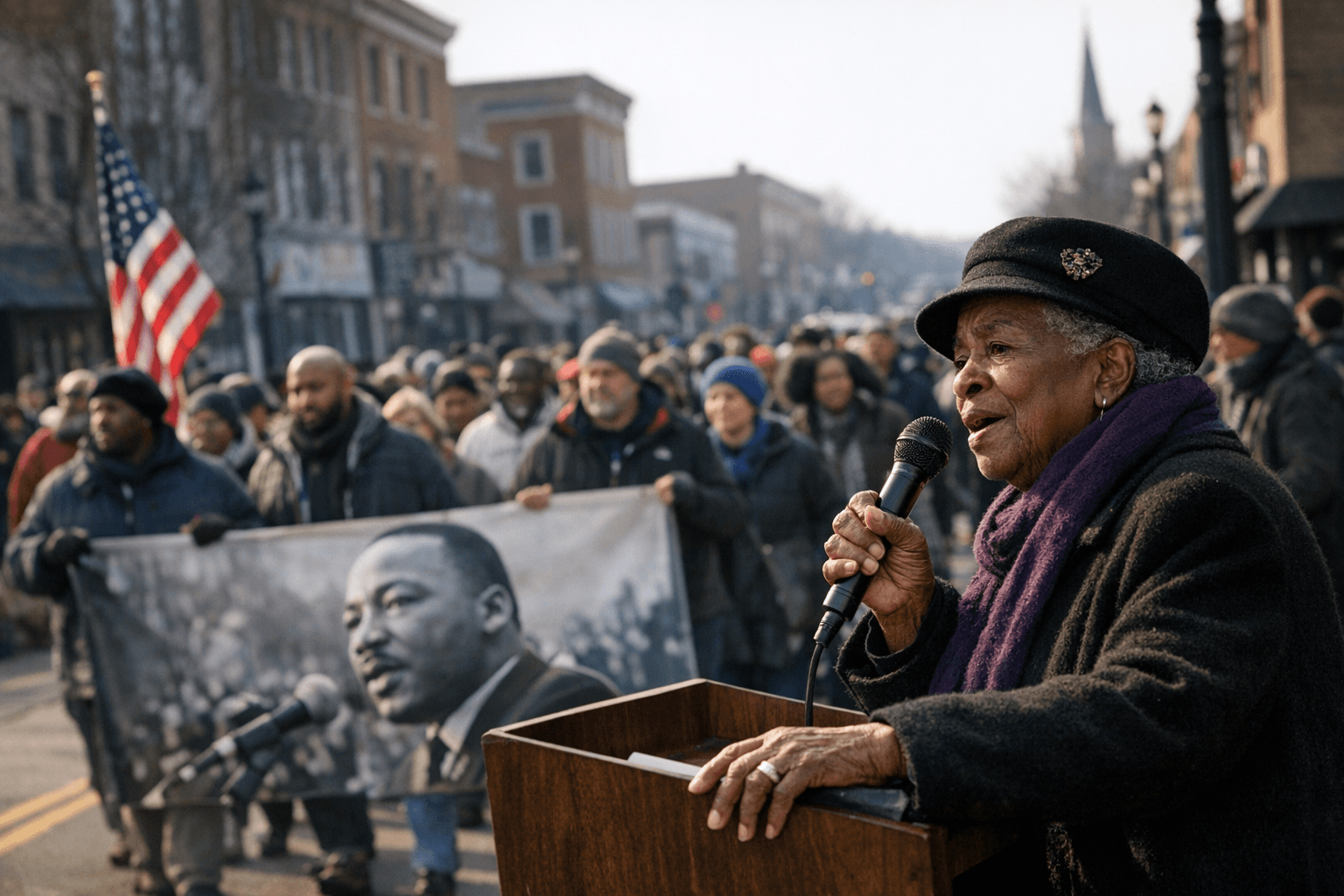
Middletown revived its in-person Main Street march for Martin Luther King Jr. Day, marking the 33rd annual observance and the first procession held in public since 2020. The Martin Luther King Jr. Scholarship Committee of Greater Middletown organized the event under the theme "Faith in Action: Standing Firm for Justice." The march began at noon on Main Street and concluded at First Church (UCC), where a program and keynote address by Elder Mary Marshall, an 85-year-old civil rights activist who worked with Dr. King in Alabama, closed the gathering.
The decision to return to a street procession signaled a restoration of a civic ritual that connects downtown business corridors, houses of worship, and community groups. Organizers framed the event as both a commemoration and a call to sustained civic engagement, emphasizing continuity between past civil rights struggles and present-day local concerns. Elder Mary Marshall's presence linked Middletown's observance to the national movement's living memory and underscored the event's intergenerational dimensions.
For residents, the march functions as more than ceremony; it reestablishes a public space for collective attention to issues that resonate locally. The theme invited a focus on justice in contexts that matter to Orange County voters and stakeholders - public safety, equitable education, affordable housing, and access to the ballot. Community gatherings like this one create opportunities for civic organizations, houses of worship, and schools to coordinate outreach, amplify policy conversations, and mobilize volunteers and volunteers-in-training for local initiatives.
Institutionally, the return of an in-person march highlights the role of civic and faith-based institutions in sustaining democratic practices outside formal electoral cycles. First Church (UCC) served as the program's terminus, demonstrating how religious congregations continue to anchor public commemoration and community organizing. The Scholarship Committee's stewardship of the annual observance also points to the sustained investment in youth development and civic education implied by its name.
The march's revival comes at a moment when local civic capacity matters for policy choices that will be decided at municipal and county levels. Restored public rituals can reinforce civic norms, increase visibility for underrepresented voters, and create momentum for issue-driven advocacy. For Middletown residents, the event offered a tangible reminder that local engagement - attending rallies, joining community boards, and holding elected officials accountable - remains central to translating principles into policy.
As Middletown moves beyond the holiday observance, the march's return may influence how community groups organize in the months ahead and how elected leaders respond to renewed public attention on justice-related priorities.
Sources:
Know something we missed? Have a correction or additional information?
Submit a Tip