Milan Fall 2026 Embraces Old Money Restraint Amid Creative Debuts
Milan’s runways married old‑money restraint — tonal tailoring and sumptuous coats — with a wave of high‑stakes creative debuts that kept buyers and celebrities buzzing.
Big picture: craft, stakes, and debuts Milan arrived like a well‑tailored rebuttal to chaos: low on flash resale theatrics, high on construction and materiality. The week was driven by creative debuts — “Debuts A‑go‑go!” was the mood on many pages — and framed by real commercial pressure after the collapse of Saks Global and an unstable geopolitical backdrop. Camera della Moda Italiana president Carlo Capasa cut through the chatter: “This edition of Milan Fashion Week has been particularly intense and significant… In a complex moment for the global market, the week demonstrated that the Milanese system knows how to respond with substance, not just with image: solid collections, strong identity, and the construction of long‑term value.”
Gucci: Demna’s blockbuster first chapter Gucci’s turn under Demna landed as the week’s seismic moment — Monocle called it a “blockbuster first chapter” — and it wasn’t subtle. The collection “riffed on muscly, macho men and very slim women in skintight fits,” a pairing that polarized press and buyers but undeniably moved the needle. Net‑a‑Porter’s Brigitte Chartrand was unequivocal: “Gucci was absolutely incredible, definitely my favorite debut show in Milan.” Rickie De Sole framed the moment as cultural: “The collection reflected broader cultural shifts toward a more body‑conscious, youthful energy, with Kate Moss closing the show in a moment that felt like a powerful, sexy segue into Gucci’s next chapter.” The runway had celebrity electricity to match — Emily Ratajkowski walked, and Shawn Mendes’s entrance at the Feb. 27 show produced audible screams from the audience.
Fendi: Chiuri’s high‑profile arrival One of the season’s most talked‑about new seats was “Chiuri at Fendi,” listed among the highly anticipated debuts that sent international attention to Milan. The moment carried weight simply for what it signaled: leadership turnover that matters. The front row reflected that gravity too — Uma Thurman attended Fendi on Feb. 25 — and the house’s inclusion on the debut roster underscored how Milan’s roster of ateliers continues to court reinvention within its measured codes.
Marni: Meryll Rogge’s first chapter Marni introduced Meryll Rogge as another fresh creative voice in Milan’s rotation, listed alongside the other major debuts and presented as part of the season’s directional shake‑up. While the supplied notes don’t map Rogge’s exact silhouettes, the appointment itself is a statement: houses that once relied on slow, quiet transitions are now launching bolder creative experiments, and Marni’s reset belongs to that cohort. Expect Marni’s next moves to be watched for how they translate eccentricity into wearable, resale‑proof pieces.
Jil Sander: Simone Bellotti’s sophomore refinement Simone Bellotti’s second Jil Sander collection was one of the rare shows where minimalism felt freshly personal rather than purely historical. Monocle argued the collection “cemented the designer’s status as one of the most exciting and revered creative directors showing in Milan,” and W Magazine saw Bellotti shaping “a narrative that is looser and freer. And even a bit whimsical.” The runway proved it: a peplum jacquard minidress that “looked like its fabric could have been stripped from an armchair” made a case for tactility in pared‑back shapes, proving restraint can still flirt with domestic opulence.
Prada: layering as concept and costume Prada’s Miuccia Prada and Raf Simons show leaned hard into layering as a conceptual engine and as pure, visible theater. The collection was described as “Wild, chaotic, and free‑spirited,” with “piles of clothes” intentionally acting as an anchor: thick leathers collided with sheer skirts and big sweaters; a pretty pink dress peeled back to reveal a supersize striped scarf underneath. Prada’s own line captured the intent plainly — the collection is “a reflection of the multifaceted realities of women and the complexities of life,” and the designers were guided by “a fascination with the process of layering, of transforming through the day, through your clothes.” It’s a practical fantasy: theatrical while still giving buyers a logic for mix‑and‑match spending.
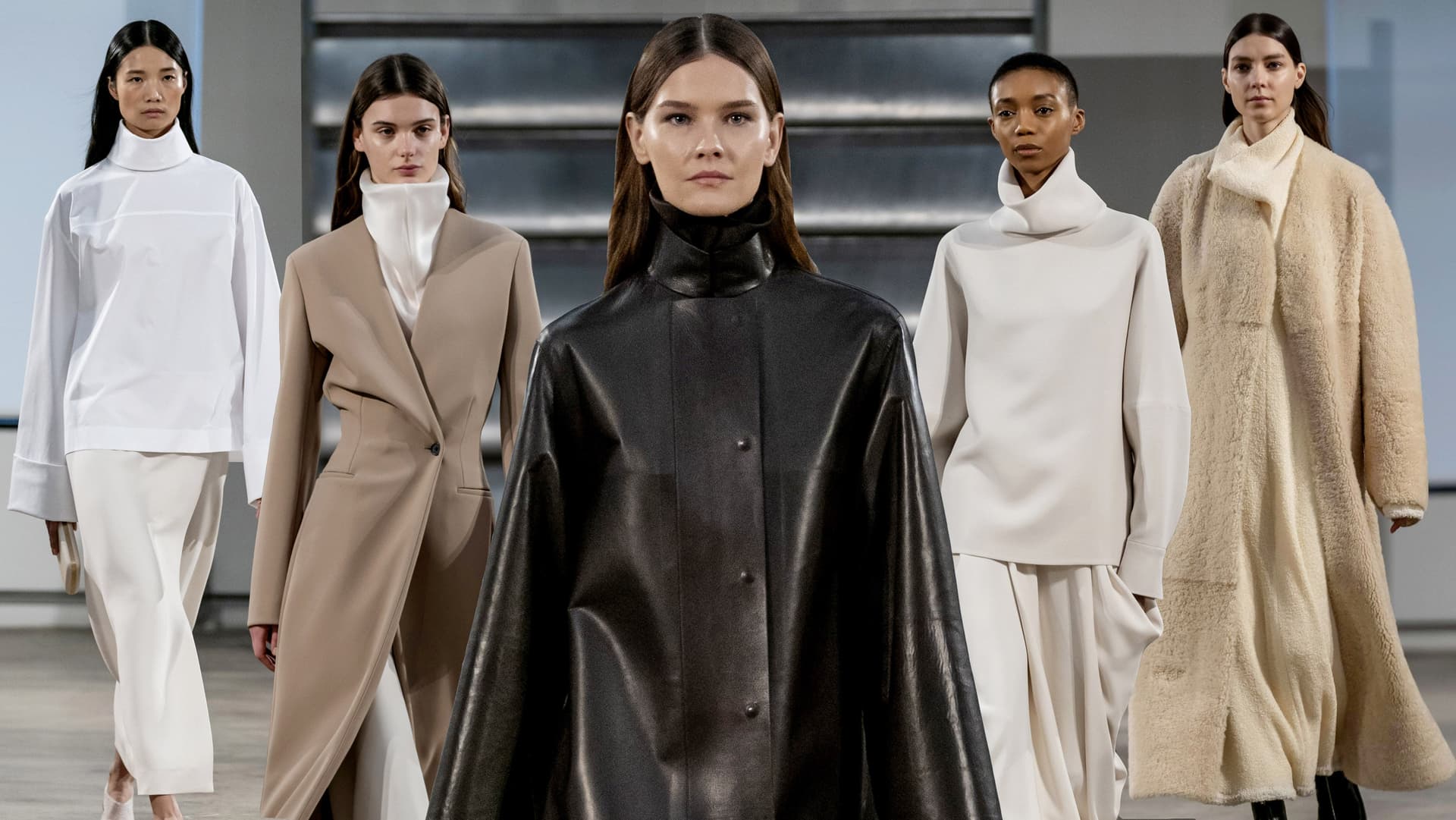
Max Mara: heavy coating and tonal glamour If old‑money dressing were a silhouette, Max Mara would be wearing it: sumptuous wool coats and cropped evening shearling looks dominated the “Heavy Coating” conversation. The house’s tonal outerwear felt calibrated for those who buy once and keep forever — a renewed focus on tailoring and tonal outerwear that read as both investment and mood. Monocle and W Magazine both flagged Max Mara as proof that craft and quality materiality remain central to Milan’s commercial pitch.
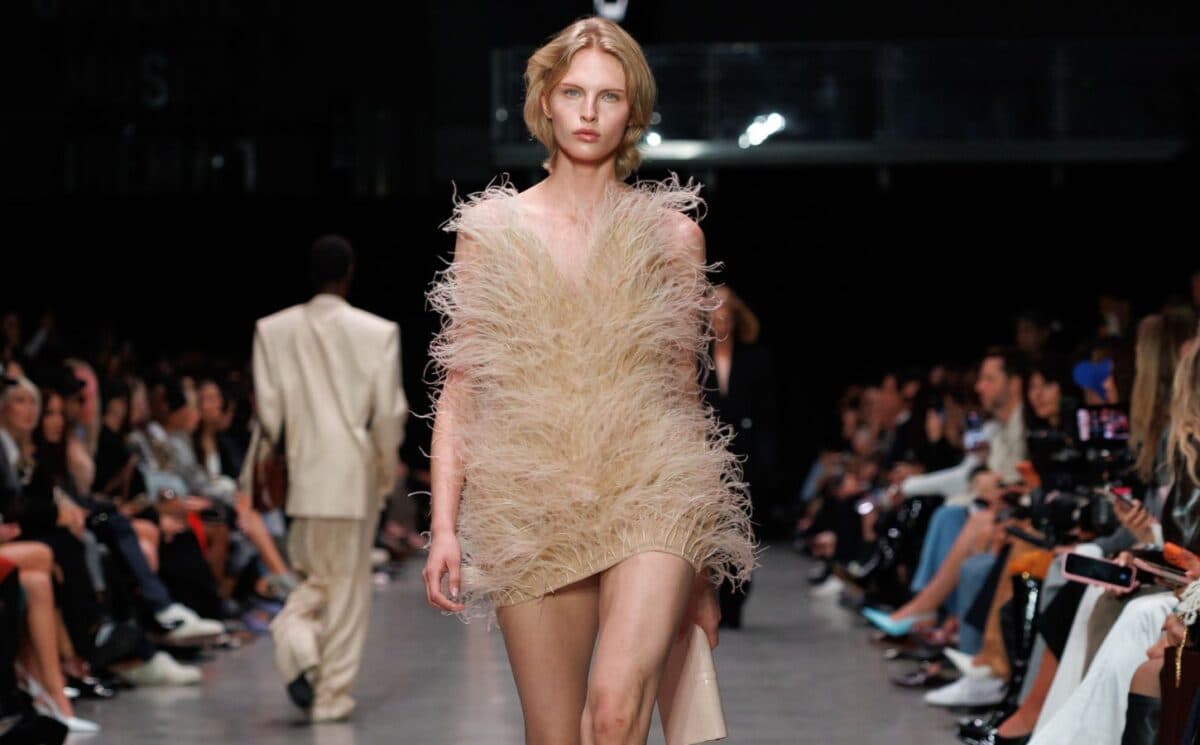
Bottega Veneta, Tod’s, and Loro Piana: structures, softened and experimenting Louise Trotter’s Bottega Veneta notes hit that sweet spot between austerity and indulgence: “This is a season of structures, softened,” she wrote. “A study of intimacy as much as protection. The way an austere façade belies beauty on the inside.” The runway followed through with exaggerated volumes in butter‑soft leathers, feathers, and knitwear with leather panelling against an industrial‑grey palette brightened by bubblegum pink and retro yellow. Tod’s reaffirmed dedication to craft and quality materials, and Loro Piana was specifically noted as “experimenting” — small, quiet pushes from brands that typically speak the language of discreet wealth.
- Zara Double‑Faced Faux Leather Jacket; Gap Modern Rib T‑shirt; Zara Z1975 Mid‑Rise Straight Loose Fit Jean; Dr. Martens 1460 Vegan 8‑Eye Boot.
- Menswear staples like Mango pinstripe blazers and J.Crew cashmere crewnecks were deployed casually, proving the old‑money look can be assembled from both high and accessible brands.
Runway to street: tailoring, chore coats, and accessible buys
Milan’s street was a study in translateable restraint: sleeker tailoring worn off‑duty, chore coats instead of puffer reliance, faux fur accents, and boxy leather silhouettes that read modern rather than ostentatious. Elle’s street‑style rundown reinforced the point — the milder weather allowed fewer layers and more considered pieces:
Those product calls show how runway restraint can be translated into a shopping list that still feels deliberate and curated.
Diesel, front‑row drama, and the celebrity breeze Celebrity magnetism was part of the week's oxygen. At DIESEL on Feb. 24, K‑pop star Jeong Yun‑Ho (ATEEZ) arrived in a coordinating brown jacket and pants and a wash of terracotta eye makeup — a small, memorable look that carried street‑to‑runway shorthand. Gucci’s Feb. 27 spectacle had Romeo Beckham, Nicky and Paris Hilton on the roster and—most loudly—Shawn Mendes, whose arrival “if you could hear screaming… was probably losing their minds.” Demi Moore’s new textured “Demi‑tris bob,” styled by Dimitris Giannetos, was explicitly crafted for Demna’s show: “I wanted to give Demi a very bold and fashion forward look for Demna’s show… an amazing, short, above the shoulder bob with this very sleek wet texture would be perfect to complement her look.” Meanwhile, Kate Moss closing Gucci provided a through‑line: the old guard still brings theater to new chapters.
Trends that matter: layering, quiet luxury, and purchase logic Across houses, a few commercial and stylistic threads recurred: layering has become essential; tailoring and tonal outerwear commanded attention; and there were unmistakable quiet‑luxury signals — pieces meant to be read up close. Milan’s answer to a challenging retail backdrop was not spectacle alone but repeatable craft: “solid collections, strong identity, and the construction of long‑term value,” as Capasa put it. For anyone building a wardrobe now, the season argued for one bold debut piece and several quietly superb anchors — the coat, the knit, the minimal dress with an unexpected fabric.
Conclusion: restraint with teeth Milan Fall 2026 felt like an exercise in controlled contrast: high‑stakes creative debuts rubbing shoulders with an almost old‑money insistence on materials, tailors, and long‑term thinking. Designers threw sparks — Demna’s blockbuster energy, Bellotti’s refined minimalism, Prada’s layered theater — but the week’s backbone was craft and buyability. If you’re looking to shop this season, aim for the intersection: statement touches that sit on a foundation of great tailoring and luxurious fabric. That’s where Milan’s momentum lives — conversation starters that age like heirlooms.
Know something we missed? Have a correction or additional information?
Submit a Tip