Militaries Struggle to Keep Pace With Soaring Demand for Air Defense Systems
In just 12 days of fighting with Iran, the U.S. burned through a quarter of its THAAD stockpile as production of key interceptors lags years behind battlefield demand.

A single 12-day war exposed just how precarious the global stockpile of air defense interceptors has become. When U.S. forces joined Israel in countering Iran's ballistic missile barrages in June 2025, they fired more than 100 Terminal High Altitude Area Defense interceptors, consuming roughly a quarter of the entire American THAAD supply and approximately $1.17 billion worth of missiles in less than two weeks.
The production math is brutal. In fiscal year 2025, the U.S. manufactured just 12 THAAD interceptors per year, according to the Congressional Research Service, a rate so far below battlefield consumption that rebuilding stockpiles could take years. The Department of Defense responded by reprogramming more than $700 million into THAAD procurement from Israel Security Supplemental Act funds, which, at the FY2026 estimated unit cost of $15 million per interceptor, would purchase roughly 45 additional missiles. The Pentagon's FY2026 budget request included funding for just 25 interceptors in its base budget, with 12 more contingent on unresolved reconciliation bill negotiations.
The Patriot system presents a similar mismatch. Lockheed Martin delivered approximately 620 PAC-3 MSE interceptors worldwide in 2025, a record production figure. Yet in the opening three days of the broader U.S.-Israeli campaign against Iran, Middle Eastern countries expended more than 800 Patriot missiles defending against over 2,000 Iranian drones and more than 500 ballistic missiles. Ukrainian President Volodymyr Zelenskyy noted that figure exceeded the total Patriot stock Ukraine had available at certain points during four years of war with Russia. Each PAC-3 missile carries a price tag of more than $3 million. Lockheed Martin has pledged to quadruple critical munitions production, though the company offered no timetable for when those increases would take effect.
The gap between consumption and output has reshaped priorities across allied defense ministries. Europe's air defense industry has accelerated investment to close the deficit. German manufacturer Diehl Defence committed €1.5 billion to expand IRIS-T missile production to 2,000 missiles per year, up from roughly 800 to 1,000 at the end of 2025, and plans to produce 10 IRIS-T SLM battery systems in 2026, scaling to 16 by 2028. European missile consortium MBDA pledged €2.4 billion toward expanded production capacity between 2025 and 2029.
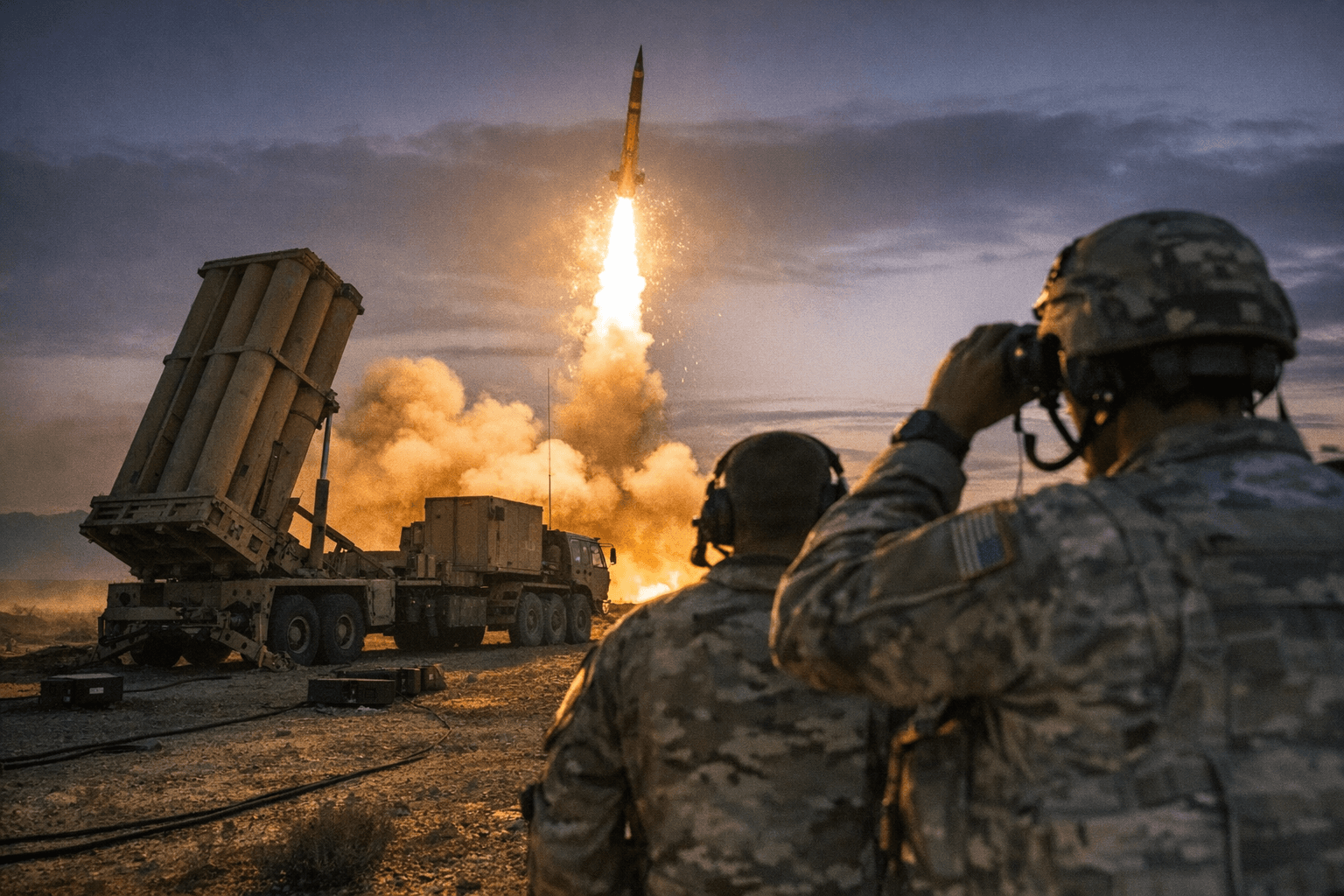
The Payne Institute estimated that ongoing fighting consumed approximately one-third of the global THAAD stockpile, and warned that U.S.-allied Gulf states absorb the heaviest expenditures while sitting at the back of the resupply queue. The U.S. Army's 2025 budget request reflected the alarm, incorporating a 77 percent increase in air and missile defense funding compared to the prior year.
Globally, the air defense systems market reached $51.4 billion in 2025, with analysts projecting growth to $73.7 billion by 2034. But market size provides little comfort when the manufacturing timelines for precision interceptors span years and the conflicts consuming them unfold in days.
This article was produced by Prism’s automated news system from verified source data, official records, and press releases, then run through automated quality and moderation checks before publishing. The system is built and supervised by the people who set the standards it runs under. Read our full AI policy.
Did this article answer your question?