Military child care shortages threaten readiness as waitlists and turnover surge
Waitlists stretching to seven months and turnover as high as 50% are forcing military parents to scramble, even as Pentagon data says child care is part of readiness.
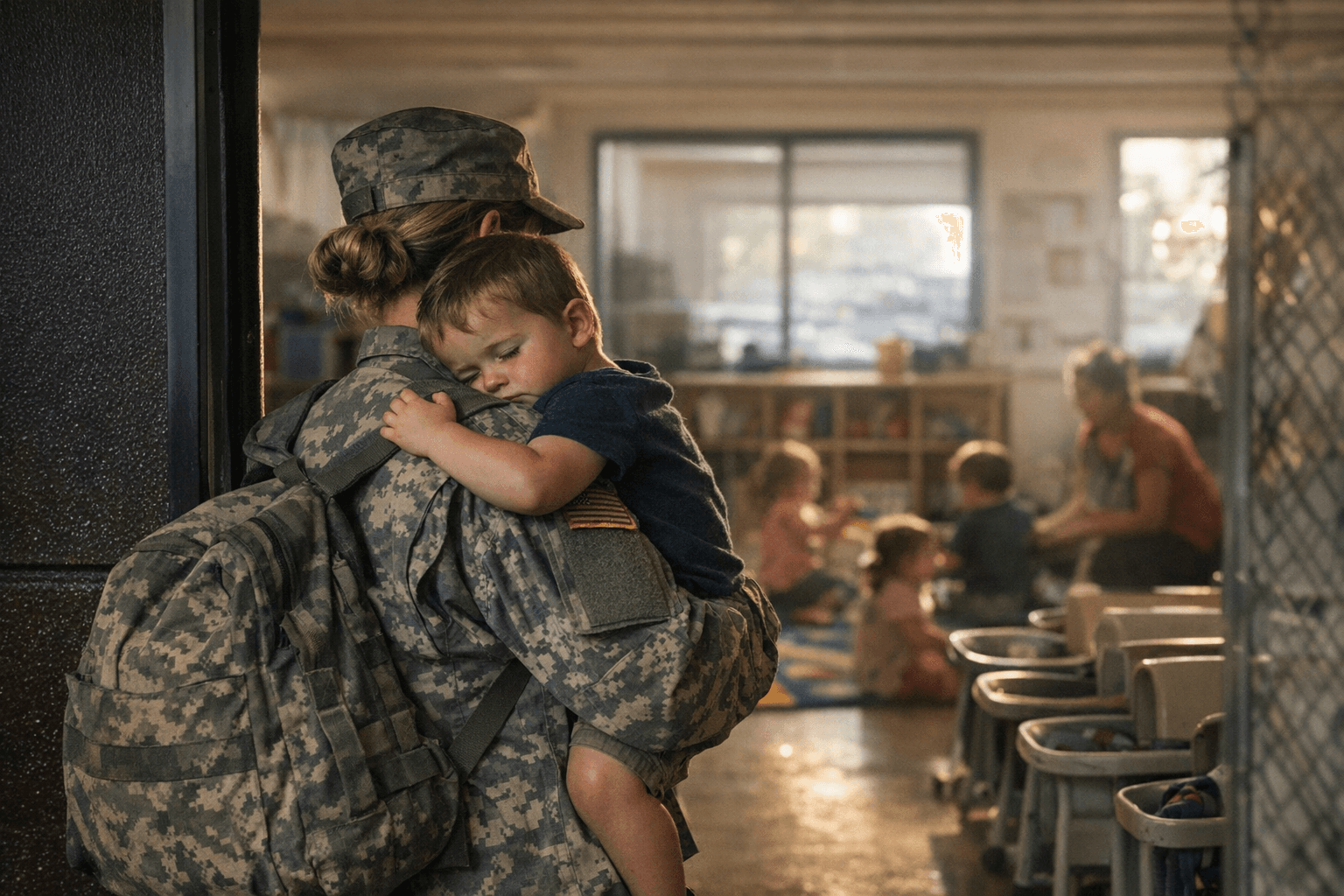
Military child care has become a readiness problem, not a side benefit. The Department of Defense says its child care system supports mission readiness, family readiness, retention and morale, and it serves about 200,000 children of servicemembers and civilian employees each year while employing about 20,000 child care workers at a cost of more than $1 billion annually. But families are still running into waitlists and staffing gaps that can make reliable care hard to find before a deployment, a transfer or a normal duty day.
A 2024 review by the U.S. Government Accountability Office found that turnover in military child care centers ranged from 34% at Marine Corps facilities to 50% in the Army during fiscal year 2022. The watchdog visited eight installations, selected in part because they had large waitlists, and said the Air Force, Army, Marine Corps and Navy should develop metrics to track whether retention efforts are actually improving the workforce. That recommendation reflected a deeper problem: the military cannot treat child care as a morale perk when the staff who provide it are leaving at such high rates.
For many families, the strain shows up immediately. When installation-based care is unavailable because of distance or a waitlist, the Pentagon’s Military Child Care in Your Neighborhood fee-assistance program is supposed to help families secure care off base. That program exists because the gaps are real, and because a servicemember cannot always wait months for a slot to open while balancing shift work, training schedules or orders to move.
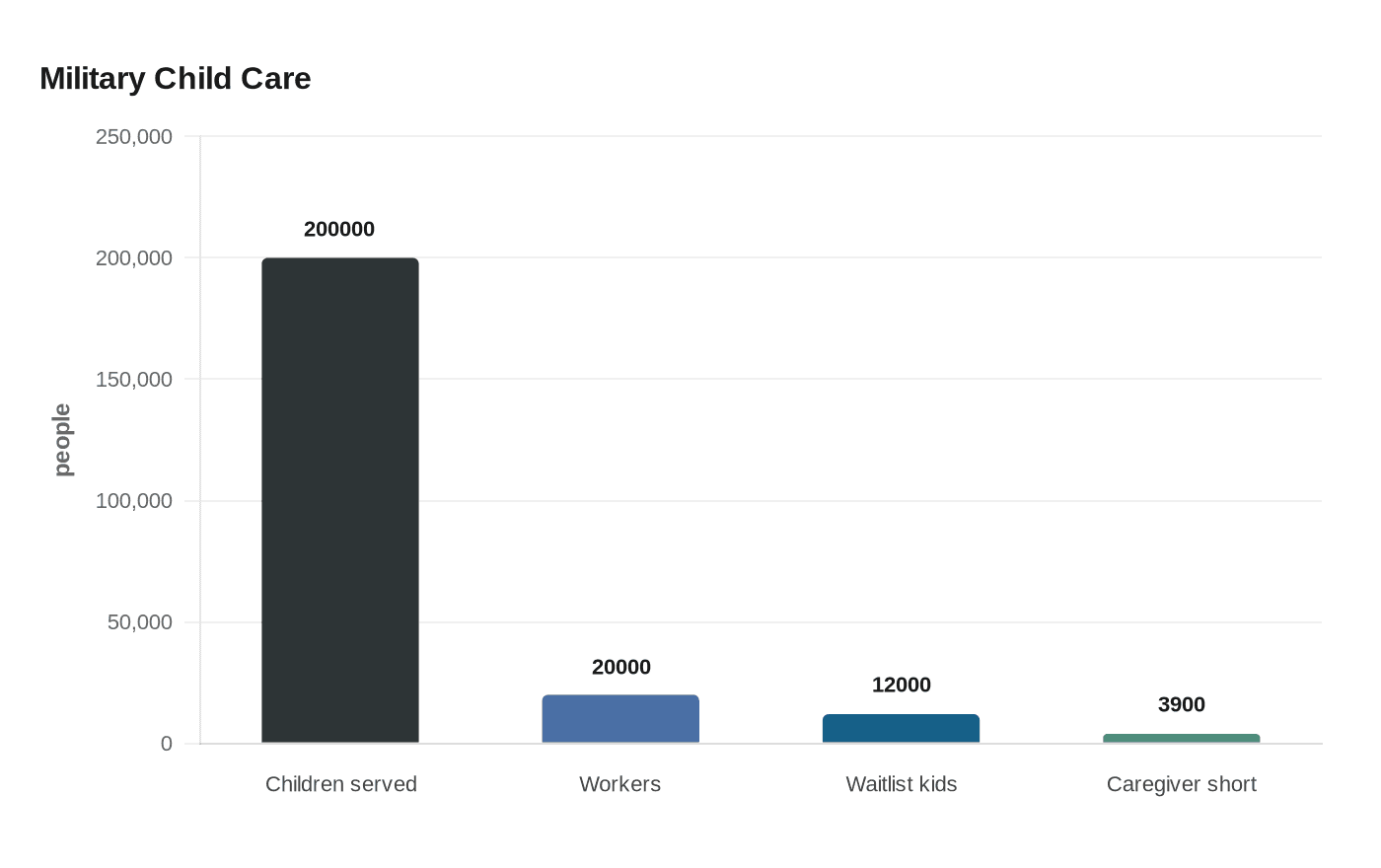
Pressure on Congress has followed the same pattern. A bipartisan Senate bill introduced on April 16, 2024, the Expanding Access to Child Care for Military Families Act of 2024, would require the Defense Department to pilot new early child care options for servicemembers and their families. Sen. Elizabeth Warren said about 12,000 children were on military child care waitlists and staffing was short about 3,900 caregivers. A military report said waits at military child care centers could run six to seven months, long enough to complicate assignments and force parents to cobble together unstable arrangements.
The Pentagon has responded with smaller fixes, including a pilot reimbursement program that began October 1, 2024, to cover child care provider travel during a permanent change of station move when care is unavailable at the new duty station within 30 days. It has also expanded fee-assistance programs and reduced on-base child care fees in recent years. Taken together, the numbers show how deeply child care now affects retention, deployability and morale, making it part of the nation’s defense infrastructure in all but name.
This article was produced by Prism’s automated news system from verified source data, official records, and press releases, then run through automated quality and moderation checks before publishing. The system is built and supervised by the people who set the standards it runs under. Read our full AI policy.
Did this article answer your question?