Missed Russian missile sparks blaze at Moscow oil refinery
A missile launched to stop a drone may have hit the Moscow Oil Refinery instead, turning Russia’s air defense shield into part of the fire.

Footage from the strike on the Moscow Oil Refinery showed a Russian air-defense missile racing toward a fuel silo, then an explosion blooming almost exactly as it arrived. Independent Russian outlet Astra and other OSINT analysts said the video points to a missile from Russian air defense forces hitting the tank after missing a Ukrainian drone, a possibility that would turn a supposed interception into the likely trigger for the blaze.
The refinery in Moscow’s Kapotnya district, about 15 kilometers from the Kremlin, was hit again on June 18, 2026, during what Russian authorities described as the largest Ukrainian drone attack on Moscow since the start of the full-scale war. Videos from the site showed multiple fireballs and thick black smoke over the complex, and one dramatic clip captured the disc-shaped lid of a storage tank blasted into the air. Ukrainian officials later said the refinery was damaged and operations were halted.
The facility is not just any industrial target. Owned by Gazprom Neft, the Moscow Oil Refinery is considered critical to the capital’s fuel supply, with reporting indicating it provides up to 40 percent of Moscow’s gasoline and about 50 percent of its diesel fuel, while also supplying jet fuel to Moscow airports. The refinery was reportedly struck for the second time in a week, underscoring how vulnerable Russia’s energy infrastructure has become even inside the capital region.
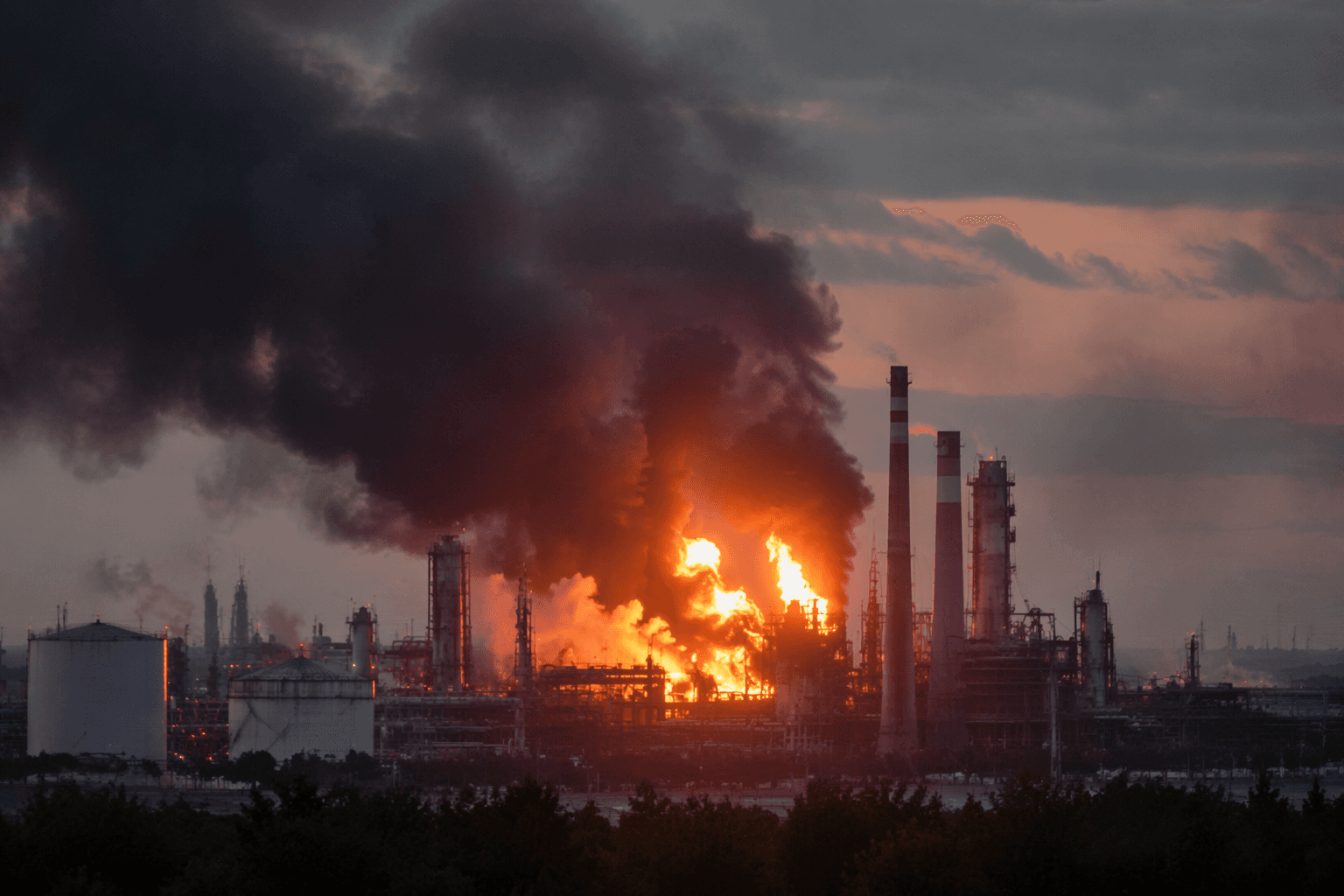
Moscow Mayor Sergei Sobyanin initially said dozens of drones were intercepted over the city. Russian officials later claimed 194 drones were intercepted over Moscow and 555 nationwide overnight, a scale that matched the severity of the disruption on the ground. Reporting also said at least five fires broke out at the refinery as crews tried to contain the damage.
The air assault rippled far beyond the refinery. Aeroflot and its subsidiary Rossiya canceled more than 170 flights to and from Moscow and delayed more than 110 others, snarling travel across the Russian capital’s main airports. For Vladimir Putin’s government, the episode carries a double message: Ukraine can still reach deep into Moscow, and Russia’s growing belt of air defenses around strategic sites may itself create new risks when interception goes wrong.
This article was produced by Prism’s automated news system from verified source data, official records, and press releases, then run through automated quality and moderation checks before publishing. The system is built and supervised by the people who set the standards it runs under. Read our full AI policy.
Know something we missed? Have a correction or additional information?
Submit a Tip