Mississippi Extension: Stocking Crappie Often Harms Small Private Ponds' Bass and Bream
Stocking crappie often reduces bass and bream growth in small private ponds, forcing Lafayette County pond owners to choose management trade-offs that affect fishing quality.

Mississippi State Extension specialists warn that adding crappie to small private ponds can undercut the quality of bass and bream fisheries, a concern for Lafayette County pond owners who manage ponds for family recreation or property value.
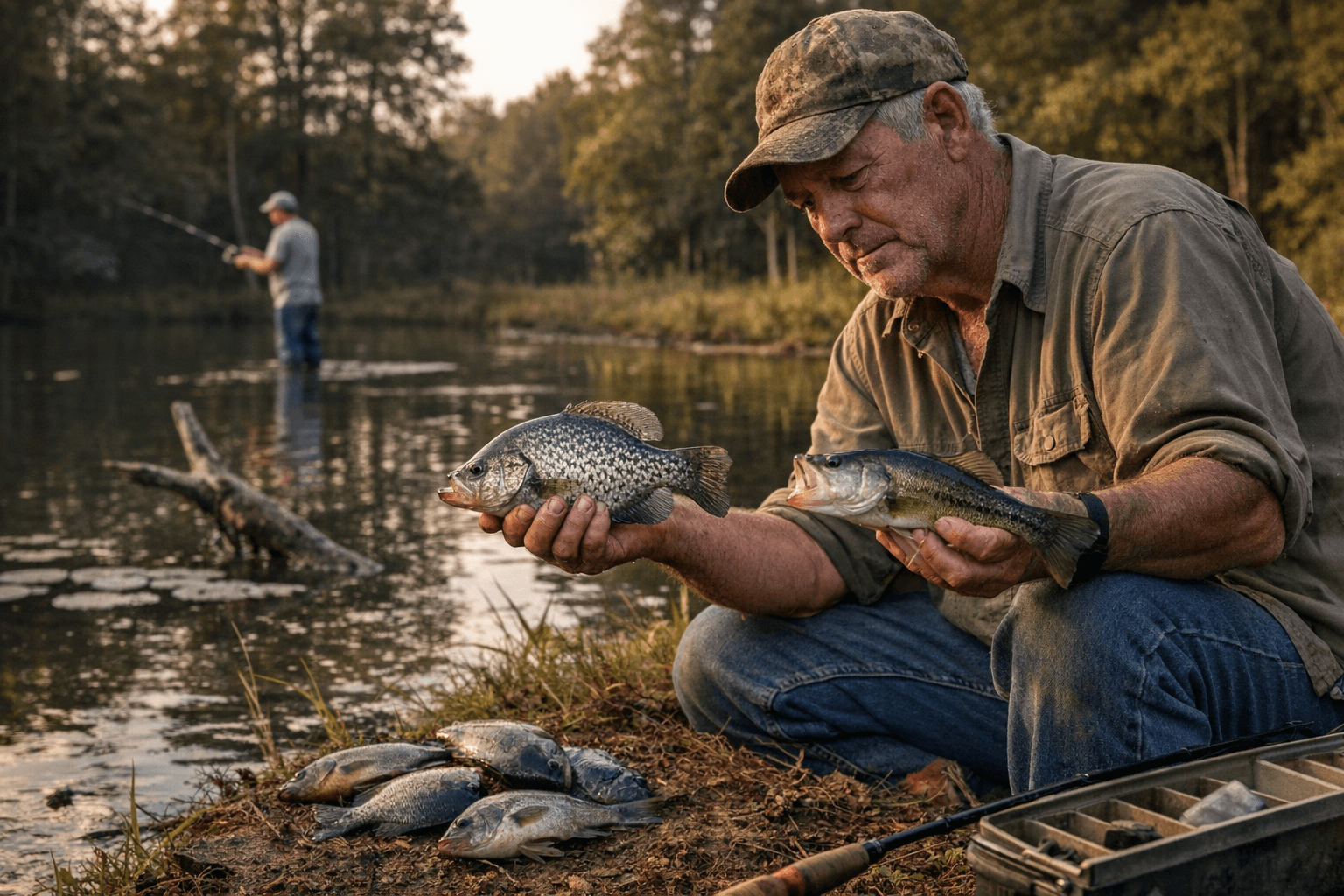
Extension guidance highlights crappie reproductive behavior that can produce occasional population explosions. Those boom years create dense schools that overlap in diet with bass and bluegill, competing for the same food base and often producing poor growth rates in traditionally desired pond fish. The result can be a pond that looks full of fish but offers smaller, less productive bass and bream for anglers.
The Extension lays out clear management options and trade-offs for owners who already have crappie or are considering stocking them. For ponds where managers want to preserve or enhance bass and bluegill size, the recommendation is to avoid crappie stocking and to focus on predator management. Increasing the number of predatory bass can help control crappie numbers and reduce recruitment, though that approach shifts the pond toward a predator-dominant system and may require ongoing stocking and monitoring.
For owners who prefer crappie fishing, the Extension notes that accepting periodic population explosions is part of the trade-off. It also provides targeted stocking recommendations for black crappie and practical stocking rates that are appropriate only under certain pond conditions. Those recommendations emphasize that stocking strategy must align with pond size, existing fish community, and management goals; improper stocking can create long-term imbalances that are costly to reverse.
Another tool discussed is winter drawdown, a habitat management technique that can reduce crappie recruitment by exposing spawning and nursery areas during vulnerable periods. The Extension presents drawdown alongside other tools as part of an integrated plan rather than a standalone fix, since each tactic affects vegetation, access, and other species differently.
For Lafayette County landowners, the stakes are both recreational and financial. Small ponds are often managed by families who expect consistent angling for bass and bream; unexpected crappie surges can change that experience and raise management costs. The Extension guidance frames these choices as intentional: prioritize crappie and accept lower bass/bream growth, or prioritize bass and bluegill and avoid crappie stocking while investing in predator management and habitat control.
Pond owners in Lafayette County should inventory their fish communities, set clear goals for what they want from a pond, and then adopt the mix of stocking and habitat tactics that matches those goals. County Extension agents can help tailor the practical stocking and management steps to individual ponds so owners can protect fishing quality and avoid expensive corrective measures down the line.
Sources:
Know something we missed? Have a correction or additional information?
Submit a Tip