MIT CSAIL's MechStyle uses generative AI with FEA to 3D-print everyday items
MechStyle lets you style vases, hooks and lamps from a text or image prompt while running FEA so the personalized 3D prints remain load-bearing and usable.
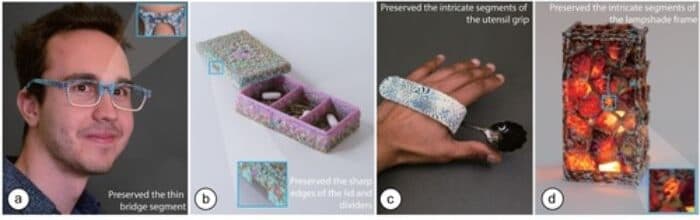
MIT CSAIL researchers built MechStyle, a generative‑AI system that personalizes 3D models while explicitly simulating mechanical behavior so the finished objects can be 3D printed and used. Lead author Faraz Faruqi, an MIT EECS PhD student and CSAIL engineer, helped design a workflow in which users upload an existing model or pick a preset asset such as a vase, hook, or lamp, guide changes with a text or image prompt like “cactus-like texture,” and let the system modify geometry while checking physical viability.
The technical heart of MechStyle is the coupling of a generative model that stylizes geometry with on‑the‑fly finite element analysis, or FEA, that evaluates stress distribution as the design evolves. The researchers paired that simulation with adaptive scheduling and dynamic weak‑region detection so the stylization process does not weaken critical areas. The team described two explicit mitigation options: halt stylization entirely in a region when a predefined stress threshold is reached, or apply progressively smaller refinements so at‑risk areas never approach the limit.
MechStyle was tested on 30 different 3D models using stylizations such as bricks, stones, and cactus textures. The contrast with prior, appearance‑only tools is stark: the researchers reported that only 26 percent of traditionally AI‑stylized models remained structurally viable after modification, whereas MechStyle’s FEA‑plus‑adaptive scheduling approach produced results that could be “as high as 100 percent structurally viable” in the experiments. The team also emphasized tactile intent: Faruqi said, “We want to use AI to create models that you can actually fabricate and use in the real world.” He added, “So MechStyle actually simulates how GenAI‑based changes will impact a structure. Our system allows you to personalize the tactile experience for your item, incorporating your personal style into it while ensuring the object can sustain everyday use.”

Collaborators on the project include researchers from Google, Stability AI, and Northeastern University, and MIT’s coverage included imagery and a video thumbnail illustrating the workflow. Representative outcomes described across coverage include a cactus‑like hook that keeps the load‑bearing capacity needed to hang items while showing the desired surface geometry, and stylized vases and lamps that preserve durability after printing.
Important caveats remain: the supplied summaries do not contain publication venue, printer materials or settings, numeric stress thresholds, or validated lifetime testing of printed parts, so claims are limited to the structural‑viability metrics the researchers reported. Even so, MechStyle addresses a clear gap—many generative design tools produce attractive forms that fail in the real world—and offers a concrete path for designers, makers, and gift creators to produce truly personalized, tactile objects that are safe to fabricate and use.
Know something we missed? Have a correction or additional information?
Submit a Tip