MIT researchers map Russia’s Burevestnik nuclear missile flight path
MIT researchers say Burevestnik could vent tens of TBq of radionuclides per hour, making a successful flight a radiological risk before any war begins.

A nuclear-powered cruise missile can be dangerous even when it works. MIT researchers argued that Russia’s Burevestnik, built to fly low and evade missile defenses, could release radioactive material during flight itself, turning testing, deployment and any crash into a contamination risk far beyond the battlefield.
At a March 13 seminar hosted by the MIT Laboratory for Nuclear Security and Policy, Jake Hecla described an open-source effort to model the weapon’s likely performance. The abstract said Burevestnik, also known to NATO as SSC-X-9 Skyfall, appeared to use a roughly 4 MWth direct-cycle nuclear turbojet. It also said the system could generate tens of TBq of gaseous radionuclides per hour, including argon-41, krypton-85m, krypton-83m and carbon-14. One analyst described the concept bluntly: “It’s almost certainly a terrible idea. But it’s not an impossible idea.”
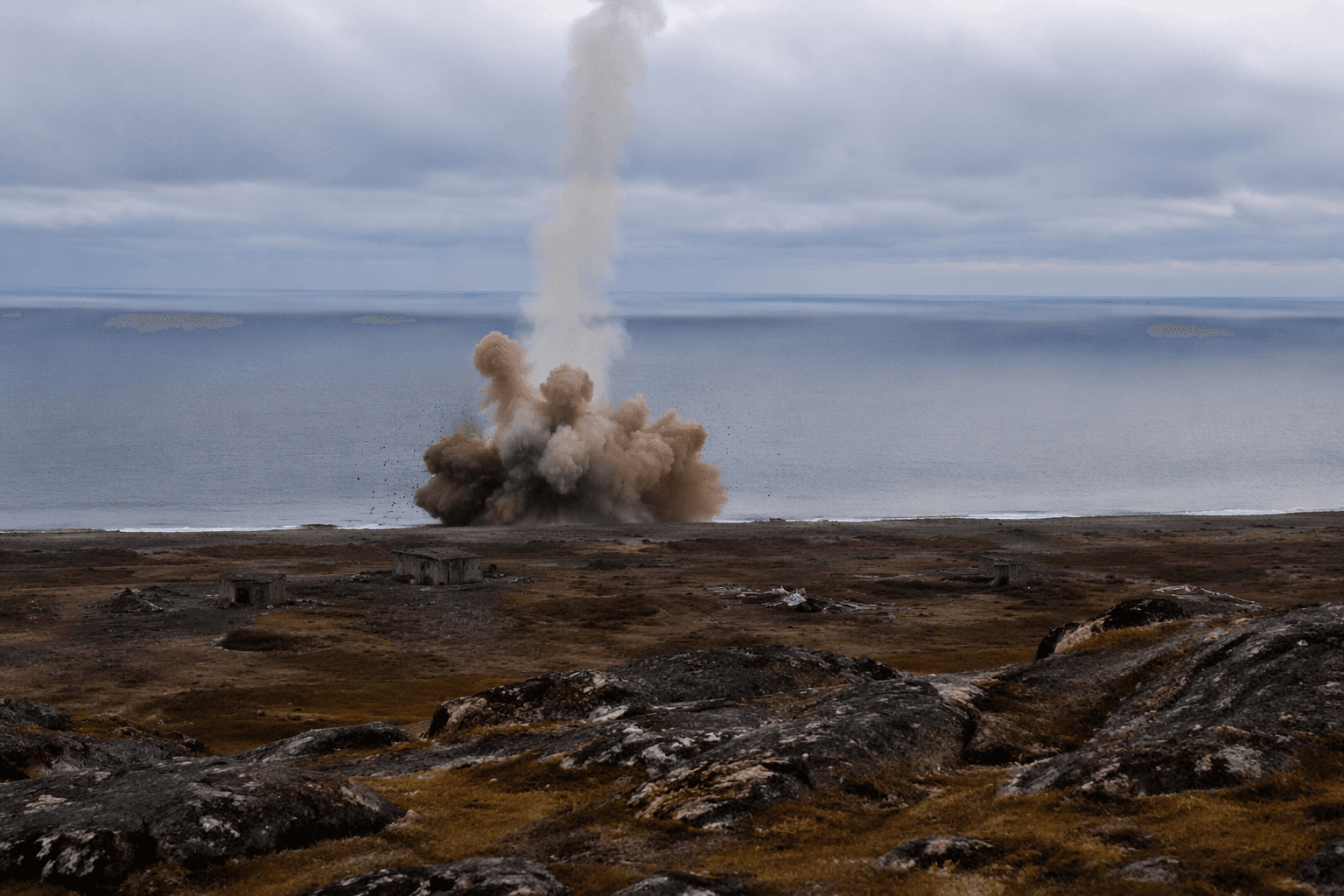
That is the central tension in Moscow’s program. Russia unveiled Burevestnik in 2018 as one of six new strategic weapons, selling it as a missile with effectively unlimited range and the ability to skim low enough to complicate interception. But the MIT abstract said the design space is heavily constrained and that its present military significance is minimal because it is likely hazardous and impractical to deploy. Even so, the researchers said compact air-breathing nuclear propulsion could have future intelligence, surveillance and reconnaissance applications.
The weapon’s history shows why the danger starts long before combat. In 2019, a failed test near Nyonoksa in Arkhangelsk Oblast killed five military and civilian specialists and was tied to a Burevestnik-related engine test. A brief radiation spike was reported in nearby Severodvinsk, and the fallout from that accident pushed testing away from the White Sea to the remote Novaya Zemlya archipelago, including the Pankovo test range. Analysts have tracked later activity there as Russia tried to keep the program alive under a heavier cloak of secrecy.
Russia said in October 2025 that it had completed a Burevestnik test lasting about 15 hours and covering roughly 14,000 km, or 8,700 miles, although that claim was not independently verified. For Moscow, the missile’s appeal is obvious: a low-flying system designed to evade missile-defense networks. For everyone else, the MIT analysis underscored the same point made by the Nyonoksa accident: a weapon built around a reactor in the air can spread risk long before it reaches an enemy.
This article was produced by Prism’s automated news system from verified source data, official records, and press releases, then run through automated quality and moderation checks before publishing. The system is built and supervised by the people who set the standards it runs under. Read our full AI policy.
Know something we missed? Have a correction or additional information?
Submit a Tip