Mitsubishi Electric Championship at Hualālai marks 30th anniversary for community
Mitsubishi Electric Championship at Hualālai celebrates 30 years today, bringing top senior pros and raising millions for local charities with heavy Rotary Club of Kona volunteer support.
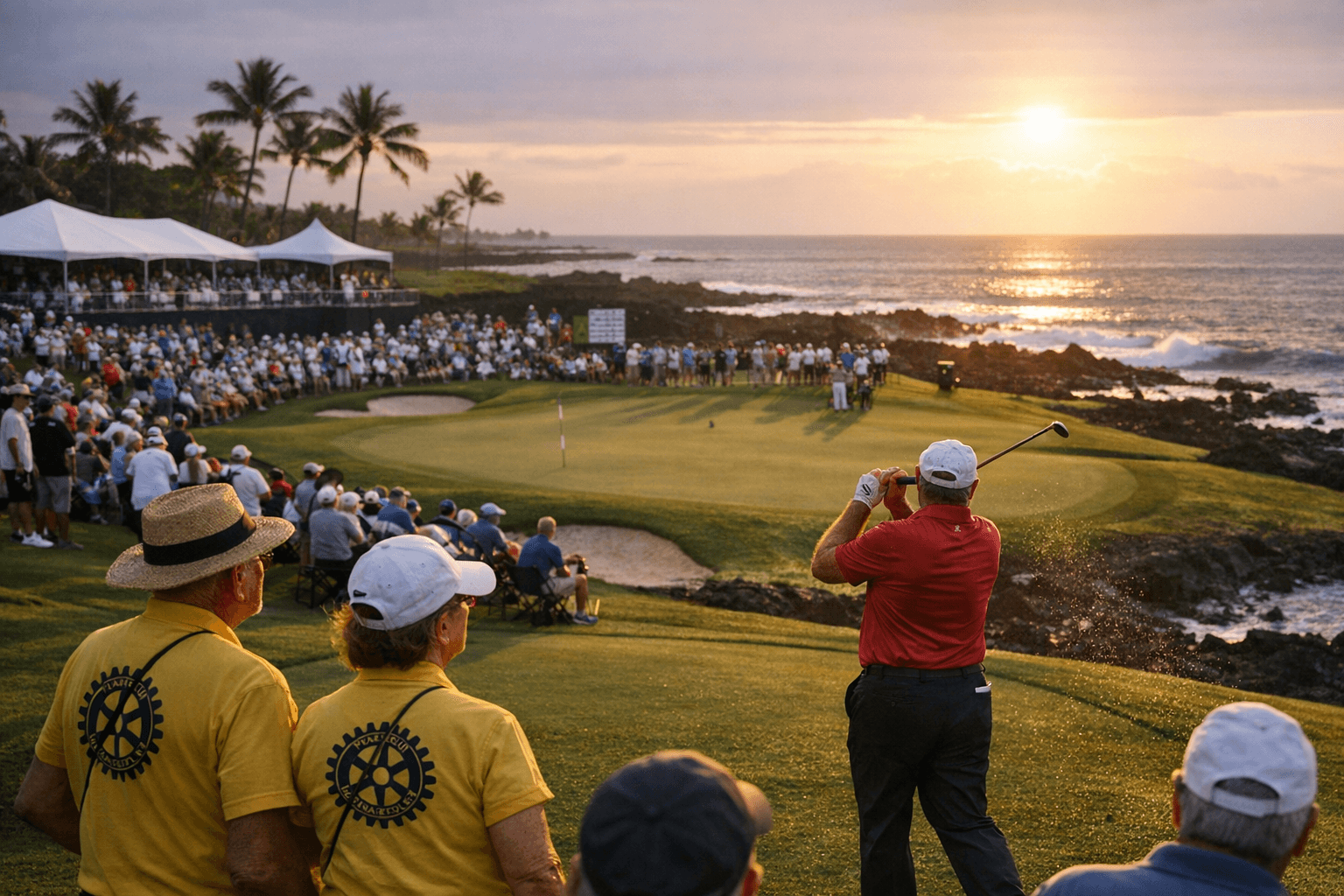
The Mitsubishi Electric Championship at Hualālai celebrates its 30th anniversary today, staging a compact, high-profile senior professional field while channeling tournament resources into local charities and scholarships. The par-72 Hualālai course on the west side of the island hosts 42 players this week, including defending champion Ernie Els, and has emphasized Hawaiian cultural integration and community partnership as central elements of the event.
Hale Irwin, who won the inaugural senior event at Hualālai in 1997, is serving this year as an ambassador, linking the tournament’s origins to its current role in Kona civic life. The field size and format reflect the tournament’s place on the senior circuit, while organizational choices underscore a sustained strategy of pairing elite play with philanthropic impact. Over three decades the event and its partners have directed millions of dollars to local charities and scholarships, a financial flow that has become a defining local benefit.
Community engagement is visible on the ground. The Rotary Club of Kona and hundreds of volunteers staff hospitality, course operations, transportation coordination and hospitality for visiting players and fans. That volunteer network reduces operational costs and amplifies the tournament’s ability to channel proceeds to nonprofit causes, while also building social capital among civic organizations that steward youth programs, scholarship funds and island services.
The tournament’s emphasis on Hawaiian cultural integration reflects broader expectations for events on island soil to honor place and practice. Organizers have incorporated cultural elements into ceremonies and community outreach, making cultural stewardship part of the event’s public identity. For residents, that integration is not just symbolic; it shapes how the championship is received by community leaders and how funds and visibility are allocated across local causes.
The event’s recurring presence also raises institutional questions for county governance and civic oversight. Large sporting events require coordination across permitting, traffic management, emergency services and land-use oversight. The delivery of millions in charitable support over decades strengthens the case that these events produce tangible returns, but it also places a premium on transparent reporting about how funds are distributed and which local programs receive sustained support.
For Kona businesses and tourism operators the championship delivers a predictable midwinter influx of customers, while for volunteers and nonprofits it provides a reliable fundraising engine. As the tournament concludes, residents should watch for final tallies on charitable distributions and for county follow-up on logistical lessons learned. The 30th anniversary underscores the tournament’s longevity on the island and points toward ongoing questions about how public, private and volunteer institutions share responsibility for ensuring benefits are equitably distributed across Big Island County.
Sources:
Know something we missed? Have a correction or additional information?
Submit a Tip