Modi departs for two-day Israel state visit to address Knesset, sign security deals
Prime Minister Narendra Modi left Feb. 25 for a two-day state visit to Israel to address the Knesset and review the India-Israel strategic partnership, with security pacts expected.

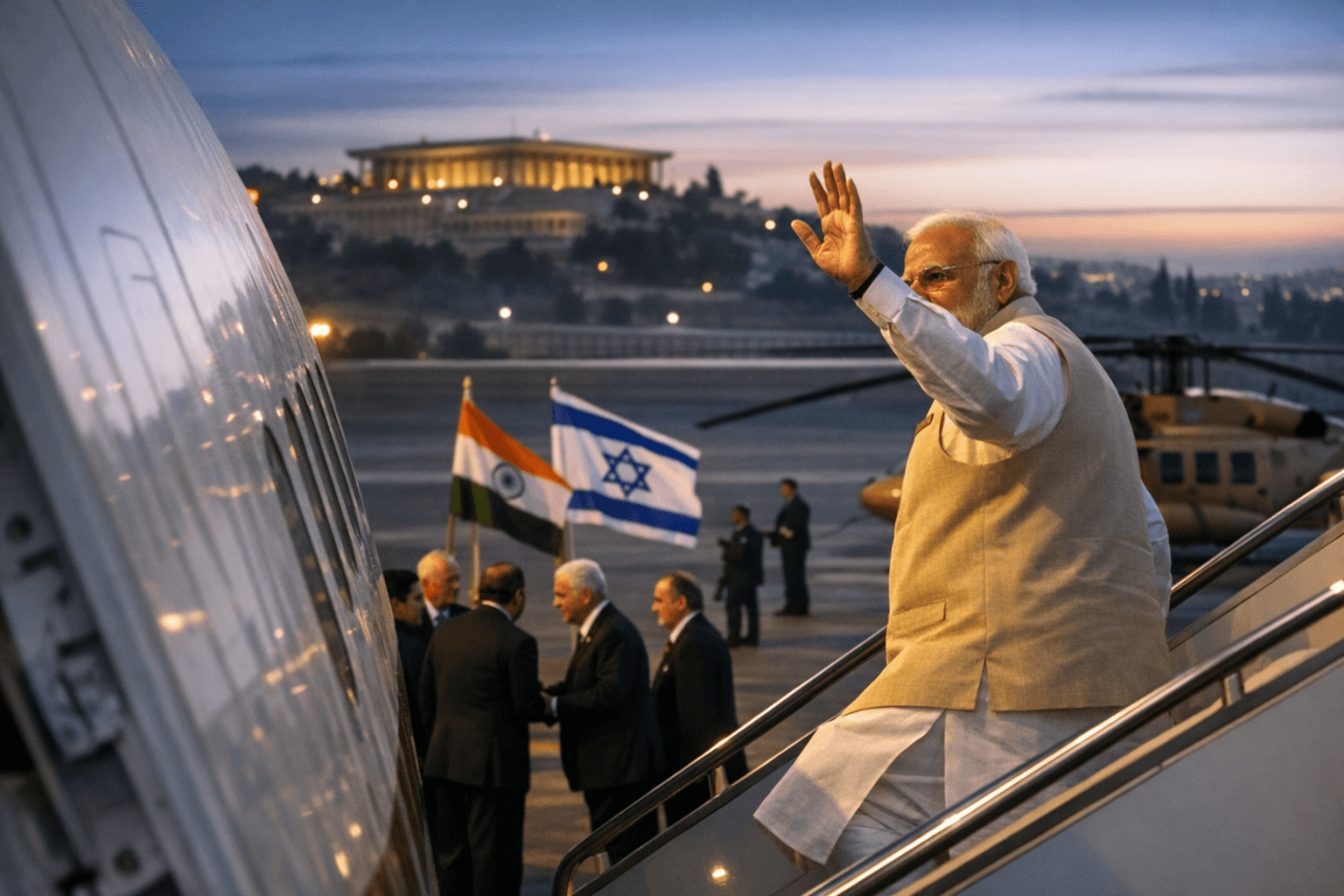
Prime Minister Narendra Modi departed for a two-day state visit to Israel on Feb. 25, 2026, at the invitation of Israeli Prime Minister Benjamin Netanyahu and is scheduled to address the Knesset during the trip. New Delhi frames the visit as a review of a rapidly deepening relationship that now includes defence, technology and trade links nine years after Modi became the first Indian prime minister to visit Israel in 2017.
An Indian government statement quoted by i24NEWS said the visit “will reaffirm the deep and long‑standing strategic partnership between the two countries and will present an opportunity to review common challenges.” Modi’s agenda in Israel includes high-level bilateral talks, a delegation-level meeting, a call on President Isaac Herzog and the signing of agreements that New Delhi and some reporters say will intensify security cooperation.
Netanyahu publicly welcomed the visit at a weekly cabinet meeting, saying, “On Wednesday, the Prime Minister of India, my friend Narendra Modi, will arrive in Israel.” In the same remarks he cast the meeting in regional terms, saying, “In the vision that I see before my eyes, we will create a complete system of alliances around or within the Middle East. An axis of countries that see reality, challenges, and goals with one eye against the radical axes.” Those comments signal Israeli hopes to use closer ties with New Delhi as part of wider diplomatic realignments in the region.
The trip comes against a complex diplomatic backdrop. Al Jazeera notes that Modi’s visit “also comes just days after India, together with more than 100 other nations, condemned Israel’s de facto expansion in the occupied West Bank after New Delhi initially appeared to hesitate about adding its name to the criticism.” An excerpt in Al Jazeera includes analysis that India balances short-term interests in defence trade, investment and remittances against a longer-term goal of a strategic footprint in the Middle East, and that India would not seek to contribute to Israel achieving “complete dominance in the Middle East.” The supplied excerpt did not identify the speaker of those sentences. Kadira Pethiyagoda, a geopolitical strategist, told Al Jazeera that “there are currently multiple countervailing forces at play.”
Domestically in India, the visit has drawn criticism. Peoples Dispatch reports the trip “has been met with strong opposition by opposition parties and civil society groups in India who question the objectives and timing of the trip,” and that members of Parliament’s standing committee on external affairs queried the timing. Peoples Dispatch also reports that Modi is expected to sign deals that “will further intensify the security cooperation between the two countries,” and it characterizes New Delhi’s recent voting and public posture on Gaza and related UN resolutions as muted, an account that the outlet frames as analytical and that will require verification of specific voting records and statements.
Visual diplomacy will be on display: press photos from previous encounters have shown warm exchanges, with Al Jazeera captioning one image “Modi hugs Netanyahu,” and Peoples Dispatch noting Netanyahu presented Modi with a framed photo during a past state visit.
Officials say the talks will touch on science and technology, innovation, defence and security, agriculture and trade. Foreign ministries in New Delhi and Jerusalem are expected to publish the full texts of any memorandums or agreements signed; those documents will determine whether this visit marks a narrow tactical deepening of defence ties or a broader strategic reorientation with implications for India’s relationships across the Middle East.
This article was produced by Prism’s automated news system from verified source data, official records, and press releases, then run through automated quality and moderation checks before publishing. The system is built and supervised by the people who set the standards it runs under. Read our full AI policy.
Did this article answer your question?