Trump oil squeeze empties Varadero, hammers Cuba's tourism economy
The Trump administration blocked Venezuelan oil and threatened tariffs, cutting visitors to 1.8 million and deepening fuel, blackout and price shocks across the island.

The Trump administration has declared Cuba "an unusual and extraordinary threat" to U.S. national security and moved to choke off fuel supplies by cutting off Venezuelan oil and threatening tariffs on any nation that supplies Cuba with fuel, a policy squeeze that has emptied beaches and collapsed tourism. Cuba reported it was running out of jet fuel on February 8, and visitor numbers fell to 1.8 million in 2025 from 2.2 million the prior year, the lowest in more than two decades.
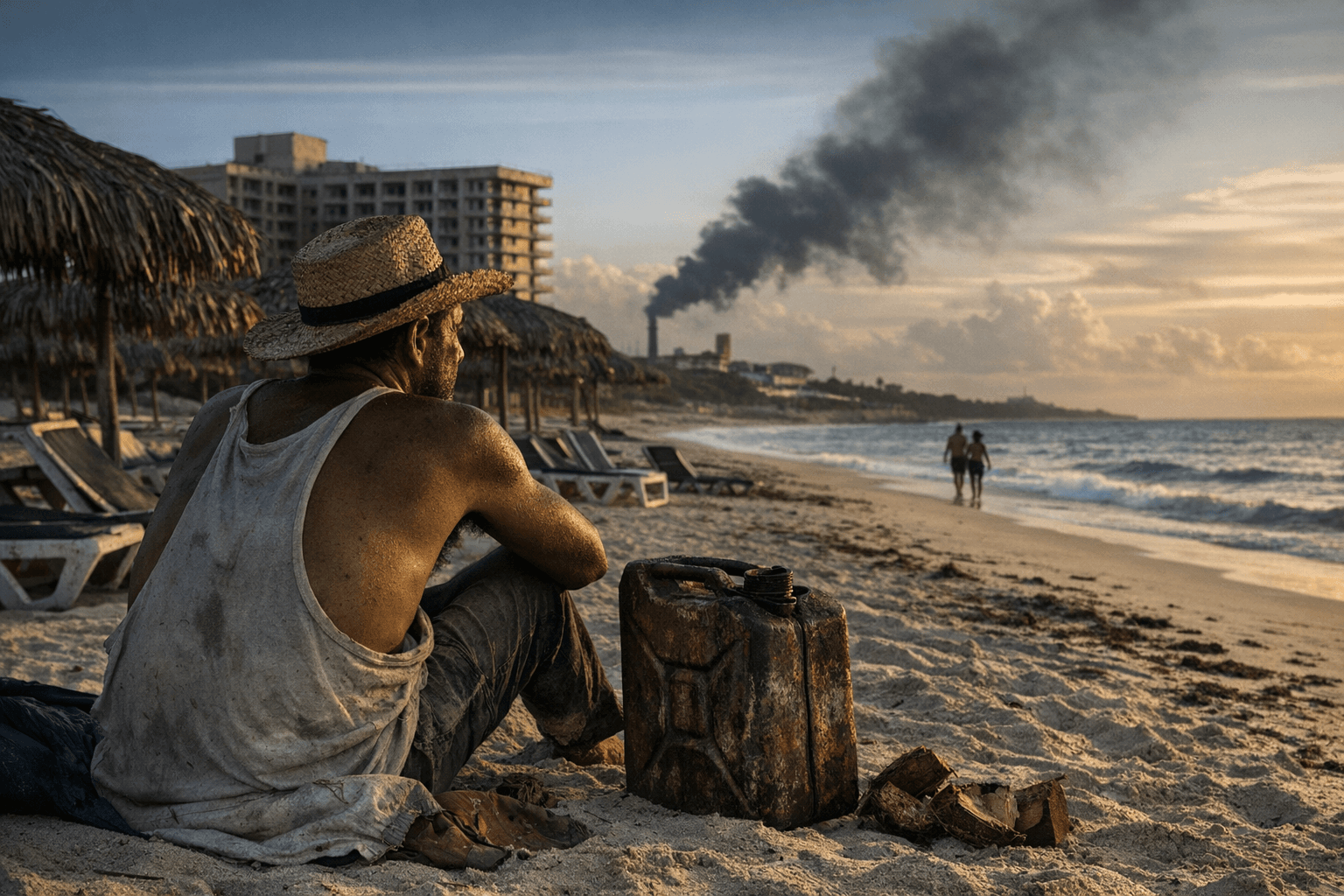
The measures have translated quickly into visible economic pain. Reuters reported Varadero's resort beaches began to clear out shortly after the February 8 jet-fuel announcement, and CNN documented "severe fuel shortages and hours of blackouts" alongside spikes in food and transport prices. An AP photograph published by CNN on February 4 showed men in Havana carrying a solar panel as Cuba grappled with an energy crisis exacerbated by fuel shortages.
Tourism is a critical source of hard currency. Reuters noted tourism earned $1.3 billion in foreign exchange in 2024, "the last time those statistics were reported in dollars," and accounted for roughly 10 percent of Cuba's export earnings. Economists warn that the sector's collapse will reverberate through other dollar earners. Paolo Spadoni of Augusta University in Georgia told Reuters, "The complete collapse of Cuba's tourism sector would create an unsustainable situation for the Cuban economy and threaten its survival." Spadoni also emphasized that tourism, remittances and the export of Cuban doctors are the island's top sources of desperately needed hard currency.
President Trump framed the campaign bluntly, saying "Cuba will be failing pretty soon," and added that Venezuela "has not recently sent oil or money to Cuba," according to CNN. The administration's tariff threat raises the diplomatic stakes by potentially penalizing third-party suppliers and complicating international shipments, prompting a response from allies. CNN reported that Canada said it plans to provide assistance to Cuba while the island grapples with fuel shortages, an intervention that underscores increasing friction among Western capitals over how to respond.
The policy traces back to an earlier White House posture. Government materials reproduced from June 16, 2017 show then-President Trump announcing, "Effective immediately, I am canceling the last administration's completely one-sided deal with Cuba," and directing the Treasury and Commerce Departments to begin issuing new regulations within 30 days, with changes not taking effect until regulations were finalized. The current campaign extends that posture into measures aimed at upstream suppliers, heightening the chance of secondary economic effects on Latin American partners.
Analysts and commentators are treating the current squeeze as historically consequential. The New York Times observed, "Many U.S. presidents have tried to bring down the Communist government over almost seven decades. This time, it feels different," and warned "This could be the year the Cuban regime falls." Humanitarian and legal questions are already circulating: CNN cited the U.N. human rights office as saying a U.S. raid in which Maduro was seized violated international law, while critics argue restrictions intended to deprive the Cuban state of dollars will also harm the island's nascent private sector that caters to tourists.
For markets, the immediate signal is tightening fuel access for a country that imports petroleum for electricity, transport and aviation, and a near-term collapse in tourist flows that shrinks foreign exchange receipts. For policymakers, the squeeze forces a choice between intensifying pressure with economic risk and mitigating a humanitarian fallout that could destabilize the region. As Paolo Spadoni put it, the economic effects now on display risk more than lost holidays; they threaten the viability of Cuba's economy itself.
This article was produced by Prism’s automated news system from verified source data, official records, and press releases, then run through automated quality and moderation checks before publishing. The system is built and supervised by the people who set the standards it runs under. Read our full AI policy.
Did this article answer your question?