Modular Jewelry Redefines Fine Jewelry Layering with Interchangeable Bases
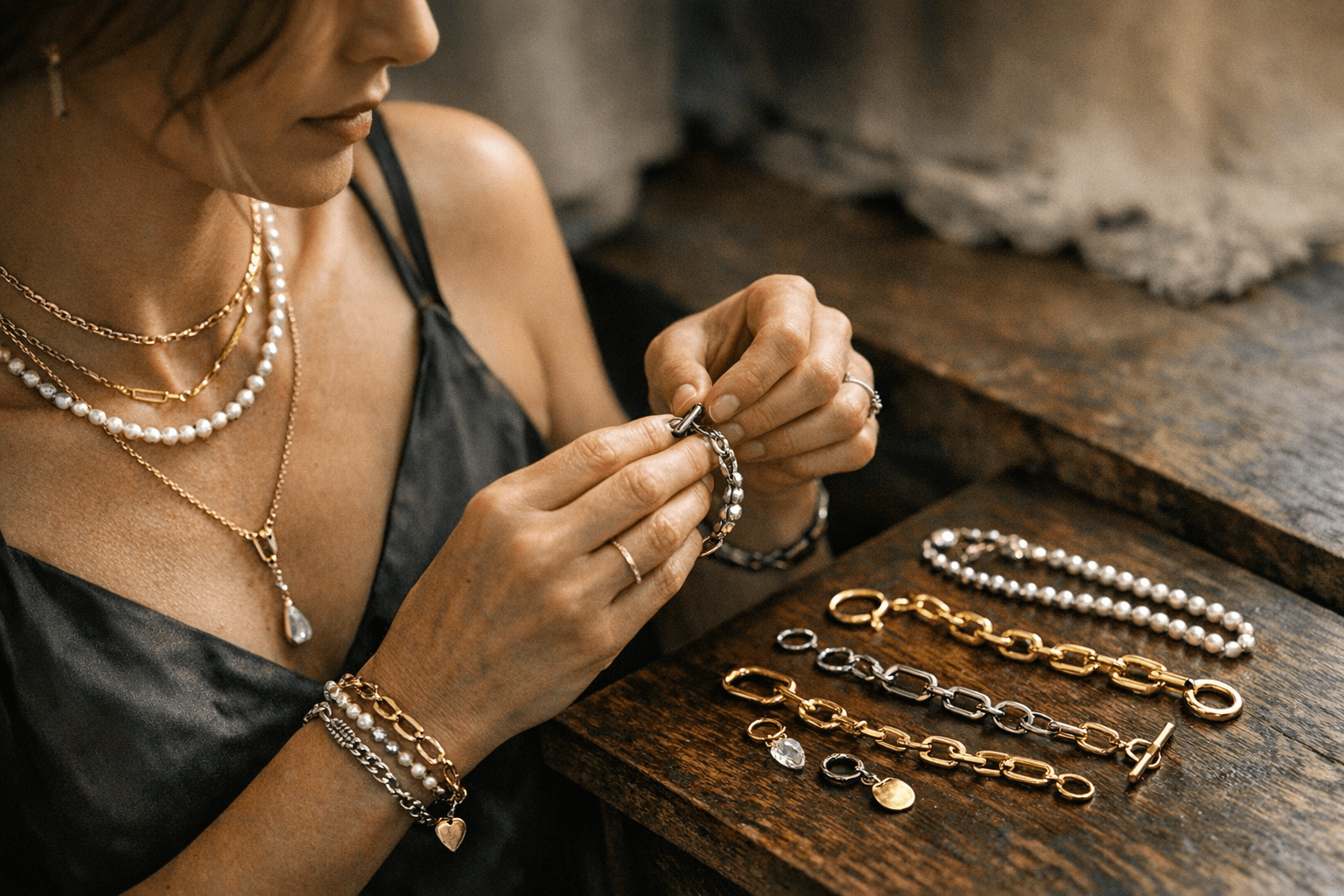
A modular system centres on two components - a base and an add-on - letting a diamond stud, a gold chain or a bracelet clasp become multiple pieces through clip-on, slide or convertible mechanisms.

A modular system centres on two components: a base and an add-on." That definition sits at the heart of the latest shift in fine jewelry layering: rather than buying new occasion pieces, collectors begin with a functional foundation—a diamond stud, a solid gold chain, or a bracelet clasp—and alter its character with interchangeable elements that clip, slide, or stack onto the base.
The rationale for modularity is both practical and ideological. Christina of SENIA frames it as "a conscious and engineered approach toward sustainability and customization," adding that versatility "allows for transcendence of time" and yields "the added benefit of cost savings." Gina expands that modular pieces let buyers "evolve, with regards to style, mood, age, and trends, without purchasing new pieces," while Lewy calls modular jewelry "the perfect investment" because it enables different styles while keeping the same base.
Mechanically, the category is defined by specific systems: clip-on add-ons, sliding bezels, convertible clasps, and locking mechanisms. Trendvisionforecasting underscores the technical demands with the observation that "precision laser cutting, locking mechanisms, and CAD/CAM technology ensure durability and meticulous execution." The same forecaster points to AI-enhanced craftsmanship, kinetic structures, and alternative materials such as aerospace ceramics and liquid metals as the tools and materials powering this next wave of design.
Practical examples make the concept tangible. Idyl and The Zoe Report recommend beginning with diamond studs—the former calling them the "white T-shirt of jewelry"—and introducing lower-priced add-ons over time. Robinsonsjewelers illustrates a typical transformation: "One day, your diamond solitaire is a simple pendant on a cable chain. The next, you've added a delicate pearl drop below it and layered it with a lariat necklace. Voila! A completely new necklace without a trip to the store." Their retail copy even invites hands-on experimentation: "Think of it like building with the most luxurious Lego set ever invented."
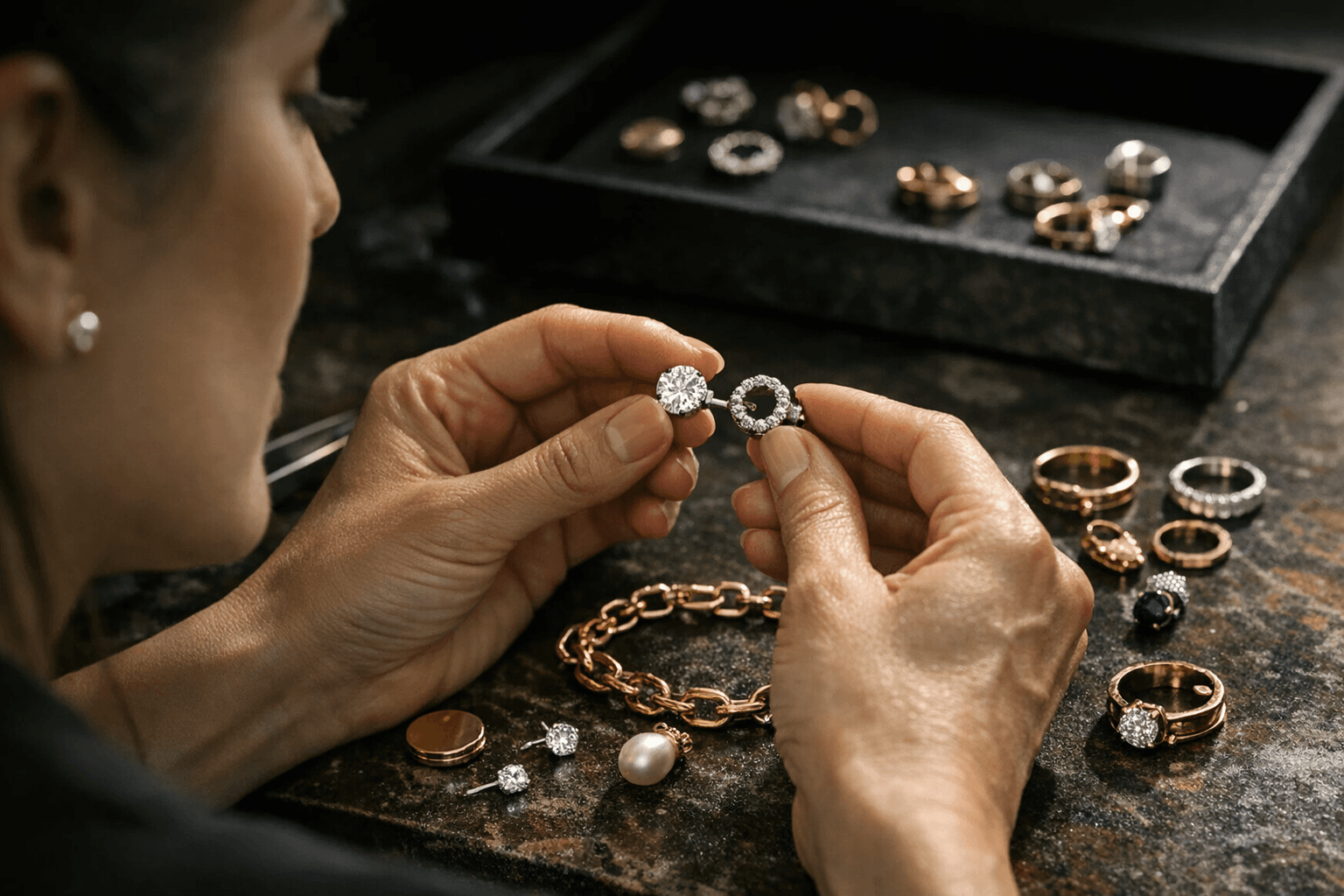
Brands are already bringing convertibility to market. Porcelainandstone's Kimberly Huestis announced that "the necklace-to-bracelet wearing jewelry collection has finally launched," describing a range "designed to wear as a necklace or as a bracelet" that can "expand to create more luxurious looks." LIMNIA's Annette Lasala Spillane describes the construction in domestic terms: "components are standardized parts that slot together (like sofas or kitchens)" and adds, "We like to say our jewelry is renewable. It means we've given them the ability to be new again, to transform."
For consumers assembling a layered wardrobe, the category offers tangible navigation points. Idyl lists product categories such as "Earrings" and "Necklaces" and highlights popular search terms—"Pear Cuffs Marquise Hoops Rings"—that signal which silhouettes translate well into modular systems. Retailers like Robinsonsjewelers make the business case explicit on their site with customer service lines and incentives, including "Call Us: 1-954-258-2246 • FREE SHIPPING!"
Trendvisionforecasting ties these practical shifts to broader values: "Modular jewellery balances functionality with emotion," and "sustainability also drives innovation: recycled metals, ethically sourced gemstones, and alternative materials meet the growing demand for responsible luxury." Modular jewelry, then, is not only a new technical grammar for layering but a design economy that prizes durability, narrative adaptability, and the arithmetic of owning less while combining more.
Know something we missed? Have a correction or additional information?
Submit a Tip