Monroe County boat ramps: what anglers and residents need to know
Public boat ramps across the Keys vary in parking, size and services; check tide, residency rules, and safety gear before launching.
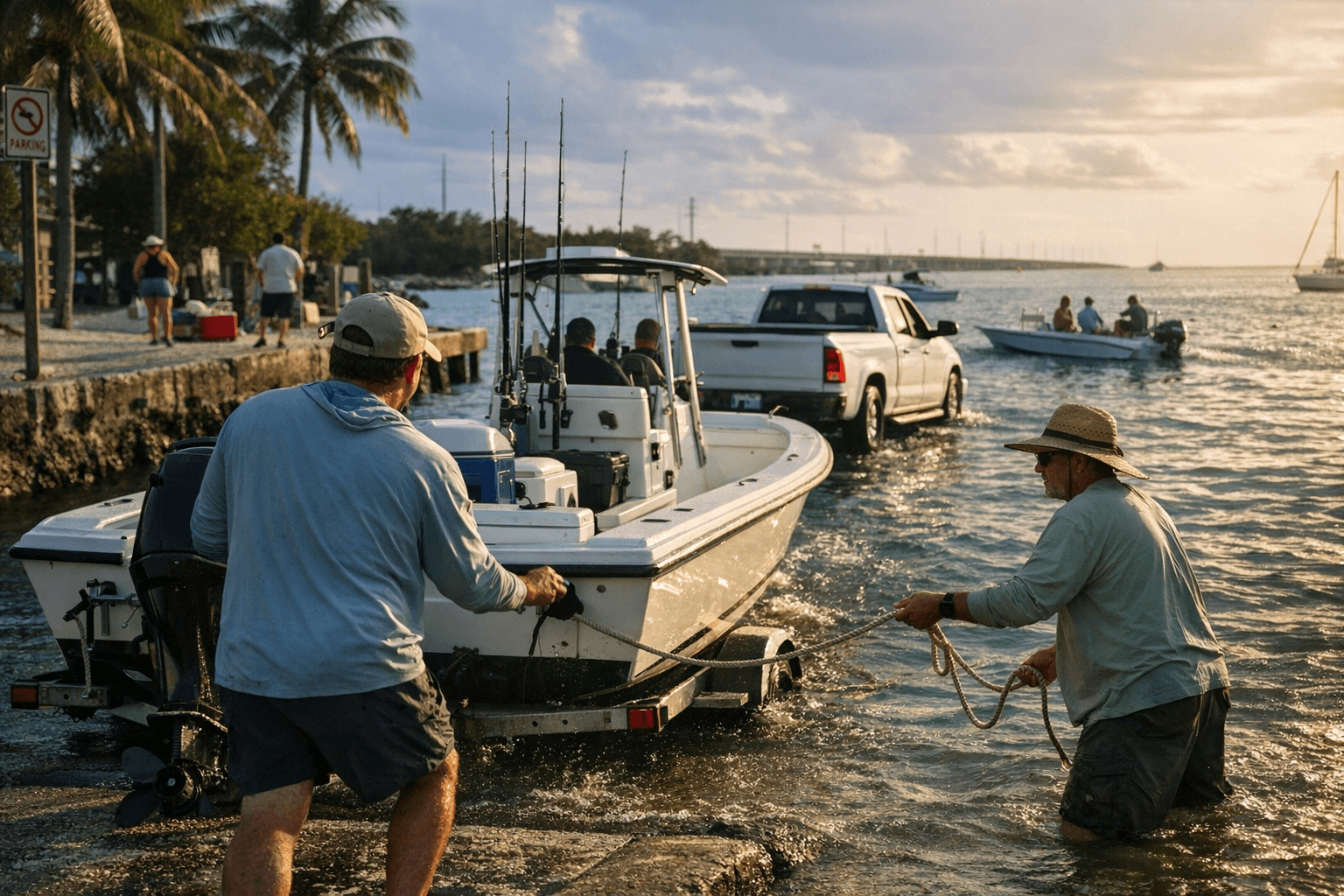
Public launch sites and piers across Monroe County provide the lanes to the water, but conditions, parking and services change from Key Largo to Key West. Residents and visiting anglers should plan around ramp limits, tide conditions and local rules to avoid fines, delays or unsafe launches.
Upper Keys ramps near mile markers 100–104 offer access to bays and Atlantic nearshore waters and are a common choice for Key Largo anglers. Many of these spots are municipal or county-managed and include designated trailer parking, though vehicle length limits can apply. In the Islamorada and Upper–Middle Keys area, community marinas and municipal parks provide docks and ramps; some facilities charge slip or day-launch fees and have bait and fuel stations nearby, easing last-minute needs. Marathon in the Middle Keys hosts multiple public ramps, including the large Boot Key Basin complex and ramps near the airport that serve both Gulf and Atlantic-side fishing grounds as well as nearby channels and flats. In the Lower Keys around Stock Island and Key West, public launches, transient docks and marinas are available, but ramp length, weight limits and limited parking during peak season can restrict larger trailers.
Practical safety and public health considerations should guide every trip. Check local tide charts and NOAA forecasts before leaving shore; low tides can strand trailers or damage propellers on flats. Observe reef and no-wake zones and manatee-protected areas to reduce wildlife injury and avoid costly violations. Carry required safety equipment: a personal flotation device for every person aboard, visual distress signals for night operations, current registration and proof of insurance. Municipal ramps often require proof of residency to receive free or discounted trailer parking — keep that ID handy to avoid tickets.
Access and equity are local policy issues. Limited trailer parking during busy months and pay-to-launch fees disproportionately affect working-class residents who rely on fishing for food and income. Adequate signage about vehicle length limits, clearer online schedules for county-managed ramps, expanded designated trailer stalls and affordable local permits would reduce conflict between visitors and longtime residents. Safe, well-maintained ramps also lower injury rates and emergency response needs, a public health savings for county services.
For up-to-date ramp locations, county-managed ramp schedules and park-related rules, consult Monroe County Parks & Beaches and municipal public works or parks pages before you go. Plan launches with tides and weather in mind, keep your papers and PFDs accessible, and consider joining local advocacy for clearer signage and equitable parking so residents and visitors alike can keep lines in the water and safety on shore.
Know something we missed? Have a correction or additional information?
Submit a Tip