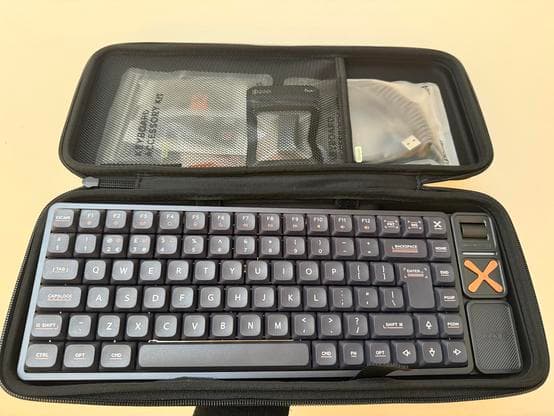
MonsGeek unveils Verve68 HE magnetic keyboard with hollow case, 32K scan rate
MonsGeek pairs a hollow translucent 65% chassis and Hall‑effect magnetic switches with a claimed 32,000Hz scanning rate and up to 8,000Hz polling in the new Verve68 HE.

MonsGeek is pitching the Verve68 HE as a performance-focused 65% magnetic keyboard that combines a hollow translucent case with what the company bills as a 32K scanning rate and up to an 8K polling rate, positioning the board for “competitive gaming and precision control.” The company’s product banner and press text name the model as Verve68 HE, advertise “32,000Hz Scanning Rate” and “8,000Hz Polling Rate,” and place the new board alongside earlier MonsGeek magnetic models such as the FUN60 and M1 V5.
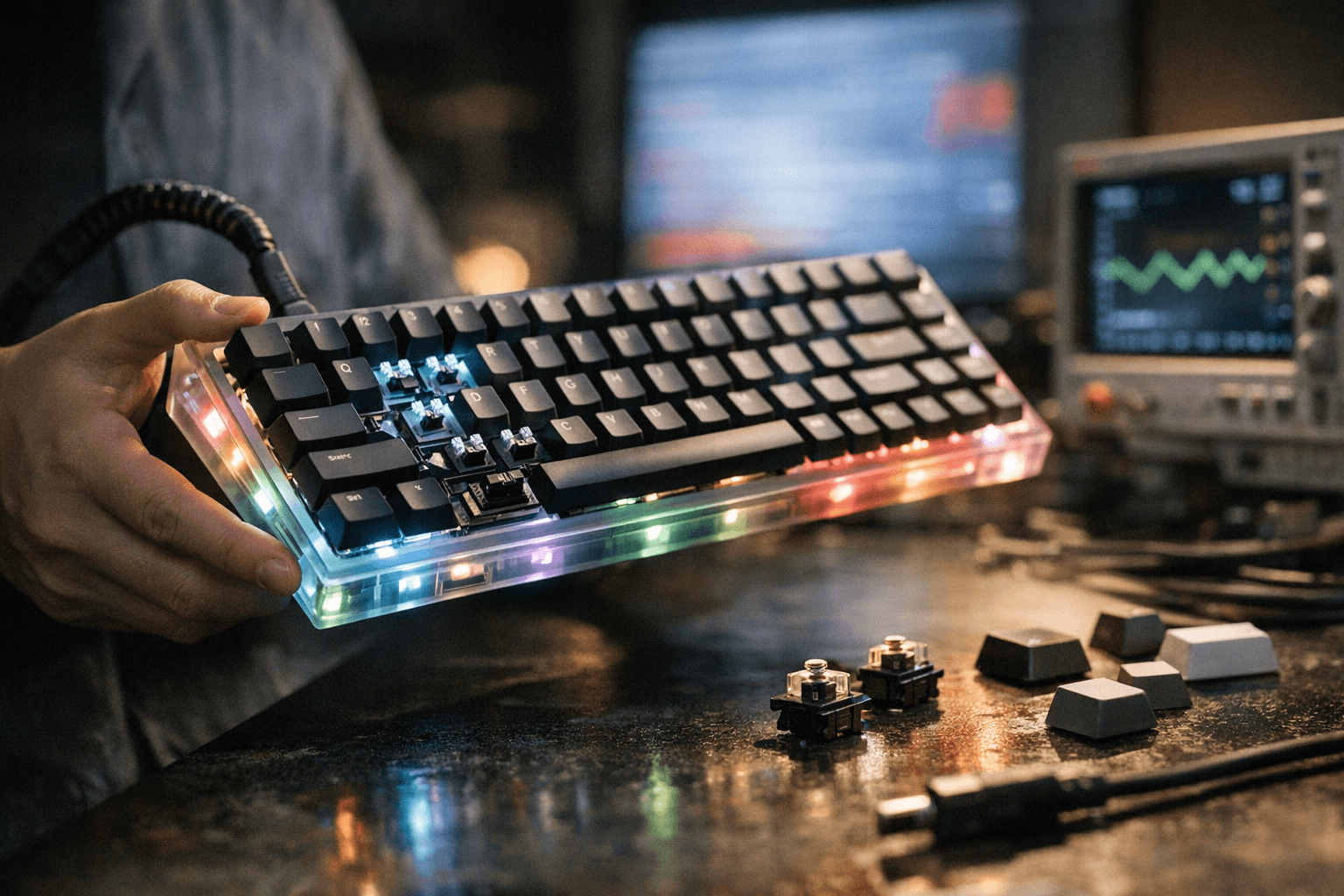
The chassis blends two explicit materials: MonsGeek’s press copy describes a “perforated ABS outer shell paired with a transparent PC inner frame,” a hybrid the company says creates “a lightweight yet structurally robust build.” RGB backlighting is listed as standard, with the company writing that the hybrid construction “allows RGB lighting to subtly shine through the keyboard, producing a clean and modern visual effect.” MonsGeek markets the Verve68 HE as a hollow translucent 65% layout, and product banners repeat labels including “Hollow Translucent Case” and “65% Layout.”
MonsGeek’s marketing leans heavily on internal electronics as the mechanism behind its speed claims. The product page highlights a 32‑bit Cortex‑M4 MCU icon and states that the Verve68 HE “adopts a re‑architected logic framework. With 15 dedicated logic ICs offloading auxiliary tasks from the MCU, processing load is reduced, ensuring lower Processing time and stable high‑speed performance, even under extreme data throughput.” MonsGeek also frames responsiveness as a three‑stage process, noting that “Every key press goes through three ultra-fast stages.”
Those three stages are quantified on MonsGeek’s page: Stage 1, the time to detect key position changes, is listed at 0.03 to 0.05 ms and is marked “Optimized with 32K Scan Rate.” Stage 2, MCU processing of scan data, is listed at 0.1 to 0.5 ms and is marked “Optimized with Logic ICs.” Stage 3 corresponds to the USB polling interval at 8kHz, given as 0.125 ms. MonsGeek asserts that “With 32K scanning, even tiny finger movements are detected immediately. This enables accurate resets, stable rapid trigger behavior, and predictable actuation during fast‑paced input.”
MonsGeek’s rapid trigger claims present a point of divergence in the materials supplied. Multiple MonsGeek banners and labels advertise “Full Range 0.005mm RT” and “RT 0.005mm,” and a product line blurb reads “Rapid Trigger up to 0.005mm for precise actuation.” A separate short report provided alongside MonsGeek’s materials lists an alternate figure, noting rapid trigger precision “down to 0.01mm of key travel.” MonsGeek’s press materials and product pages do not include MSRP, ship dates, or explicit hot‑swap confirmation for the Verve68 HE in the supplied copy.
The company’s March 5, 2026 press distribution from Shenzhen, Guangdong, China frames the Verve68 HE as the next step after FUN60 and M1 V5 magnetic keyboards. MonsGeek advertises a mix of visual design and claimed electronics performance; whether the 32,000Hz scan rate, the 8,000Hz polling interval, and the 15 auxiliary logic ICs translate into measurable latency gains will require hands‑on measurement and specification confirmation.
Know something we missed? Have a correction or additional information?
Submit a Tip