Moody's sees South Africa debt stabilizing as reforms and revenues improve
Moody's said South Africa's debt likely peaked at 86.8% of GDP in 2025, but power, logistics and politics still threaten the turnaround.
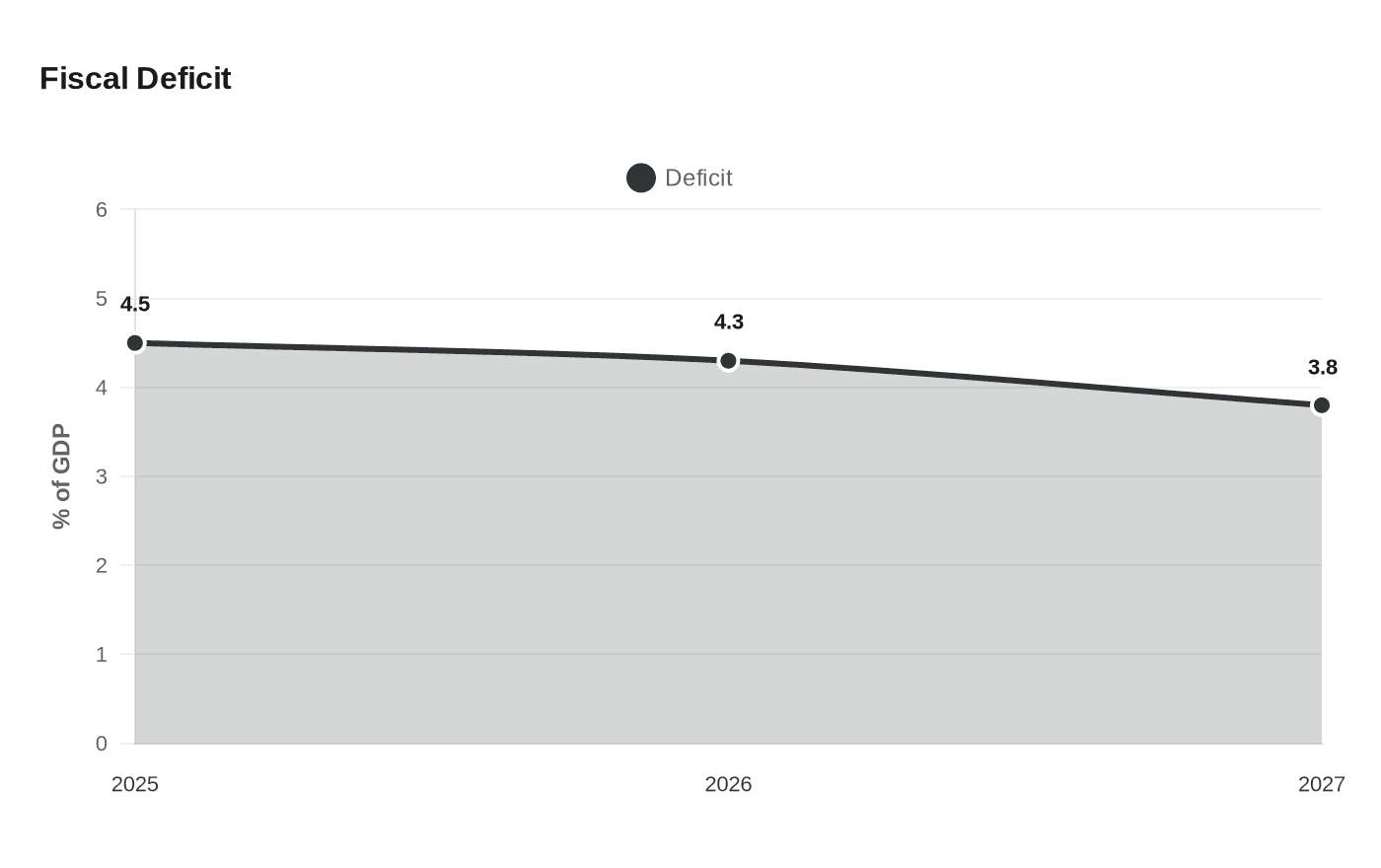
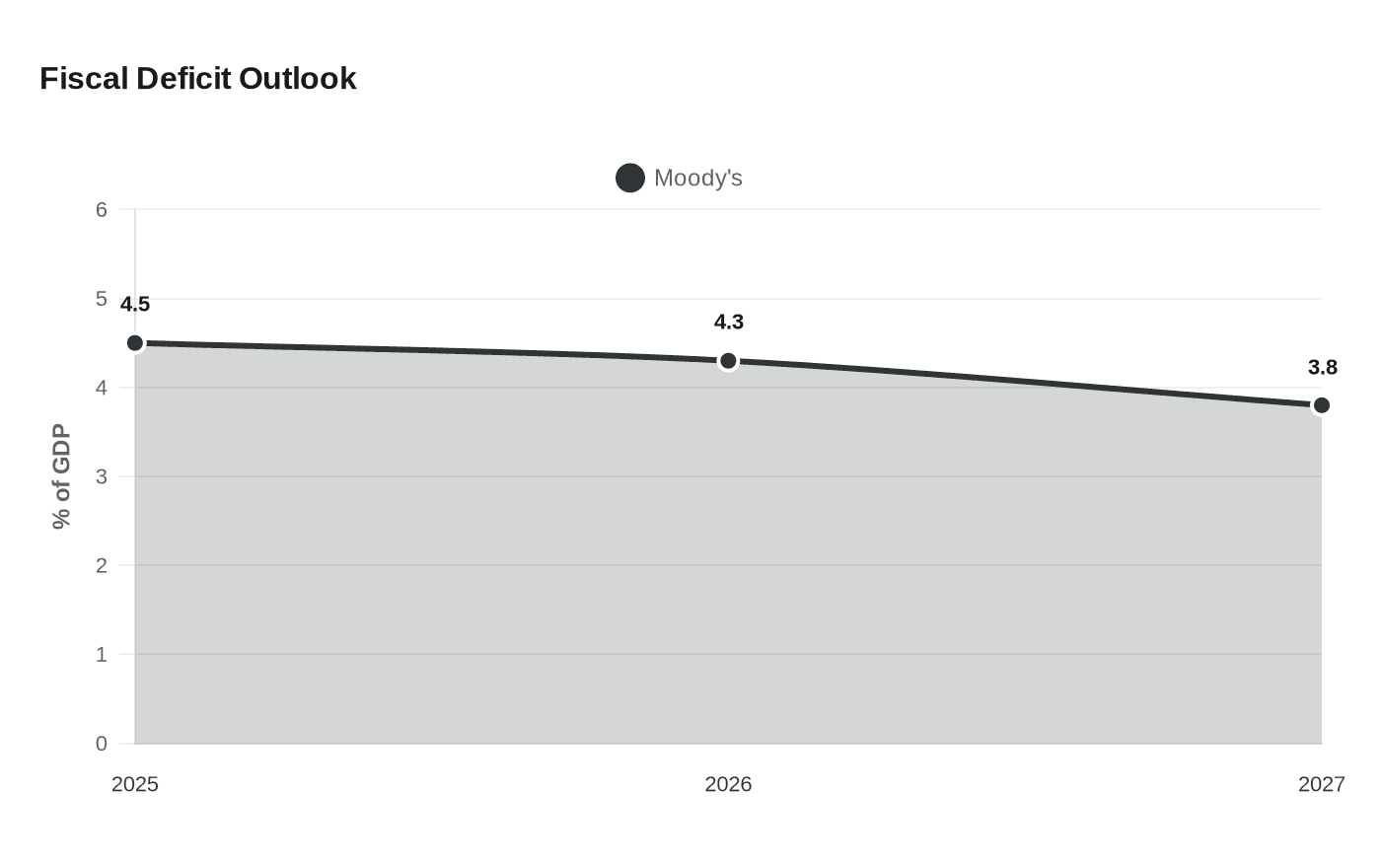
South Africa’s debt trajectory looked closer to stabilization as Moody’s Ratings said stronger tax collection, tighter spending and better funding conditions should keep the government’s debt ratio from rising further and set up a gradual decline. The agency said general government debt likely peaked at 86.8% of GDP in 2025 and should ease to 84.9% by 2028, while the fiscal deficit narrows from 4.5% of GDP in 2025 to 4.3% in 2026 and 3.8% in 2027.
That improvement still left little room for complacency. Moody’s kept South Africa at Ba2 with a stable outlook and said debt above 80% of GDP continued to constrain the state’s ability to absorb shocks. The agency’s case rests on a primary surplus that it expects to reach 1.8% of GDP in 2027, above its estimated 1.5% threshold for stabilizing debt, a sign that revenue gains and spending restraint are finally beginning to outweigh the costs of years of borrowing pressure.

The broader policy backdrop has turned more supportive. National Treasury said the consolidated budget deficit narrowed to 4.5% of GDP in 2025/26 and projected a further slide to 4.0% in 2026/27 and 3.1% in 2027/28. Treasury also sees the main budget primary surplus rising to 0.9% of GDP in 2025/26, 1.6% in 2026/27 and 1.9% in 2027/28. That fiscal turn is being reinforced by a new 3% inflation target with a 1 percentage point tolerance band, announced on November 12, 2025 after agreement between Finance Minister Enoch Godongwana and Reserve Bank Governor Lesetja Kganyago.
For investors, the details matter because lower inflation should help reduce risk premia and borrowing costs, while faster growth would make the debt math easier to defend. Moody’s said real growth could improve toward 2% by 2028 from 0.5% in 2024, helped by investment and resilient consumer spending. It also said deeper reforms in electricity, logistics and water could lift medium-term growth above 2% if they are sustained, which is the real test of whether South Africa can reform its way back into investor confidence in a higher-rate world.
Those reforms are moving inside Operation Vulindlela Phase II, a 30-reform program focused on energy, transport, water, local government, visas and digital transformation. South Africa has already picked up some credit-positive markers, including its exit from the Financial Action Task Force grey list on October 24, 2025 and S&P Global Ratings’ upgrade to BB from BB- in November 2025, the first major upgrade in more than 16 years. But Parliament’s finance committees warned in March 2026 that debt service and compensation still consume too much of the budget, leaving limited space for development spending.
The political test is still ahead. The 2027-2029 election cycle will determine whether the unity government can keep reform momentum intact when pressure rises to spend more and deliver faster. Kganyago said on May 6, 2026 that policymakers needed to keep rate options open amid geopolitical shocks and inflation risks, a reminder that South Africa’s fiscal gains are real but still fragile.
This article was produced by Prism’s automated news system from verified source data, official records, and press releases, then run through automated quality and moderation checks before publishing. The system is built and supervised by the people who set the standards it runs under. Read our full AI policy.
Did this article answer your question?

