More Than 1,000 Dead, Over 800 Missing After Southeast Asia Floods
A rare convergence of tropical storms and monsoon systems unleashed devastating floods and landslides across Indonesia, Sri Lanka and Thailand, killing more than 1,000 people and leaving over 800 still unaccounted for. The scale of evacuations and damage to roads, bridges and power lines is straining rescue operations and raising urgent questions about regional disaster preparedness and economic resilience.

Rescue teams and military units worked through the weekend to reach remote communities cut off by floodwaters and landslides as governments grappled with one of the region's deadliest weather disasters in years. The death toll has passed 1,000 and more than 800 people remain missing, officials reported, as coordinated relief efforts continued on Monday.
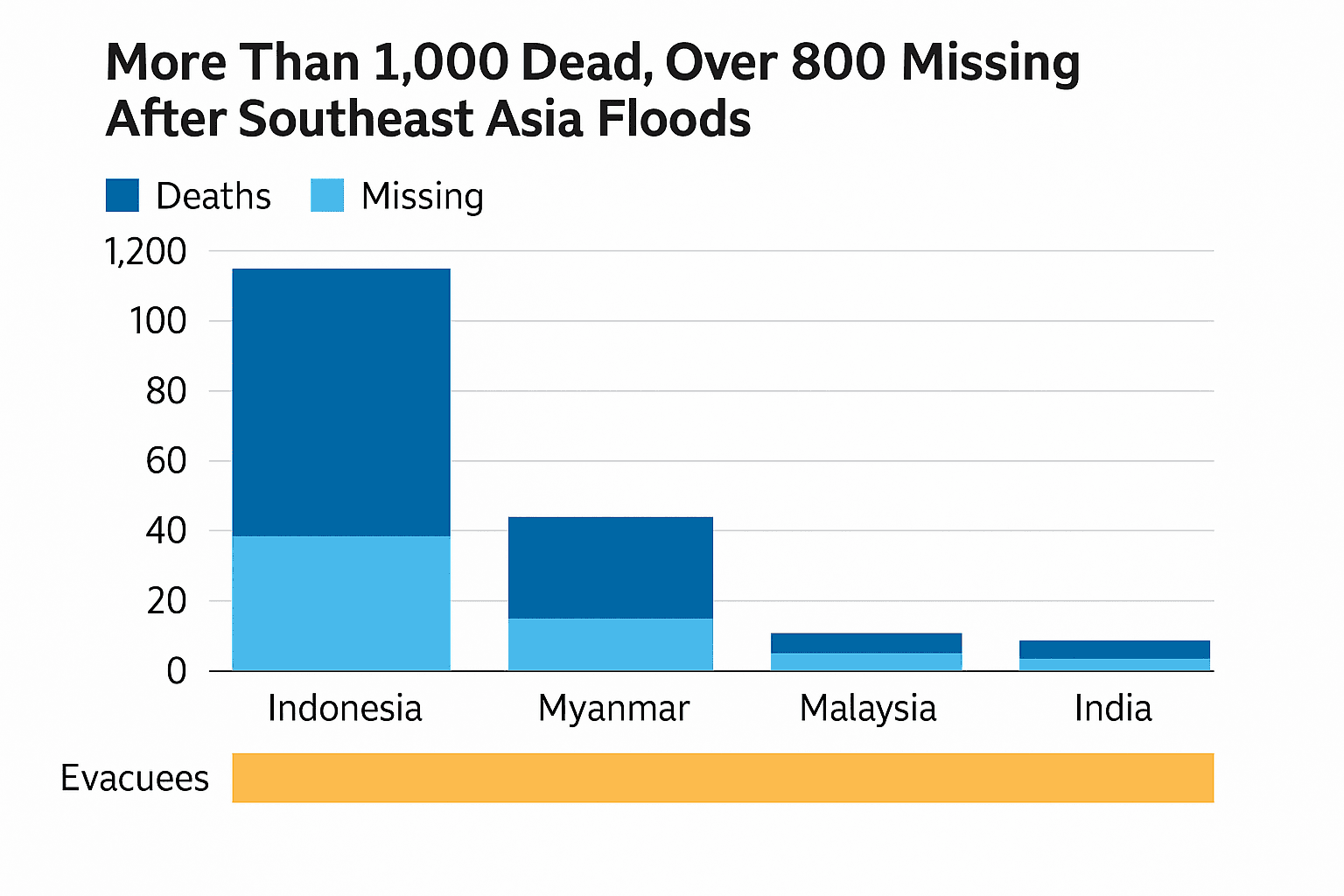
Indonesia bore the heaviest human cost, particularly on the western island of Sumatra where at least 604 people were reported killed and hundreds remain unaccounted for. Authorities evacuated nearly 578,000 people across several provinces as floodwater submerged towns and severed road and rail links. In Sri Lanka, officials declared a state of emergency after Cyclone Ditwah, reporting hundreds of deaths and more than 200,000 people in temporary shelters. Southern provinces of Thailand also recorded scores of fatalities and mass evacuations, with damage to local infrastructure complicating relief work.
The floods damaged critical transport and power infrastructure, isolating villages and slowing the delivery of food, medicine and clean water. Naval vessels and air assets were pressed into service to reach communities unreachable by road. Health agencies are warning of imminent public health risks, noting heightened potential for waterborne and vector borne diseases and calling for rapid deployment of clean water, sanitation supplies and medical support.
International aid agencies and neighboring countries have begun mobilizing assistance, while national governments are balancing immediate rescue needs with the longer term task of recovery. The scale of evacuations and infrastructure damage points to significant economic disruption. Road and bridge losses are likely to interrupt local supply chains and agricultural shipments during a critical season, while widespread power outages may depress industrial output in affected provinces. Insurers and financial markets could face elevated claims, and public finances will likely be pressured by immediate relief spending and reconstruction costs.
This extreme weather event underscores a broader trend of increasing climate related disaster risk in Southeast Asia. Meteorological authorities attributed the severity to an uncommon alignment of tropical storms with active monsoon systems, producing prolonged heavy rainfall over vulnerable terrain. The episode amplifies calls from disaster management experts for stronger investment in early warning systems, resilient infrastructure and land use planning to reduce exposure to landslides and riverine flooding.
Policy responses over coming weeks will be critical. Governments will need to prioritize restoring transport and power links to revive commerce and supply chains, while channeling humanitarian aid to avert secondary health crises. Longer term, the fiscal burden of reconstruction may prompt debates over insurance schemes, climate adaptation funding and regional cooperation on disaster response.
The immediate focus remains saving lives and reuniting families. As rescue operations continue, authorities face the twin challenges of reaching isolated survivors and managing a humanitarian response at unprecedented scale in parts of the region. Reporting compiled from Associated Press situation reports issued December 1 and 2, 2025.
This article was produced by Prism’s automated news system from verified source data, official records, and press releases, then run through automated quality and moderation checks before publishing. The system is built and supervised by the people who set the standards it runs under. Read our full AI policy.
Did this article answer your question?


