Mortgage rates jump as inflation keeps borrowing costs elevated
Affordability tightened again as the average 30-year mortgage hit 6.51%, its highest since late August 2025, while April inflation stayed stuck at 3.8%.

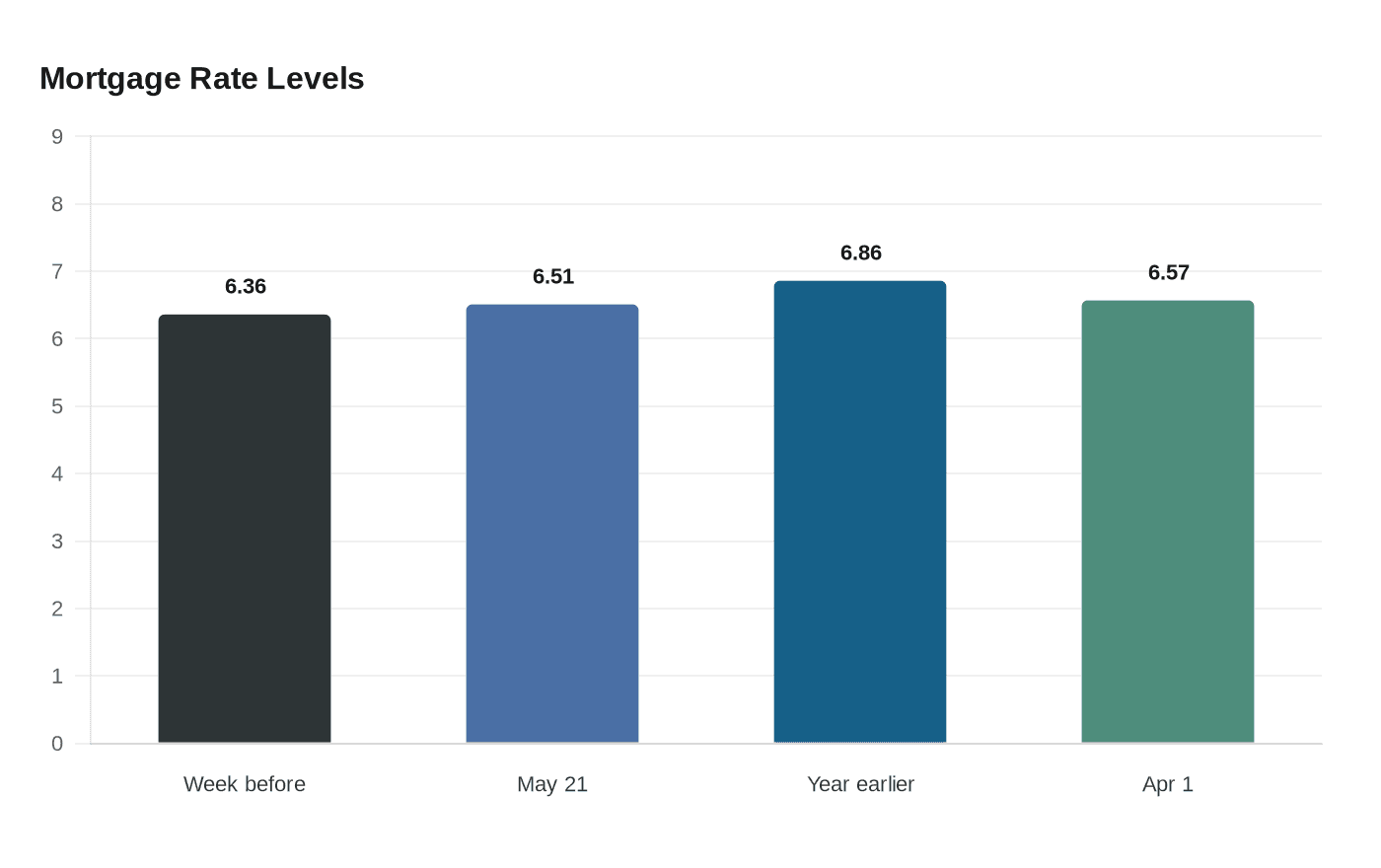
Higher prices are pinching home shoppers just as mortgage rates climbed back to their highest level since late August 2025, keeping monthly payments elevated even after last year’s peak has faded. The average 30-year fixed mortgage rose to 6.51% for the week of May 21, from 6.36% the week before, Freddie Mac said.
That rate is still below the 6.86% average seen a year earlier, but it remains high enough to make refinancing decisions harder and keep many first-time buyers on the sidelines. Freddie Mac has said shoppers can save by comparing multiple quotes, a reminder that small changes in pricing can still translate into thousands of dollars over the life of a loan.
The pressure on borrowing costs is tied directly to inflation. The U.S. Bureau of Labor Statistics said the Consumer Price Index rose 0.6% in April 2026 and 3.8% over the past 12 months, the strongest annual reading since May 2023. Core CPI, which strips out food and energy, rose 0.4% in April and 2.8% from a year earlier. That mix signaled that price growth is proving sticky enough to keep mortgage markets cautious.

Mortgage rates do not move exactly in step with the Federal Reserve’s short-term policy rate, but they often follow Treasury yields and inflation expectations. When investors expect inflation to stay high, long-term borrowing costs tend to rise with it. Reuters reported on April 1 that the 30-year fixed mortgage rate jumped to 6.57% as rising oil prices fueled inflation fears and pushed Treasury yields higher.
That dynamic has also carried into the Federal Reserve’s policy debate. The central bank’s May 2026 minutes showed a majority of officials thought rate hikes might be needed if inflation stays elevated, especially if the conflict with Iran adds to price pressures. The message is that even if the Fed pauses, mortgage borrowers may not get much relief unless inflation eases convincingly.
Industry forecasters are split on how much improvement is likely. Fannie Mae’s Economic and Strategic Research Group, led by Chief Economist Mark Palim, projected in September 2025 that mortgage rates would end 2026 at 5.9%. More recent outlooks from the Mortgage Bankers Association and others suggest rates may instead spend much of 2026 in the 6% to 6.5% range. MBA chief economist Mike Fratantoni has said mortgage rates and inflation are likely to remain elevated through 2026, with inflation near 4% and the Fed likely on hold.
For borrowers, that leaves a narrow path. Buying, refinancing and moving up in price all remain expensive, and the market still rewards the households that can shop carefully, lock quickly and survive a payment test that has become harder to pass.
This article was produced by Prism’s automated news system from verified source data, official records, and press releases, then run through automated quality and moderation checks before publishing. The system is built and supervised by the people who set the standards it runs under. Read our full AI policy.
Did this article answer your question?